Pet odors often hide deep in fabrics, carpets, and furniture, making your home smell fresh when you’re there but reek once you leave. Dander, oils, and bacteria cling to fibers, trapping scent molecules that release when disturbed or reactivated by movement. Air circulation alone can’t fully eliminate these embedded smells, so odors persist unseen. To truly understand how to keep your home consistently fresh, discover the hidden sources and the smartest ways to neutralize them.

Get cleaning gear delivered free with Prime
- Fast, free delivery on millions of items
- Prime Video, Amazon Music and more included
- Member-only deals all year
Key Takeaways
- Pet odors are trapped deep in fabrics and fibers, hiding until disturbed or re-exposed, causing homes to smell clean only temporarily.
- Infrequent cleaning allows pet dander and odors to accumulate in carpets, upholstery, and hidden areas, re-emerging when disturbed.
- Poor ventilation or airflow can concentrate odors indoors, making spaces smell fresh only when air is exchanged.
- Odor molecules cling to household materials and are released slowly over time, causing lingering smells that reappear after cleaning.
- Regular targeted cleaning, proper ventilation, and odor-neutralizing products are essential to eliminate pet smells permanently.
Understanding the Science Behind Pet Odors

Pet odors often seem mysterious, but understanding the science behind them reveals that they result from specific substances produced by your pet’s body and environment. Dander buildup, tiny skin flakes, is a primary source, carrying odor molecules that cling to furniture, carpets, and clothing. When your pet sheds, these particles mix with oils on their skin, releasing odor molecules into the air. These molecules are what give pet smells their distinct, sometimes stubborn scent. Additionally, bacteria and fungi thrive on dander and skin oils, producing even more odor molecules over time. Recognizing that pet odors originate from these substances helps you see that regular cleaning and grooming can markedly reduce their presence, making your home smell fresher and more inviting. Understanding microbial activity can further help you address persistent pet smells. Incorporating proper ventilation can also aid in dispersing odor molecules more effectively, reducing their buildup indoors. Moreover, air purifiers with HEPA filters can help trap airborne particles and microbes that contribute to lingering pet odors.
How Air Circulation Affects Smell Perception

Good air circulation plays a key role in how you perceive pet odors, as it helps disperse stale air and reduce concentrated smells. Proper ventilation prevents odors from lingering in one space, making your home feel fresher. Without enough airflow, stale air builds up, intensifying pet smells and making them harder to ignore. Additionally, maintaining consistent airflow supports simple systems that keep your home smelling clean over time. Ensuring good air exchange is especially important when dealing with air quality issues, as it directly influences odor perception and overall freshness. Properly managed ventilation also minimizes the buildup of stale air, which can trap and amplify unwanted odors in your home environment. Incorporating effective airflow management techniques can further enhance odor control and indoor air quality, creating a healthier living space. Adequate airflow also discourages the growth of mold and bacteria, further improving indoor air quality and odor control.
Ventilation and Odor Dispersion
When it comes to how air moves through a space, ventilation plays a crucial role in shaping how you perceive odors. Proper air exchange prevents pet smells from lingering by dispersing odors more effectively. Ventilation efficiency determines how quickly fresh air replaces stale air, reducing scent buildup. Factors influencing this include:
- The size of vents and windows.
- The rate of air exchange.
- The placement of exhaust fans.
- The overall airflow pattern.
- Indoor air circulation also impacts how odors are dispersed and diluted throughout the space. Additionally, airflow patterns can be affected by furniture placement and obstacles that disrupt natural air movement. Good ventilation can dilute odors, making your home smell fresher even if pets are present. Properly designed ventilation systems ensure continuous and effective odor dispersion, especially in spaces with limited natural airflow. For example, using air quality management strategies can further enhance odor control by improving overall air cleanliness. Understanding how air movement influences odor dispersion helps you maintain a cleaner, more inviting home environment.
Stale Air Accumulation Effects
If air isn’t circulating properly, stale odors from pets can quickly build up and become more noticeable. When airflow is limited, the air exchange inside your home slows down, causing odor buildup in confined spaces. Without fresh air replacing the stale air, pet smells become concentrated, making them harder to ignore. This accumulation can intensify the perception of odors when you return home, even if your house initially smelled clean. To prevent this, guarantee good air circulation by opening windows, using fans, or running an air purifier. Proper air exchange helps remove lingering pet odors and keeps indoor air fresh. Adequate ventilation is essential for controlling indoor odors and maintaining a fresh environment. Without it, stale air traps odors, making your home seem perpetually smelly despite superficial cleaning. Additionally, implementing air quality management techniques can further reduce odor buildup and improve overall indoor air comfort. Ensuring proper air circulation not only reduces odors but also enhances overall indoor air quality, creating a healthier living space. Regularly monitoring air exchange rates can help identify when ventilation needs improvement to prevent odor buildup.
The Role of Household Materials in Trapping Odors

You might notice that fabrics tend to absorb pet odors quickly, making your clothes and curtains smell fresh then suddenly stale. Carpets can trap smells deep within their fibers, causing odors to linger long after cleaning. Upholstery, on the other hand, can hold onto fragrances or pet scents, affecting the overall smell of your home.
Fabric Absorbs Odors
Fabric easily absorbs odors because its fibers trap scent molecules from nearby sources. This process, known as odor absorption, depends on the structure of fabric fibers and their ability to hold onto molecules. When you spend time in a room, your clothes and furniture fibers collect pet dander, smoke, and other odors. Over time, these scent molecules settle into the fabric, making spaces smell fresh initially but lingering when you leave. To understand this better, consider:
- Fiber type—natural fibers like cotton absorb more odors than synthetic ones.
- Weave density—looser weaves trap more scent molecules.
- Fabric age—older fabrics hold onto odors longer.
- Frequency of use—more contact means more odor absorption.
Understanding how fabric fibers trap odors helps explain why homes smell different when you leave and return.
Carpets Retain Smells
Carpets, like fabrics, are highly effective at trapping odors due to their dense fibers and layered structures. This makes them excellent at absorbing pet grooming smells and other odors over time. When pets shed or get groomed, oils and dander settle deep into the carpet fibers, holding onto odors long after cleaning. Additionally, household materials like carpets can be difficult to clean thoroughly without specialized equipment, which is why odors often persist. The material composition of carpets, including their fiber type, can influence how much odor they retain and how challenging they are to clean. Moreover, the layered structure of carpets creates numerous tiny pockets that trap odors, making it harder for surface cleaning methods to fully remove them. This layered structure means odors can linger, requiring more than surface cleaning. Understanding how carpets trap smells helps you target the source of that persistent pet smell, keeping your home fresher longer.
Upholstery Traps Fragrances
Upholstery often acts as a sponge for both unpleasant odors and pleasant fragrances, depending on how it’s used and maintained. Fabric absorption allows fragrances to settle deep within cushions and furniture, trapping scents over time. This means your upholstery can hold onto upholstery fragrances long after the smell has faded elsewhere. To understand this better, consider these points:
- Fabric absorbs airborne scents, making your furniture smell fresh or musty.
- Dust and pet dander cling to fibers, trapping odors beneath the surface.
- Regular cleaning releases some trapped fragrances but often doesn’t remove all odors.
- Over time, upholstery can become a reservoir for smells, making it seem clean until you leave and return.
Knowing how fabric absorption works helps you manage and refresh your home’s scent more effectively.
Why Fresh Air Doesn’t Always Disperse Pet Scents
Even though opening windows and letting in fresh air might seem like the simplest way to eliminate pet odors, sometimes it doesn’t work as expected. Fresh air can temporarily dilute scents, but pet odor myths persist because scents often get absorbed into surfaces, making them hard to remove. When you leave and return, the smell might seem stronger, not because fresh air failed, but because scent absorption occurs in furniture, carpets, and walls. These materials trap odors, releasing them slowly over time. To truly clear pet scents, cleaning and deodorizing are necessary, rather than relying solely on ventilation. Understanding how odors cling helps you avoid ineffective solutions and keeps your home smelling fresh longer. Recognizing the effect of surface materials on odor retention can help you choose better cleaning strategies, especially when combined with proper ventilation techniques. Additionally, using specialized deodorizing products designed to break down odor molecules can significantly improve results, especially those that target odor absorption in porous surfaces.
The Impact of Pets on Indoor Air Quality

Pets substantially influence indoor air quality by introducing dander, fur, and other particles that can linger in your home. These particles can cause allergies and contribute to persistent pet odors. Regular pet grooming helps reduce loose fur and dander, minimizing airborne particles. Using odor neutralizers effectively targets lingering smells at their source. To improve your indoor air quality, consider these steps:
Pets can impact indoor air quality through dander, fur, and odors; regular grooming and cleaning help reduce these effects.
- Groom your pet frequently to decrease dander.
- Use air purifiers with HEPA filters to capture airborne particles.
- Clean pet bedding and carpets regularly.
- Incorporate odor neutralizers into your cleaning routine.
Common Surprising Sources of Persistent Pet Smells
While many people focus on obvious sources like pet bedding or litter boxes, some of the most persistent pet smells come from surprising places you might overlook. Pet grooming tools, such as brushes and combs, can trap oils and dander that emit odors over time. Carpets and upholstery absorb pet scents, especially if cleaning hasn’t been thorough. Even odor masking sprays can temporarily hide smells but sometimes leave behind residues that attract dirt and odors again. Small items like pet toys or bedding tucked away in closets also harbor lingering smells. Regular cleaning of these hidden spots, along with proper pet grooming, helps reduce stubborn odors. Being mindful of these less obvious sources can make your home smell fresher and cleaner longer.
Techniques to Detect Hidden Odor Sources

To find hidden pet odors, start by using a blacklight to spot stains not visible to the naked eye. You can also use odor-absorbing sensors that detect lingering smells in the air or surfaces. Conduct targeted inspections in suspected areas to pinpoint the exact source of the smell more effectively.
Use Blacklight to Detect
A blacklight can be an invaluable tool for uncovering hidden pet odors that aren’t visible to the naked eye. Using blacklight detection helps you pinpoint where odor sources hide, making odor source identification easier. When you shine a blacklight in darkened rooms, certain substances glow, revealing hidden stains or residues. Here are some tips to get started:
- Turn off ambient lighting and darken the room.
- Slowly sweep the blacklight across surfaces.
- Look for glowing spots indicating organic stains or pet residues.
- Mark or note areas with fluorescence for further cleaning.
This method effectively reveals pet messes buried in carpets, upholstery, or walls, giving you a clear starting point for targeted cleaning. Blacklight detection streamlines odor source identification, helping your home smell fresh again.
Employ Odor-Absorbing Sensors
Employing odor-absorbing sensors offers a high-tech approach to locating hidden pet odors that blacklights might miss. These sensors analyze air samples to detect volatile organic compounds (VOCs) associated with pet odors, providing precise identification of problem areas. Unlike traditional methods, they can pinpoint subtle scent sources even behind walls or furniture. Once detected, you can improve air purification strategies to remove lingering smells effectively. Sensors also help you identify if scent masking products are temporarily concealing odors rather than eliminating them. By integrating these sensors into your cleaning routine, you gain a clearer understanding of hidden pet odor sources and can target them directly. This proactive approach ensures your home smells fresh and clean, even when pet odors try to hide.
Conduct Targeted Inspections
Wondering how to uncover hidden pet odor sources? Conducting targeted inspections is your best move. Use scent detection tools like handheld odor meters or UV lights to pinpoint trouble spots. Focus on areas where pet activity is frequent, such as:
- Upholstered furniture
- Carpets and rugs
- Cracks or crevices in walls and floors
- Hidden corners or behind appliances
Effective Strategies for Maintaining a Odor-Free Home
Keeping your home smelling fresh requires consistent effort and smart strategies. Regular pet grooming is essential, as it reduces shedding and prevents lingering odors from skin oils and dirt. Bathing your pets with quality pet-safe products minimizes smell buildup. Additionally, using odor neutralizers around the house can effectively eliminate persistent smells without masking them. Choose natural options like baking soda or commercial neutralizers designed for pet odors. Keep your ventilation system running to circulate fresh air and reduce indoor humidity, which traps odors. Regularly wash bedding, curtains, and soft furnishings to prevent odors from settling. By maintaining a routine of pet grooming, employing odor neutralizers, and ensuring proper ventilation, you can keep your home smelling clean and fresh long-term.
The Best Products for Neutralizing Pet Odors
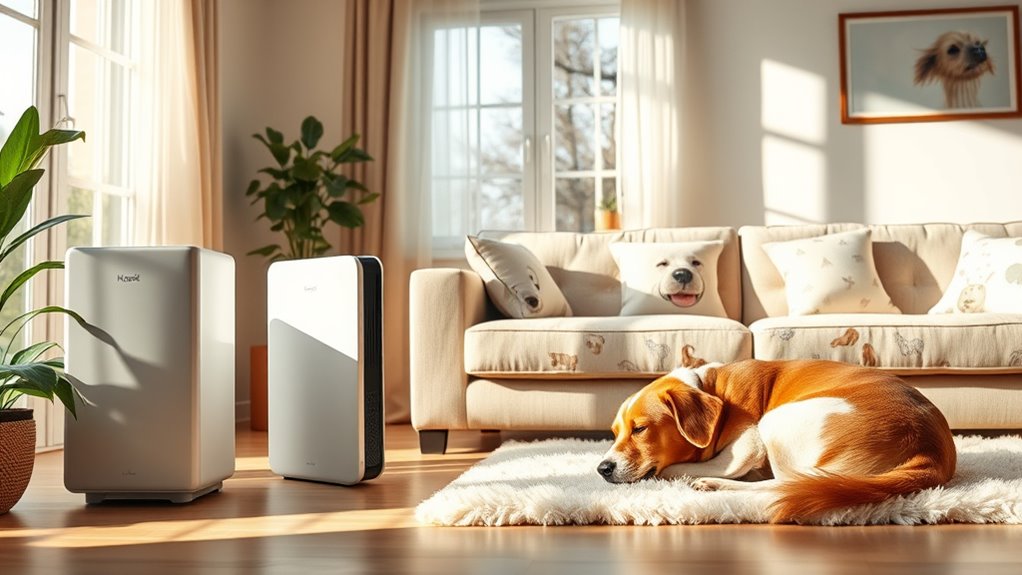
When it comes to effectively neutralizing pet odors, choosing the right products can make all the difference. Avoid falling for pet odor myths that suggest scent masking alone solves the problem; instead, focus on products that eliminate odors at their source. Here are top options to consider:
- Enzymatic cleaners break down odor-causing proteins.
- Activated charcoal absorbs lingering smells effectively.
- Odor-neutralizing sprays with natural ingredients freshen spaces without masking.
- Air purifiers with HEPA filters remove airborne pet odors.
Using these products ensures you’re not just covering up pet smells but truly eliminating them. Remember, scent masking might temporarily hide odors, but it often leads to frustration. Invest in proven solutions for lasting freshness in your home.
Preventative Habits to Keep Your Home Smelling Fresh

Implementing simple preventative habits can considerably reduce pet odors before they become a problem. Regular pet grooming minimizes dander, dirt, and oil that cause lingering smells. Brushing your pet frequently and bathing them as needed helps keep their coat fresh and odor-free. Using air purifiers with HEPA filters can also make a big difference by capturing airborne pet dander and allergens, improving overall indoor air quality. Keep your pet’s bedding, toys, and areas they frequent clean and wash them regularly. Consistently maintaining these habits prevents odors from building up and keeps your home smelling fresh longer. By staying proactive with pet grooming routines and investing in air purifiers, you’ll create a cleaner, more inviting environment for both you and your furry friend.
Frequently Asked Questions
Can Certain Pets Produce Stronger Odors Than Others?
Yes, some pets produce stronger odors than others. Dogs and cats with oily skin or those that aren’t regularly groomed tend to have more pronounced smells. Pet grooming helps reduce odor absorption and keeps their coat fresh. Breeds with naturally stronger scents, like certain terriers or persian cats, also emit more noticeable odors. Regular grooming and cleaning their living areas can substantially minimize these stronger pet odors.
How Do Pet Odors Infiltrate Furniture and Fabrics?
Pet odors infiltrate furniture and fabrics through absorption caused by fabric porosity and furniture absorption. When your pet sheds or marks, oils and smell particles seep into porous materials like upholstery, carpets, and curtains. Over time, these odors become embedded, making it hard to eliminate them completely. To reduce this, clean fabrics regularly, use protective covers, and consider deep cleaning or replacing highly porous furniture pieces.
Are There Natural Remedies to Eliminate Pet Smells?
Yes, you can use natural deodorizers and homemade sprays to eliminate pet smells. Mix baking soda with water and a few drops of essential oils like lavender or eucalyptus for a simple spray. Vinegar diluted with water also works well to neutralize odors. Regularly airing out your home and washing fabrics with natural detergents can further help keep pet smells at bay, making your space fresher and more inviting.
How Often Should I Deep Clean to Prevent Odor Buildup?
You should deep clean your home at least once a month to prevent odor buildup. Regular household cleaning, including vacuuming carpets, washing pet bedding, and wiping down surfaces, helps with odor prevention. Pay special attention to areas your pets frequent. Consistent cleaning removes pet dander and odors before they settle, keeping your home smelling fresh. Remember, the more often you clean, the less likely you’ll notice lingering pet smells.
Do Air Purifiers Effectively Remove Pet-Related Airborne Scents?
Air purifiers can effectively reduce pet-related airborne scents thanks to advanced air purifier technology. Look for models with HEPA filters and activated carbon, as these excel at capturing pet dander and odors. They use odor absorption methods to neutralize smells, making your home smell fresher. Keep your purifier running regularly, especially in pet areas, to maintain a cleaner, odor-free environment and prevent pet smells from lingering.
Conclusion
Did you know that indoor pet odors can be up to 10 times more concentrated than outdoor air? Understanding how odors hide in household materials and air circulation helps you combat that elusive ‘fresh’ smell. By using targeted cleaning techniques and proper ventilation, you can keep your home smelling clean even after you leave. Stay proactive with regular upkeep, and you’ll enjoy a consistently fresh space that welcomes both you and your pets.
Fall Picks
fall essentials
As an affiliate, we earn on qualifying purchases.