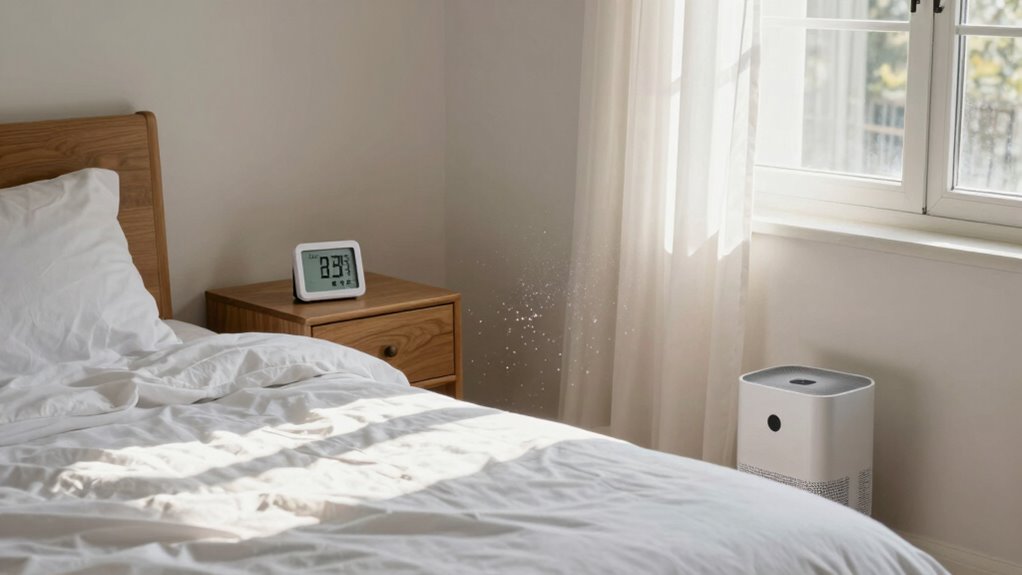

To control dust mites without chemicals, keep your indoor temperature between 65-70°F (18-21°C) and humidity below 50%. Lowering the thermostat at night can reduce mite activity in bedding. Use a whole-house dehumidifier to maintain consistent moisture levels, and ventilate moisture-generating areas like bathrooms and kitchens. Regularly wash bedding in hot water and use allergen-proof encasements for mattresses and pillows. By combining these strategies, you can create an inhospitable environment for dust mites. Curious about more effective methods?

Get cleaning gear delivered free — and shop member deals
- Fast, free delivery on millions of items
- Access to Prime Big Deal Days deals on October 6–7
- Prime Video, Amazon Music and more included
Key Takeaways
- Set indoor temperatures between 65-70°F (18-21°C) to reduce dust mite activity and reproduction.
- Maintain relative humidity below 50% using dehumidifiers to inhibit mite growth.
- Regularly monitor humidity levels with hygrometers to ensure optimal conditions for dust mite control.
- Wash bedding weekly in hot water (>130°F / 54°C) to eliminate existing mites and prevent their proliferation.
- Use allergen-proof encasements on mattresses and pillows to block mite entry and reduce exposure.

When it comes to maintaining a healthy home, dust mite control is essential, especially if you suffer from allergies. These microscopic invaders thrive in warm, humid conditions, making it vital for you to manage both temperature and humidity levels effectively. You can notably reduce dust mite populations by implementing a few straightforward strategies.
Dust mite control is crucial for allergy sufferers, requiring effective management of temperature and humidity for a healthier home.
First, keep your indoor temperature cooler, ideally around 65-70°F (18-21°C). This range discourages mite activity and reproduction. If you can, set your thermostat lower at night when you’re most exposed to bedding and pillows, where mites often reside. Alongside this, aim to maintain relative humidity (RH) below 50%. Mites flourish when humidity exceeds 50%, so investing in a whole-house dehumidifier can be a game changer. It’ll help keep moisture levels stable, preventing those brief spikes that allow mites to survive and reproduce. Additionally, keeping relative humidity below 50% is crucial for long-term dust mite eradication. Maintaining optimal indoor air quality can also enhance your home environment and reduce allergens.
Using a hygrometer to monitor humidity is also a smart move. Place it in key areas like your bedroom and living spaces to ensure you’re consistently hitting that 30-50% RH sweet spot. Regularly ventilating moisture-generating areas, like kitchens and bathrooms, with exhaust fans can further help control humidity levels. This way, you’re tackling the issue at its source.
Next, focus on your bedding and fabrics. Wash your sheets and pillowcases weekly in hot water, ideally at temperatures above 130°F (54°C), to kill mites effectively. For non-washable items like stuffed toys, consider freezing them for at least 72 hours to eliminate mites. Additionally, use allergen-proof encasements on mattresses and pillows to block allergens from entering your sleeping space.
You should also minimize the use of heavy carpets and upholstered furniture, especially in bedrooms. Opt for hard flooring and smooth surfaces to reduce dust accumulation and humidity retention. If you must have carpets, vacuum them regularly with a HEPA-filter vacuum to capture allergens and mite fragments. Damp dusting can also help reduce airborne particles that trigger allergic reactions.
Incorporating heat treatments can be beneficial, too. Steam clean carpets and upholstery to kill mites and denature allergens without resorting to chemicals. By combining these temperature and humidity control measures with proper cleaning techniques, you can create a less hospitable environment for dust mites and improve your overall indoor air quality. Adopting these strategies will help you manage dust mite populations effectively, paving the way for a healthier home.
Frequently Asked Questions
How Often Should I Check Humidity Levels in My Home?
You should check humidity levels in your home at least once a week. If you notice fluctuations in temperature or after activities like cooking or showering, check more frequently. Use a hygrometer to monitor levels consistently, aiming for 35% to 50% humidity. This regular checking helps you maintain a comfortable environment and reduces dust mite populations, ensuring better indoor air quality. Stay vigilant to keep your home healthy and allergen-free.
Can Air Purifiers Help Reduce Dust Mite Allergens?
Yes, air purifiers can help reduce dust mite allergens in your home. They work by trapping airborne particles, including mite feces and skin fragments, which can trigger allergies. When you choose a purifier with a HEPA filter, you’ll increase its effectiveness. However, remember that air purifiers should complement other measures, like controlling humidity and temperature, to create a thorough approach for minimizing dust mite allergens and improving your indoor air quality.
What Types of Bedding Materials Are Best for Mite Control?
If you want your bedding to be a fortress against dust mites, opt for materials like wool or synthetic fills designed to repel moisture. These choices keep your sleeping environment dry and unwelcoming to those pesky critters. Avoid heavy fabrics that trap humidity and promote mite growth. Cover your mattress with allergen-proof encasements, and wash your bedding weekly in hot water to guarantee you’re sending those mites packing for good!
How Long Does It Take to See Results From These Methods?
You can expect to see results from these methods within a few weeks to a few months. Maintaining consistent humidity below 50% and regularly laundering bedding in hot water markedly reduces mite populations and allergen loads over time. However, if humidity spikes intermittently, it can delay progress. Monitoring with hygrometers and checking for improvements in allergy symptoms will help you gauge the effectiveness of your efforts.
Are There Specific Plants That Help Reduce Indoor Humidity?
Yes, certain plants can help reduce indoor humidity. Spider plants, peace lilies, and Boston ferns are excellent choices for absorbing excess moisture. They naturally transpire, releasing water vapor into the air, which can help balance humidity levels. Placing these plants in key areas of your home not only improves humidity but also enhances air quality. Just remember to care for them properly, as overwatering can lead to higher humidity, counteracting their benefits.
Conclusion
By managing temperature and humidity in your home, you can substantially reduce dust mite populations without resorting to chemicals. Did you know that keeping indoor humidity below 50% can lower dust mite levels by up to 80%? This simple adjustment not only creates a healthier environment but also makes your home more comfortable. So, take charge of your indoor climate, and say goodbye to those pesky allergens for good!
Fall Picks
fall essentials
As an affiliate, we earn on qualifying purchases.