To de-shed your pet at home and vacuum less, start by choosing the right grooming tools like slicker brushes or undercoat rakes suited to your pet’s coat. Establish a regular brushing routine to remove loose hair before it falls. Bathe your pet with de-shedding shampoos and keep their space tidy by using furniture covers. Consistent maintenance and proper techniques can dramatically reduce shedding—keep going to learn more simple tips and tricks.
Listen free for 30 days with Audible
Thousands of audiobooks and originals — cancel anytime.
As an affiliate, we earn on qualifying purchases.
Key Takeaways
- Regularly brush your pet with appropriate tools to remove loose hair before it falls around the house.
- Bathe your pet with de-shedding shampoos and conditioners suited to their coat type.
- Use washable, tightly woven covers on furniture and bedding, and wash them frequently.
- Maintain a consistent grooming schedule, ideally every week or two, to reduce shedding at the source.
- Incorporate air purifiers with high-quality filters to trap pet hair and dander, minimizing indoor allergens.
Understanding Your Pet’s Shedding Cycle

Understanding your pet’s shedding cycle is essential for managing their grooming and maintaining a clean home. Seasonal changes profoundly influence how much your pet sheds, with many dogs and cats shedding more in spring and fall as they prepare for temperature shifts. Breed differences also play a role; some breeds shed minimally, while others shed heavily year-round. Knowing these patterns helps you anticipate when your pet will shed the most, so you can plan grooming sessions accordingly. For example, double-coated breeds tend to shed heavily during seasonal transitions, requiring more frequent brushing. Recognizing seasonal shedding patterns**** can help you better prepare for increased grooming needs during these times. By understanding these factors, you can reduce loose hair around the house and keep your pet comfortable. Staying attentive to your pet’s shedding patterns makes grooming more effective and minimizes the need for excessive cleaning.
Choosing the Right Grooming Tools

Choosing the right grooming tools is essential for effectively managing your pet’s shedding. Make sure you select equipment suited to their coat type, and keep your tools in good condition with regular cleaning and maintenance. Properly maintained tools will work better and last longer, making grooming easier for both of you. Additionally, selecting tools that are appropriate for your pet’s coat type can significantly improve shedding control and comfort during grooming sessions. Incorporating the use of proper sanitation practices can also help prevent skin irritation and infections, ensuring a healthier grooming routine. Understanding your pet’s coat type can help you choose tools that effectively target shedding areas and reduce fur around your home. Regular grooming can also promote a healthy coat and reduce the amount of fur that ends up on your furniture and floors.
Appropriate Grooming Equipment
Selecting the right grooming tools is essential to make the de-shedding process effective and comfortable for your pet. Using improper tools can reinforce pet grooming myths, like thinking only professional grooming is effective. To guarantee safety and efficiency, choose tools suited to your pet’s coat type and size. For example, slicker brushes work well for long-haired breeds, while undercoat rakes target loose fur in double-coated pets. Keep grooming safety tips in mind, like gentle handling and avoiding sensitive areas. Here’s a quick guide:
| Tool Type | Suitable For |
|---|---|
| Slicker Brush | Long-haired or curly coats |
| Undercoat Rake | Double-coated, heavy shedding |
| Pin Brush | Sensitive, short-haired pets |
| Grooming Gloves | Quick, gentle de-shedding |
| Dematting Comb | Tangles and mats |
Additionally, incorporating sound therapy techniques during grooming sessions can help keep your pet calm and relaxed. Incorporating proper grooming equipment can also reduce the overall shedding by removing loose fur more effectively, leading to a cleaner home environment. Using appropriate grooming tools tailored to your pet’s specific coat type not only improves shedding control but also enhances the overall grooming experience. Understanding the net worth of pet grooming experts and professional tools can help you invest wisely in quality equipment that lasts. Moreover, choosing high-quality tools can prevent injuries and make grooming sessions more efficient and enjoyable for both you and your pet.
Proper Tool Maintenance
Proper maintenance of your grooming tools guarantees they work effectively and last longer. Regularly cleaning and sharpening your tools ensures they perform pet hair removal efficiently. Follow a consistent grooming schedule, so your tools stay in excellent condition. To keep them in top shape:
- Clean your brushes and combs after each session to remove pet hair and debris.
- Sharpen blades or replace them when dull to prevent pulling hair and discomfort.
- Store tools in a dry, safe place to avoid rust and damage.
Maintaining your grooming tools helps prevent uneven shedding and makes grooming sessions quicker. Well-maintained tools reduce stress for your pet and improve hair removal results, making it easier to stick to your grooming schedule and keep shedding under control.
Establishing a Regular Brushing Routine
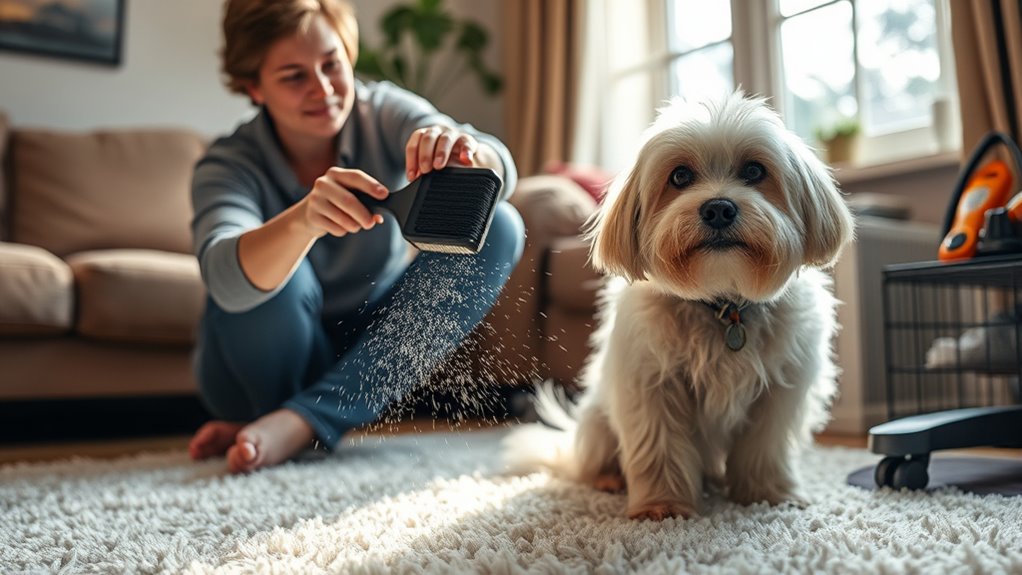
Establishing a regular brushing routine is essential for keeping your pet’s coat healthy and minimizing shedding around your home. Consistent pet grooming helps remove loose hair before it falls off naturally, reducing hair around your living space. By brushing frequently, you also distribute natural oils, which keeps your pet’s coat shiny and healthy. Choose the right tools for your pet’s fur type, and set a schedule that fits their shedding cycle. Daily or every-other-day brushing is ideal for most breeds, especially those prone to heavy shedding. Regular hair management not only decreases loose fur but also allows you to check for skin issues or parasites early. Incorporating vetted grooming methods into your routine can help create a more harmonious environment for both you and your pet. Making brushing a routine keeps your pet comfortable and your home cleaner, saving you time on cleaning and vacuuming. Additionally, consistent grooming can reduce the risk of skin infections caused by accumulated dirt or mats. Proper grooming can also help prevent the development of piercing infections if your pet has body jewelry or recent piercings.
Bathing Your Pet to Reduce Loose Fur

Bathing your pet regularly can greatly reduce loose fur and keep shedding under control. Proper pet grooming during baths helps loosen and remove dead hair, leading to significant fur reduction. To maximize results, follow these tips:
Regular baths help control shedding and promote healthy, shiny fur.
- Use lukewarm water and a gentle, pet-specific shampoo to avoid skin irritation.
- Focus on thorough rinsing to ensure all loose fur and shampoo residues are washed away.
- Dry your pet completely with a towel or blow dryer on a low setting to prevent matting and further shedding.
- Incorporating consistent feedback from grooming sessions during grooming can help monitor and improve shedding reduction efforts.
- Regular baths also support skin health, which is essential for minimizing excessive shedding and maintaining a healthy coat. Additionally, using grooming tools like brushes suited to your pet’s coat type can enhance shedding control between baths.
- Maintaining a balanced diet rich in nutrients for coat health can also contribute to less shedding and a shinier coat.
Regular baths not only keep your pet clean but also help you spot skin issues early. Consistent pet grooming through bathing can drastically cut down on loose fur around your home.
Using Special De‑Shedding Shampoos and Conditioners
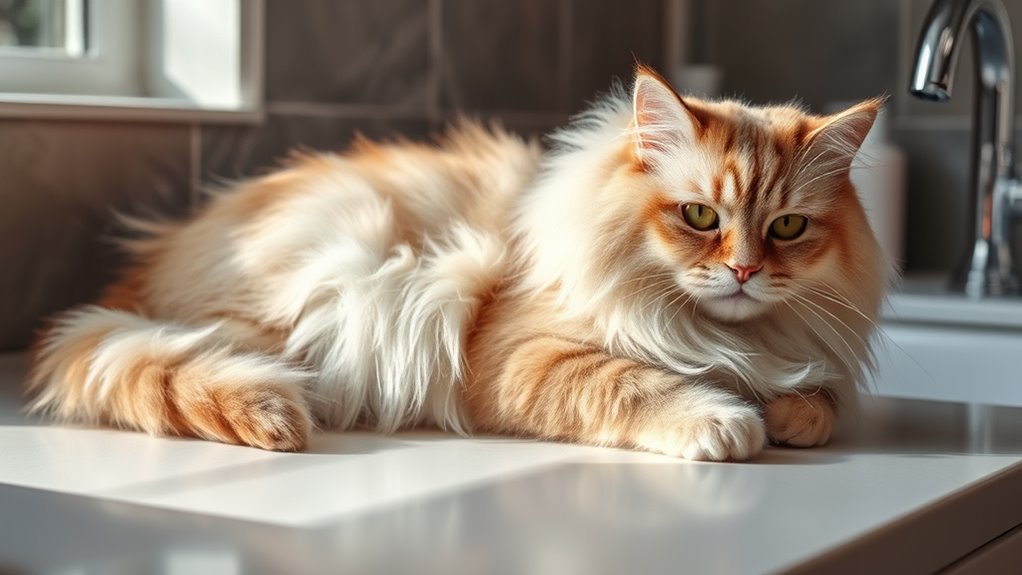
Choosing the right de-shedding shampoo and conditioner is key to effectively reducing loose fur. Make sure you apply them properly, massaging thoroughly into your pet’s coat for best results. These products not only help control shedding but also improve your pet’s coat health and shine. Incorporating regular grooming routines can further enhance shedding control and promote overall skin health. Additionally, selecting products formulated for coat health can support the natural oils and nutrients necessary for a resilient and shiny coat. Using appropriate grooming tools can also maximize the effectiveness of these products and reduce fur around your home. Being aware of ear wax odor can help identify issues that might affect your pet’s comfort during grooming sessions.
Choosing the Right Formula
Selecting the right de-shedding shampoo or conditioner can make a significant difference in managing your pet’s shedding. To choose effectively, consider your pet’s specific needs and shedding patterns. You are trained on data up to October 2023. Additionally, using products designed with specialized formulas can enhance the effectiveness of shedding control. 1. Look for formulas designed for seasonal shedding to reduce excess hair during peak times. 2. Choose products with gentle, pet-friendly ingredients to support pet allergy management and avoid irritation. 3. Read labels to find conditioners that strengthen hair and minimize loose fur, making grooming easier.
Matching the formula to your pet’s coat type and shedding cycle helps control fur around the house and eases allergy symptoms. Proper product selection guarantees your pet stays comfortable and your home stays cleaner, with less fur everywhere.
Proper Application Techniques
To get the best results from de-shedding shampoos and conditioners, it’s essential to apply them correctly. During pet grooming, wet your pet thoroughly with warm water, ensuring the coat is completely saturated. Apply the special de-shedding shampoo in gentle, even strokes, focusing on areas prone to shedding. Massage it into the coat to break down loose hair and reduce excess shedding. Let the shampoo sit for a few minutes to maximize shedding control benefits, then rinse thoroughly. Follow with a conditioner if recommended, applying it evenly and avoiding the eyes and ears. Proper application guarantees your pet’s coat is clean, healthy, and less prone to excessive shedding, making grooming sessions more effective and helping you vacuum less.
Benefits for Coat Health
Using special de-shedding shampoos and conditioners not only helps control shedding but also markedly improves the overall health of your pet’s coat. These products promote coat conditioning, making fur shinier and softer, while supporting healthy skin. They can also influence shedding patterns by strengthening hair follicles and reducing excess hair loss.
To maximize benefits, consider these tips:
- Choose shampoos formulated for coat conditioning to nourish your pet’s skin and hair.
- Use conditioners that help lock in moisture, improving coat texture and reducing breakage.
- Regularly bathing with de-shedding products helps maintain healthy shedding patterns, keeping your home cleaner and your pet more comfortable.
Incorporating Diet and Supplements for Healthier Skin and Coat
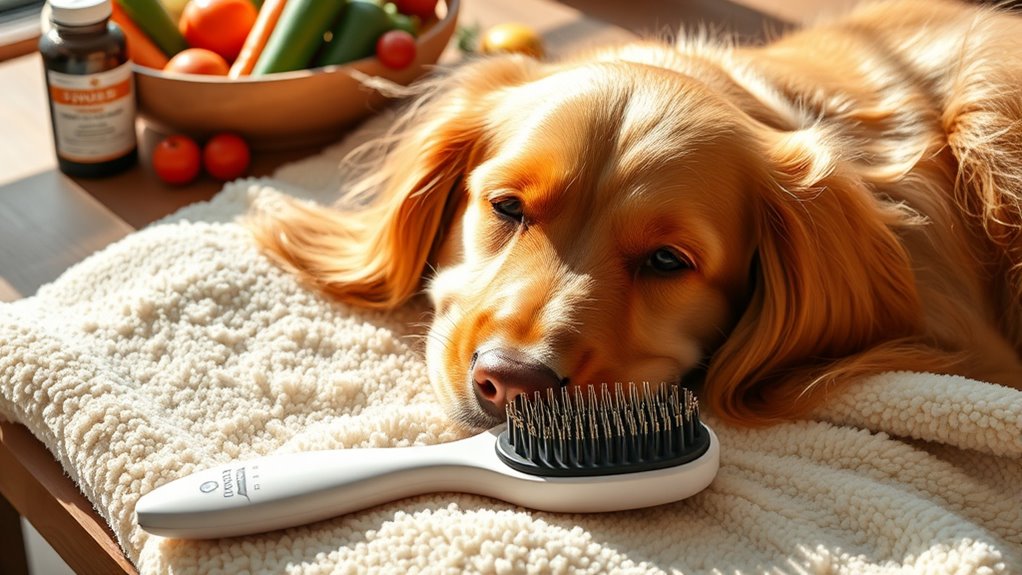
A balanced diet plays a crucial role in maintaining your pet’s skin and coat health. Including nutritional supplements can enhance their skin health and reduce shedding. Omega-3 and omega-6 fatty acids are especially effective, promoting a shiny coat and less irritation. Look for supplements formulated specifically for pets, as these deliver essential nutrients without excess calories. Proper nutrition supports the production of healthy skin cells and oils, preventing dryness and dullness. Incorporate high-quality proteins and vitamins like biotin and vitamin E to strengthen hair follicles. Consistent feeding of these supplements, combined with a balanced diet, helps keep your pet’s coat sleek and minimizes shedding. This approach not only improves their appearance but also contributes to overall well-being.
Creating a Pet-Friendly Space for Grooming
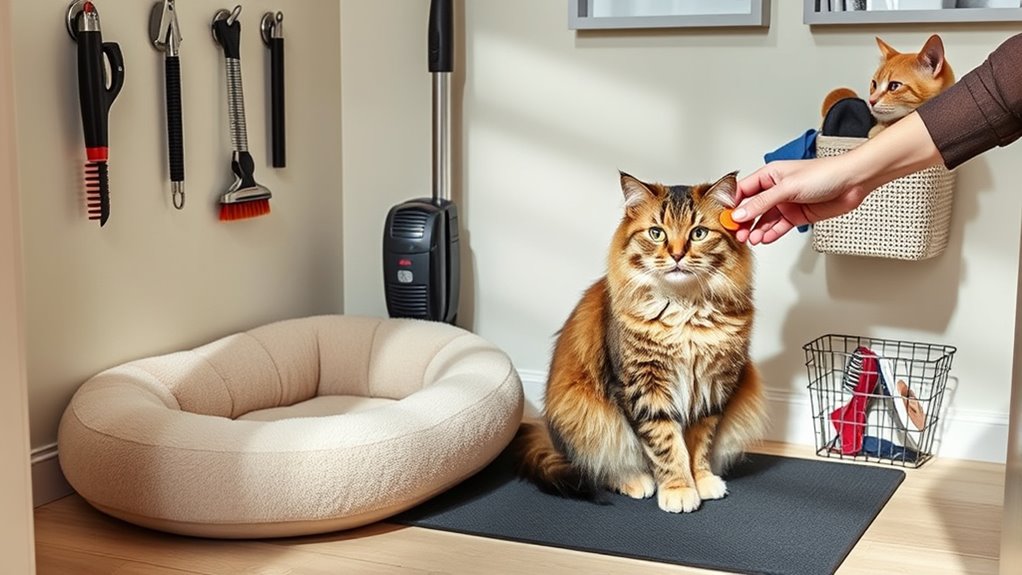
Setting up a dedicated grooming space makes the process easier for both you and your pet. Use pet-friendly tools to guarantee comfort and safety during each session. Keep a regular maintenance schedule to maintain a clean, calm environment that encourages positive grooming experiences.
Dedicated Grooming Area
Creating a dedicated grooming area makes the process safer and more comfortable for both you and your pet. This space helps contain pet hair removal messes and ensures grooming safety. To set up your area:
- Choose a well-lit, ventilated spot with easy cleanup, like a tiled bathroom or laundry room.
- Keep all grooming tools and pet-safe products within reach to avoid accidents.
- Use a non-slip mat to prevent slips and make your pet feel secure during grooming.
Having a designated space minimizes distractions and makes grooming less stressful. It also helps contain loose pet hair, reducing the amount that ends up on your furniture. A dedicated area keeps grooming efficient, safe, and more enjoyable for your furry friend.
Use of Pet-Friendly Tools
Using pet-friendly tools is essential to guarantee grooming sessions are safe and comfortable for your pet. Opt for gentle brushes, hypoallergenic shampoos, and ergonomic grooming tools that minimize stress and skin irritation. These tools help with pet allergy management by reducing allergens and shedding more effectively. Always check that grooming equipment is clean and appropriate for your pet’s size and coat type. Following grooming safety tips, such as avoiding sharp tools and ensuring a calm environment, prevents injuries and anxiety. Using the right tools not only makes grooming easier but also fosters a positive experience for your pet, encouraging cooperation and reducing the likelihood of shedding around the house. Proper tools are the foundation of an effective, stress-free grooming routine.
Regular Maintenance Schedule
Establishing a regular maintenance schedule is key to maintaining a safe and comfortable grooming space for your pet. Consistent pet grooming helps you manage shedding patterns and keeps your home cleaner. To stay on top of this, consider these steps:
- Schedule grooming sessions weekly or biweekly based on your pet’s shedding intensity.
- Clean grooming tools after each use to prevent the spread of loose hair and bacteria.
- Regularly vacuum and wipe down the grooming area to minimize pet hair buildup and maintain a hygienic environment.
Managing Shedding With Furniture and Bedding Covers

To keep pet hair off your furniture and bedding, covering these surfaces with removable, washable covers can be highly effective. Furniture covers act as a barrier, trapping loose hair before it settles into upholstery, making cleaning easier. Bedding covers serve the same purpose for beds and cushions, preventing hair from embedding into fabrics. Choose covers made from tightly woven, washable materials for best results. Regularly remove and wash these covers to keep shedding under control and maintain a clean home. Using covers also helps protect your furniture and bedding from pet dander, reducing allergens and improving air quality. With this simple strategy, you’ll spend less time vacuuming and more time enjoying your pets without the constant hassle of pet hair.
Maintaining Your Home’s Cleanliness Effectively

Keeping your home clean with pets requires consistent effort and smart strategies. To maintain cleanliness effectively, focus on a few key habits. First, prioritize pet nutrition; a balanced diet can reduce shedding and dander. Second, schedule regular veterinary checkups to catch skin or health issues that contribute to excess shedding. Third, establish a routine cleaning schedule, including vacuuming, dusting, and washing pet bedding frequently. Using high-quality filters and air purifiers can also help trap pet hair and allergens. Maintaining overall hygiene, combined with good nutrition and health care, minimizes shedding and keeps your home cleaner longer. Staying proactive ensures less pet hair on furniture and floors, making vacuuming less overwhelming and your space more comfortable.
Recognizing When to Seek Professional Grooming Assistance
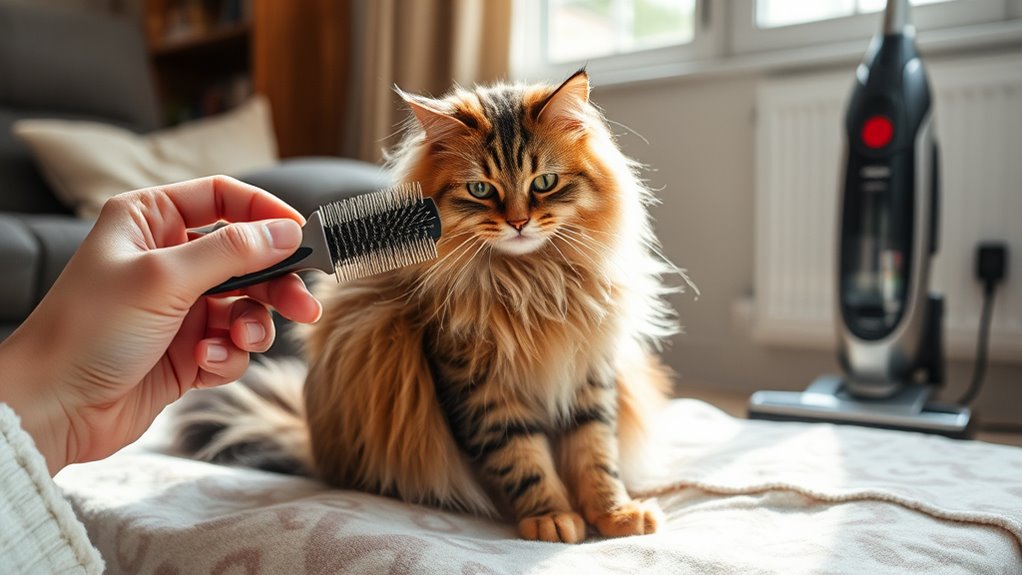
Recognizing when professional grooming is necessary can prevent small issues from becoming bigger problems. If your pet’s coat is matted, tangled, or excessively shedding despite regular at-home care, it’s time to think about a grooming appointment scheduling. Professional groomers have the tools and expertise to handle tricky grooming tasks safely, ensuring your pet’s comfort and pet grooming safety. Additionally, if your pet shows signs of skin irritation, persistent scratching, or discomfort during grooming, seek professional help. Regular grooming helps maintain your pet’s health and reduces shedding around your home. When in doubt, consulting a groomer can save you time and prevent stress for both you and your pet, keeping grooming a positive experience.
Frequently Asked Questions
How Often Should I Replace My Pet’s Grooming Tools?
You should replace your pet’s grooming tools every 6 to 12 months to maintain grooming tool longevity and effectiveness. If you groom your pet frequently, say weekly, check the tools regularly for signs of wear, such as dull blades or broken bristles. Replacing them guarantees a smoother grooming process, keeps your pet comfortable, and prevents skin irritation. Regularly updating your tools helps maintain ideal pet grooming frequency and overall coat health.
Are There Specific Grooming Routines for Different Dog Breeds?
Yes, different dog breeds require breed-specific grooming routines to keep their coat healthy. For example, long-haired breeds like Shih Tzus need regular brushing and trimming to prevent matting, while short-haired breeds like Beagles need less frequent grooming but still benefit from routine coat maintenance. Tailor your grooming schedule to your dog’s breed to reduce shedding, keep their coat clean, and maintain overall health.
Can Diet Changes Significantly Impact My Pet’s Shedding?
Imagine your pet’s coat as a lush garden—what you feed it shapes its health and shedding. Diet impact is profound; high-quality food with omega-3s and vitamins can nurture a vibrant, resilient coat, reducing shedding like a gentle breeze. Consistent, nutritious meals promote shedding reduction, keeping loose fur at bay. When you nourish your pet properly, you’re planting the seeds for a healthier coat and less fur flying around your home.
What Are Safe Ways to De-Shed Long-Haired Cats?
To safely de-shed your long-haired cat, regularly brush their fur with a high-quality, gentle brush designed for long hair. This helps remove loose cat hair and reduces shedding control. Use a de-shedding tool to reach undercoat areas and prevent matting. Bathing your cat occasionally with a vet-approved shampoo can also help loosen stubborn fur. Consistent grooming keeps your cat comfortable and minimizes the amount of hair around your home.
How Do I Identify Signs of Skin Issues During Grooming?
During grooming, watch for signs of skin issues like redness, swelling, or patches that seem irritated. If your pet scratches excessively, bites at certain areas, or shows allergy symptoms such as sneezing or watery eyes, these could indicate skin irritation or allergies. Pay close attention to changes in their coat or behavior, and consult your vet if you notice persistent issues or discomfort, ensuring your pet stays healthy and comfortable.
Conclusion
By regularly caring for your pet’s coat, you’re gently guiding unwanted fur to stay where it belongs—on their brush or in your grooming routine, not all over your home. With patience and consistent effort, you create a cozy space where fur feels more like a guest than a permanent visitor. Remember, a little extra attention now keeps your home feeling fresher and your bond stronger, making shedding less of a hidden surprise.
Fall Picks
fall essentials
As an affiliate, we earn on qualifying purchases.