If your rugs are suffering from persistent dog odors, the low-moisture method is a game changer. Using minimal water, it targets the root of the smell by encapsulating odor particles and lifting them out without saturating your rugs. This method not only helps prevent mold growth but also guarantees quicker drying times. Plus, it enhances indoor air quality. Want to discover more about how this technique can transform your cleaning routine? Keep exploring!

Get cleaning gear delivered free — and shop member deals
- Fast, free delivery on millions of items
- Access to Prime Big Deal Days deals on October 6–7
- Prime Video, Amazon Music and more included
Key Takeaways
- The Very Low Moisture (VLM) method uses minimal water, reducing the risk of mold while effectively addressing dog odors in rugs.
- VLM employs encapsulation pre-spray to bind odor particles and allows for chemical action with minimal moisture.
- Mechanical agitation through oscillating pads or brushes lifts encapsulated soils, ensuring thorough cleaning without saturating the fibers.
- Routine vacuuming and prompt spot treatments are essential for maintaining odor control and preventing recurrence.
- For severe cases, deeper extraction methods may be necessary, as VLM is not designed for deep stains or odors in padding.
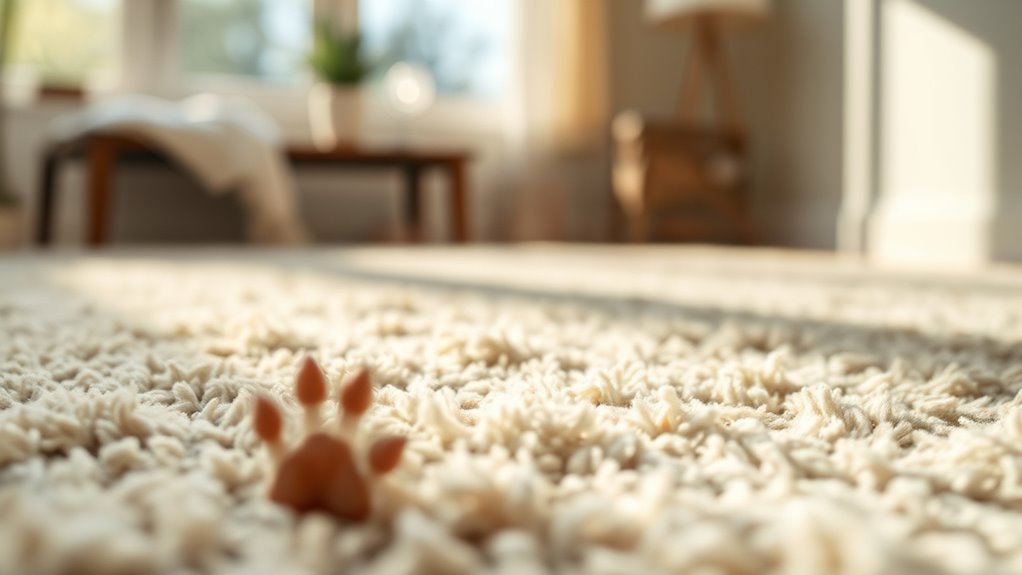
Have you ever wondered why your rugs still smell like a wet dog, even after cleaning? It’s frustrating, especially when you think you’ve done everything right. The problem often lies in the way odors develop in the first place. Fresh pet urine contains urea and other organic compounds that break down into ammonia and uric acid crystals as they dry, creating persistent smells that seep deep into your rug’s fibers, backing, and even the subfloor. Traditional cleaning methods may not address these issues effectively, leading to recurring odors.
Persistent odors from pet urine can seep deep into rugs, often eluding traditional cleaning methods.
That’s where the Very Low Moisture (VLM) method comes into play. VLM uses minimal water—typically just 16 ounces per room—allowing your rugs to dry in about an hour. This rapid drying time considerably reduces the risk of mold and mildew, and it’s particularly beneficial for homes with pets and allergy concerns. By combining targeted pre-spray chemistry with mechanical agitation, VLM loosens and encapsulates soils without saturating the fibers. This means that instead of just pushing contaminants deeper, you’re actually lifting them out. This method promotes healthier indoor air quality, making it ideal for households sensitive to allergens. Additionally, using smart home technology can help monitor air quality and enhance your cleaning routine.
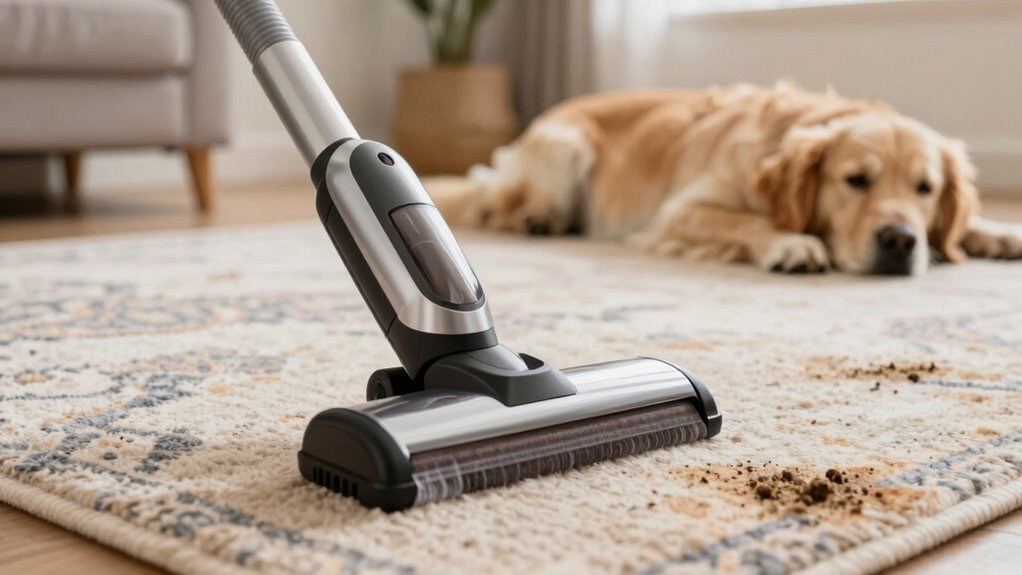
When you use VLM, you’ll apply a specialized encapsulation pre-spray that binds and immobilizes the odor-bearing particles. After allowing it to dwell for the recommended time, you’ll agitate the rug with an oscillating pad or a counter-rotating brush. This helps separate the encapsulated soils from the fibers, making it easier to vacuum them away. The beauty of this method lies in its ability to remove odors rather than simply masking them. Unlike air fresheners, which only cover up the smell, VLM targets the source of the odor at a molecular level.
But keep in mind, VLM isn’t a one-size-fits-all solution. If your rug has deep stains or if urine has migrated to the padding or subfloor, you might need to think about professional cleaning or full extraction methods. Improper cleaning methods, like using too much water or vinegar, can push contaminants deeper and set stains, leading to more trouble down the line.
To maintain your rugs, routine vacuuming and prompt spot treatments are key. If you notice persistent odors, use enzymatic products that break down proteins and uric acid without saturating the fibers. With the right approach, you can keep your rugs smelling fresh and inviting. By choosing the VLM method, you’re not just cleaning; you’re effectively combating the source of those stubborn pet odors.
Frequently Asked Questions
How Often Should I Clean Rugs With Dog Odor?
You should clean your rugs with dog odor at least once a month to maintain freshness. If your dog has frequent accidents or sheds heavily, consider cleaning every two weeks. Regular vacuuming helps, but deeper cleaning removes embedded odors. Pay attention to any persistent smells; they indicate that deeper cleaning is necessary. Using enzymatic cleaners can help break down odor-causing compounds, ensuring your rugs stay fresh and inviting for both you and your pet.
Can Low-Moisture Methods Damage My Rug?
Low-moisture methods generally won’t damage your rug if used correctly. You’ll want to make certain your rug is suitable for this technique, as some constructions might be sensitive to moisture or agitation. Always start with thorough dry soil removal and select the right chemistry to avoid over-saturation. If you notice any issues, such as discoloration or delamination, consider consulting a professional to assess your rug and recommend the best cleaning approach.
How Do I Choose the Right Enzyme Cleaner?
Choosing the right enzyme cleaner is like picking the perfect key for a lock; it needs to fit just right. Look for a product specifically designed to break down uric acid and other pet odors. Check the ingredient list for effective enzymes and make sure it’s safe for your rug material. Always test a small area first to avoid damage, and follow the instructions for maximum results. That way, you’ll tackle odors effectively and safely!
What Materials Are Safest for Low-Moisture Cleaning?
For low-moisture cleaning, you’ll want to use materials that are gentle yet effective. Opt for synthetic fiber pads that absorb while preventing damage. Enzymatic cleaners tailored for uric acid are safe and break down odors at the source. Avoid harsh chemicals like bleach or vinegar, which can set stains or harm fibers. Always check your rug’s construction to guarantee compatibility with low-moisture methods for the best results.
Are There Preventative Measures for Dog Odor on Rugs?
Imagine your home as a serene oasis, free from unwanted odors. To prevent dog odor on rugs, you can start by vacuuming regularly, keeping your furry friend clean, and treating accidents immediately. Use enzymatic cleaners to tackle any lingering smells and maintain a consistent cleaning routine. Consider placing washable rugs in high-traffic areas, and guarantee proper ventilation to keep the air fresh. These simple steps can help you maintain a pleasant, inviting atmosphere.
Conclusion
You’ve tried countless methods to eliminate that stubborn dog odor on your rugs, but what if the answer lies in a simple, low-moisture technique? Many believe that damp cleaning only spreads the scent, while this method targets the source without soaking the fibers. By embracing this approach, you might just uncover the secret to a fresher home. So, why not give it a shot? You could be one step away from a rug that smells as good as new!
Evergreen bestsellers Picks
bestsellers
As an affiliate, we earn on qualifying purchases.