To keep your indoor space pollen-free during pollen season, create a dedicated entryway zone with a hard surface floor and storage for outerwear. Implement a no-shoes policy, use a double-mat system, and regularly clean mats to trap contaminants. Launder outer garments weekly and maintain a routine to vacuum and mop entryway floors. These simple steps will help keep pollen at bay and improve your indoor air quality. Discover more effective strategies to enhance your entryway routine!

Get cleaning gear delivered free with Prime
- Fast, free delivery on millions of items
- Prime Video, Amazon Music and more included
- Member-only deals all year
Key Takeaways
- Establish a transition zone near the entrance with a hard floor and storage for outerwear to trap contaminants quickly.
- Implement a double-mat system, cleaning mats twice weekly to effectively capture and remove pollen.
- Enforce a no-shoes policy indoors, providing slippers and a shoe rack to contain outdoor footwear.
- Designate hooks for outerwear and launder garments weekly during peak pollen season to minimize indoor pollen transfer.
- Maintain daily vacuuming with a HEPA filter and weekly surface cleaning to reduce pollen accumulation in the entryway.

How can you keep your home pollen-free during peak pollen season? Start by creating a dedicated transition zone near your main entrance. This area should feature a hard-surface floor like tile or vinyl, making it easy to wipe up any pollen that makes its way indoors. A bench or low seat will help everyone remove their shoes without balancing awkwardly, increasing compliance with a no-shoes policy. You’ll also want built-in storage, like closed cubbies or lockers, for outerwear to prevent hanging pollen-laden coats in your living spaces. Additionally, utilizing energy-efficient solutions can support a cleaner indoor environment while promoting sustainable practices.
Implement a double-mat system at your entryway. Use an outer coarse doormat to scrape off larger debris and an inner absorbent mat to catch finer pollen particles. Make sure these mats are strategically positioned within 5–10 feet of your door, as most contaminants settle near entryways. Clean these mats at least twice a week to prevent trapped pollen from being reintroduced into your home. Opt for water-resistant or rubber-backed mats to guarantee durability during frequent cleaning.
Footwear protocols are essential in your entryway routine. Enforce a strict no-shoes policy beyond the entry, ideally providing a shoe rack or tray to keep footwear contained. Consider supplying indoor slippers stored in the entry area to encourage adherence to this practice. Place an outdoor shoe-cleaning brush or boot scraper right outside the door to minimize the pollen load before stepping onto the mats. Regularly vacuum or wipe down the shoes stored inside, as they can continue to shed outdoor pollen even after being removed.
When it comes to outerwear, designate specific hooks or a closed closet for hanging coats and hats in your entryway. This prevents pollen from being carried into living areas. Use washable storage surfaces and launder or brush outer garments weekly during peak pollen season. Implement a change-of-clothes routine after outdoor exposure, placing those garments directly into the laundry to minimize indoor pollen transfer.
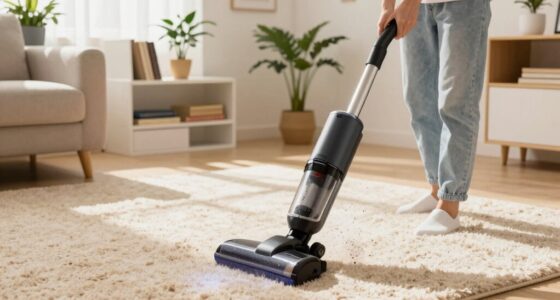
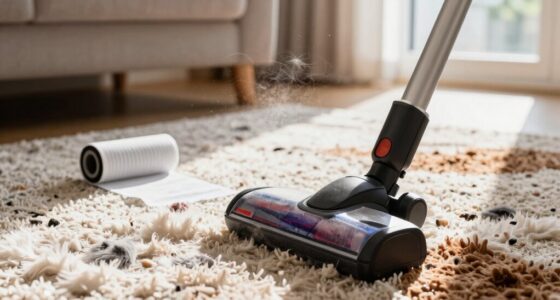
For cleaning and maintenance, vacuum entryway floors daily with a HEPA filter-equipped vacuum to capture fine pollen. Mop hard floors using damp methods to effectively trap pollen. Wipe down surfaces like countertops and door handles weekly to capture settled pollen rather than dispersing it. By following this entryway routine, you’ll considerably reduce the amount of pollen tracked indoors, creating a more comfortable living environment during peak pollen season.
Frequently Asked Questions
How Can I Identify High Pollen Count Days?
To identify high pollen count days, check local weather apps or websites that provide daily pollen forecasts. You can also subscribe to alerts from allergy organizations or use dedicated smartphone apps for real-time updates. Keep an eye on pollen levels for specific types like grass, tree, or weed pollen, as they peak during different seasons. Adjust your outdoor plans based on these forecasts to minimize exposure on days with elevated counts.
What Are the Best Air Purifiers for Pollen Removal?
Imagine breathing in fresh, clean air instead of pollen-laden dust. For effective pollen removal, choose HEPA air purifiers with a high Clean Air Delivery Rate (CADR) and appropriate room size ratings. Look for models that are certified asthma and allergy-friendly. Brands like Dyson, Honeywell, and Levoit often come highly recommended. Regularly change filters to maintain efficiency, and consider adding an air quality monitor to track your indoor environment. You’ll breathe easier!
How Often Should I Change My HVAC Filters?
You should change your HVAC filters every 1 to 3 months, depending on usage and filter type. If you have pets, allergies, or significant dust buildup, consider changing them monthly. Regularly checking your filters helps maintain ideal airflow and indoor air quality. Don’t forget to inspect them frequently, especially during high pollen seasons, to ensure they’re clean and effective. This simple step can make a big difference in your home’s air quality.
Can Pets Carry Pollen Indoors?
Yes, pets can definitely carry pollen indoors. Their fur traps pollen particles, which can then be transferred to your home. To minimize this, you should wipe or brush your pets at the entryway after outdoor time. Additionally, consider limiting their access to main living areas until you’ve had a chance to clean them. Regular grooming and washing your pet’s bedding can also help reduce the amount of pollen they bring inside.
What Materials Are Best for Entryway Mats?
For entryway mats, you’ll want a mix of coarse and absorbent materials. Coarse outdoor mats effectively scrub dirt and pollen off shoes, while absorbent indoor mats trap what remains. Look for water-resistant mats with deep grooves for outdoor use and machine-washable options for indoors. This combination keeps your entryway cleaner, ensuring you don’t drag pollen into your home. Prioritizing these materials not only protects your space but makes maintenance easier too.
Conclusion
By establishing a simple entryway routine, you can markedly reduce the pollen that sneaks indoors. Think about how much more enjoyable your time at home could be without the constant irritation of allergens. With a few easy steps like shaking off shoes, using doormats, and keeping windows closed during peak pollen times, you’ll create a cleaner environment. So, why not take these small actions today to breathe easier tomorrow? Your allergies will thank you!
Halloween Picks
halloween
As an affiliate, we earn on qualifying purchases.