Garage odors often come from spilled gasoline or oil, and poor ventilation can make things worse. Gasoline gives off a sharp smell, especially from leaks or spills, while oil has a rancid, petroleum odor, particularly after changing it. To combat these smells, clean up spills quickly, enhance airflow, and use absorbents. Also, managing humidity helps prevent musty scents caused by mold. Discover more remedies and preventative measures to keep your garage fresh and inviting.

Get cleaning gear delivered free with Prime
- Fast, free delivery on millions of items
- Prime Video, Amazon Music and more included
- Member-only deals all year
Key Takeaways
- Gasoline odors in the garage are often due to spills or leaks, necessitating immediate cleanup and proper ventilation.
- Oil smells can arise from engine oil drips or changes; use degreasers and pressure washing to eliminate these odors.
- High humidity and poor airflow contribute to musty smells and mold growth; keep moisture levels below 50% with dehumidifiers.
- Promptly address spills and leaks to minimize odor buildup and health risks associated with VOCs from gasoline and oil.
- Regular maintenance, including proper storage of oily rags, helps prevent lingering odors and fire hazards in the garage.

When you step into your garage, the last thing you want is to be greeted by unpleasant odors that can linger and disrupt your space. Gasoline smells often stem from spilled fuel or leaking fuel lines in your vehicle. These volatile organic compounds (VOCs) release sharp, sweet odors that can permeate your garage even in low concentrations. If you notice persistent fuel odors, it may indicate ongoing vapor sources or porous surfaces like concrete that have absorbed spills. You should address this promptly, as concentrated VOC exposure can lead to headaches, dizziness, and even long-term health risks.
Unpleasant gasoline odors in your garage can indicate spills or leaks, posing health risks that require immediate attention.
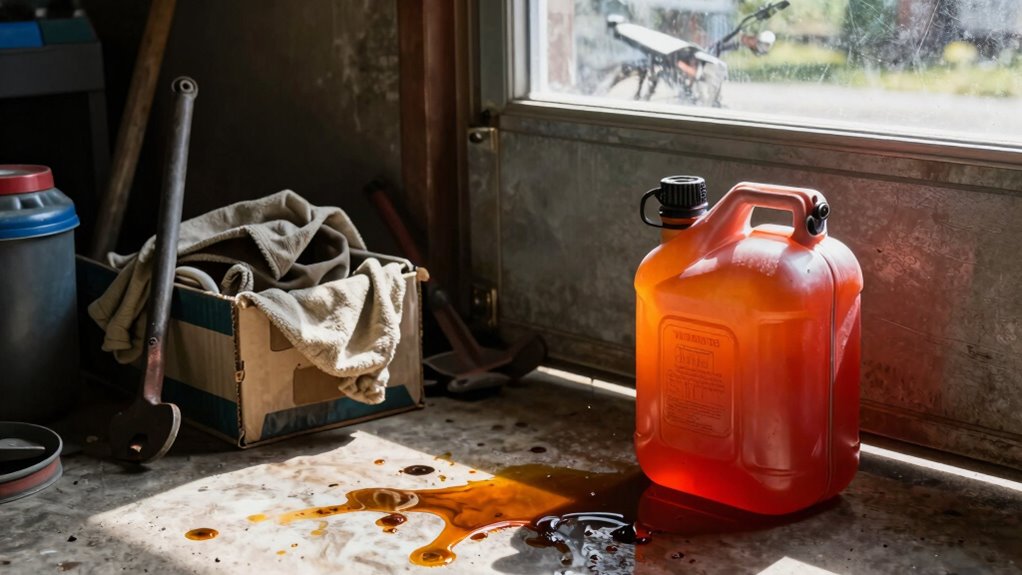
To tackle the gasoline smell, start by removing or transferring any fuel to UL-approved sealed containers. Clean up spills quickly using absorbents or degreasers to minimize off-gassing. Increasing ventilation in your garage can also help; open windows or install exhaust fans to circulate air and push out those stubborn fumes.
Oil smells are another common issue. If you’ve performed an oil change or have engine oil drips, you might notice a rancid petroleum-like odor. This heavier smell comes from less volatile components of motor oil and can cling to your garage’s surfaces. Concrete and other porous materials can trap oil, releasing odors over time. To combat this, use degreasing cleaners and thoroughly pressure-wash any affected areas.
Don’t overlook the importance of proper disposal of soaked rags, as they pose a fire risk if they self-heat. Ensuring that these items are stored in sealed containers can greatly reduce both odor and hazards.
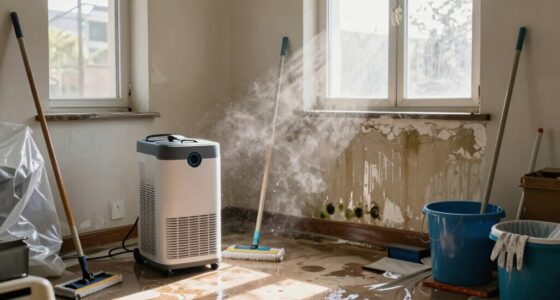
Moisture and mold can also contribute to musty smells in your garage. High humidity and poor ventilation create a perfect environment for mold spores to thrive. If you notice dampness or a musty odor, it’s essential to control humidity levels and improve airflow. Damp and humid conditions can create ideal mold and mildew environments, making it crucial to address any moisture issues. Repair any leaks, and consider using dehumidifiers to keep moisture levels below 50%.
Cleaning with antimicrobial agents can help you address small mold issues, but you might need professional help for widespread mold growth. Regular maintenance is key; remove any wet items and keep your garage organized to eliminate hidden moisture traps. By staying proactive, you’ll ensure your garage remains a pleasant and functional space.
As an affiliate, we earn on qualifying purchases.
Frequently Asked Questions
How Can I Identify the Source of Garage Odors?
To identify the source of garage odors, start by checking for spills or leaks from vehicles, fuel containers, or oil cans. Look for dust or residue on tools and surfaces that could trap smells. Inspect corners for mold or dampness, and guarantee good ventilation. Pay attention to any unusual scents from chemicals or decomposing materials. By pinpointing these areas, you’ll better understand and tackle the odor problem effectively.
Are There Health Risks Associated With Garage Odors?
Yes, there are health risks associated with garage odors. You might experience headaches, dizziness, or respiratory issues from prolonged exposure to volatile organic compounds (VOCs) and fumes. If you notice a persistent smell, it’s essential to ventilate the space to minimize these risks. Regularly check for leaks or spills, and consider using air purifiers to improve air quality. Your health’s worth the effort to keep your garage odor-free and safe.
How Often Should I Clean My Garage to Prevent Odors?
Cleaning your garage should be as regular as watering a plant—about once every season. This routine keeps odors at bay and helps maintain a tidy space. During each cleaning, focus on spills, clutter, and moisture buildup. If you notice persistent smells, consider cleaning more often or addressing specific issues like leaks. Don’t forget to ventilate your garage to guarantee fresh air flows through, preventing any unpleasant odors from settling in.
Can Garage Odors Affect My Home’s Indoor Air Quality?
Yes, garage odors can definitely affect your home’s indoor air quality. When volatile organic compounds and other fumes seep into your living spaces, they can lead to poor air quality and health issues. You might notice headaches, allergies, or respiratory problems as a result. To keep your air fresh, make certain proper ventilation in your garage, regularly clean spills, and store chemicals safely. Taking these steps helps protect your home’s air quality.
What Are the Best Products for Eliminating Garage Odors?
When it comes to eliminating garage odors, you’ve got to tackle the problem head-on. Start with activated charcoal bags, which absorb lingering smells effectively. For spills, enzyme cleaners work wonders on pet odors and oil stains. Baking soda’s a classic; sprinkle it around to neutralize odors. Ultimately, consider a good-quality air purifier with a HEPA filter to keep the air fresh. With these tools, you’ll have your garage smelling like a rose in no time!
As an affiliate, we earn on qualifying purchases.
Conclusion
In conclusion, tackling those troublesome garage odors is totally doable! With a little diligence and the right remedies, you can banish the bothersome scents of gasoline and oil. Don’t let unpleasant aromas overshadow your space; instead, embrace an environment that’s fresh and inviting. Remember, it’s all about regular maintenance, proper storage, and smart solutions. So, say goodbye to stubborn smells and savor a serene, soothing garage sanctuary!
As an affiliate, we earn on qualifying purchases.
As an affiliate, we earn on qualifying purchases.
Fall Picks
fall essentials
As an affiliate, we earn on qualifying purchases.