To reduce allergens in your bedding, wash it at least once a week. This helps eliminate dust mites and other allergens, promoting a healthier sleep environment. Use hot water and a quality detergent designed to tackle allergens. If you can’t use high heat, consider professional steam cleaning. Additionally, choose tightly woven fabrics and hypoallergenic materials to further minimize allergen build-up. Keep going to discover more effective strategies for managing your bedding allergens.
Open a free Amazon Business account
Business pricing, bulk buying and tax-exempt orders.
As an affiliate, we earn on qualifying purchases.
Key Takeaways
- Wash bedding at least once a week to effectively reduce dust mites and allergens.
- Use high-heat drying settings or professional steam cleaning for optimal allergen elimination.
- Choose tightly woven and hypoallergenic materials to minimize mite colonization.
- Maintain low humidity levels in your home to inhibit mite and mold growth.
- Regularly replace bedding materials to prevent allergen accumulation and enhance cleanliness.
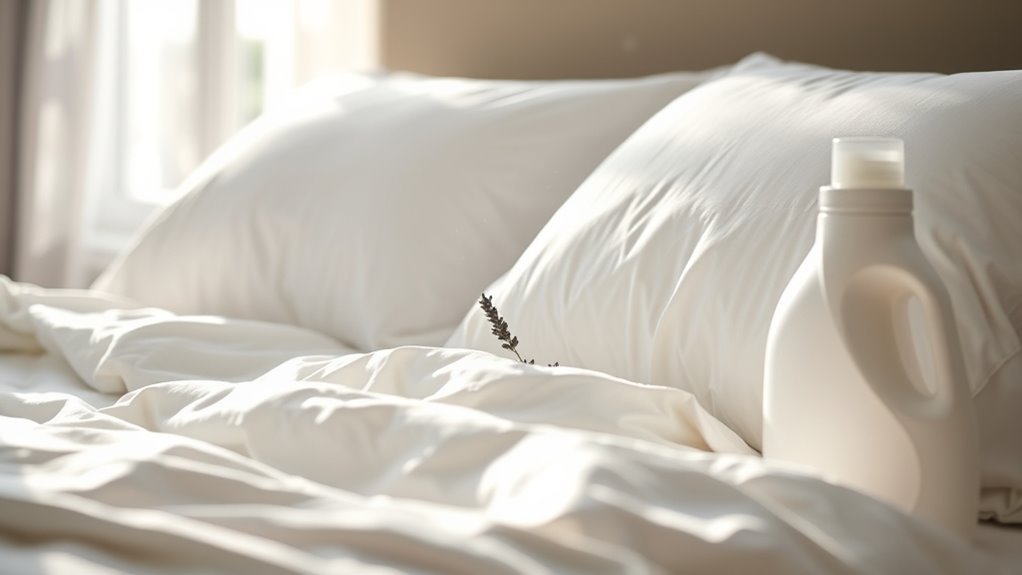
The laundry process is just as important as the frequency. High-heat tumble drying after washing helps to denature proteins and eliminate any remaining mites. If you can’t use high heat, look for allergen-encasing covers or consider professional cleaning methods like steam cleaning. Remember that mechanical removal during washing is *key*, so always opt for effective detergents designed to reduce allergens.
Choosing the right bedding materials can also make a difference. Opt for tightly woven fabrics like microfiber or high-thread-count cotton, which are less hospitable to dust mites. Hypoallergenic fills such as memory foam or latex resist mite colonization better than traditional feather or wool fillings. Additionally, moisture-wicking fabrics can help reduce humidity, creating an environment less favorable for mites and mold.
With the right washing routine and bedding choices, you can *considerably* reduce allergen levels in your bedroom. This proactive approach not only helps create a cleaner sleeping environment but can also alleviate allergy symptoms. By prioritizing your washing schedule and bedding materials, you’re taking essential steps to *guarantee* a healthier, more restful night’s sleep. So, don’t overlook the power of fresh, clean bedding—it could make all the difference for your health and well-being.
Frequently Asked Questions
Can I Use Cold Water to Wash Bedding for Allergen Removal?
No, you can’t effectively use cold water to wash bedding for allergen removal. To eliminate dust mites and allergens, you need to wash your bedding in hot water, ideally at 130°F or higher. Cold water won’t kill dust mites or remove allergens adequately. Stick to weekly hot washes and follow up with a hot dryer cycle to make certain you’re minimizing allergens in your bedroom for better health and relief from allergy symptoms.
How Do I Know if I Have Dust Mites in My Bedding?
You can’t see dust mites, but signs of their presence include frequent sneezing, runny nose, or itchy skin when you’re in bed. If you notice these symptoms, especially at night, it might indicate a dust mite issue. Additionally, if your bedding has a musty smell or you see dark spots on sheets, it’s a good idea to investigate further. Regular washing and using allergen-proof covers can help manage any potential dust mite problems.
Are Hypoallergenic Pillows Effective Against Allergens?
When it comes to allergens, you can’t judge a book by its cover. Hypoallergenic pillows can be effective at reducing allergen exposure, as they’re typically made from materials that resist dust mites and other irritants. However, they’re not a cure-all. Regular washing and proper care are still essential. Pairing these pillows with allergen-proof covers and maintaining a clean environment will give you the best chance at a restful, allergy-free sleep.
What Type of Vacuum Cleaner Is Best for Allergen Removal?
For allergen removal, a vacuum cleaner with a HEPA filter is your best bet. These filters trap tiny particles, including dust mites and pet dander, preventing them from being released back into the air. Choose a vacuum with strong suction and specialized attachments for upholstery and crevices. Regularly vacuuming floors, carpets, and furniture will help reduce allergen levels, making your living space healthier and more comfortable for you and your family.
How Can I Reduce Allergens in My Child’s Bedroom?
Imagine your child’s bedroom as a fortress against allergens! To reduce allergens, start by washing bedding weekly in hot water, ensuring you dry everything thoroughly. Use allergen-proof covers on pillows and mattresses, and keep surfaces dust-free by vacuuming often. Minimize clutter, especially stuffed toys, and opt for hard flooring instead of carpet. Consider using a dehumidifier to keep humidity low, which helps control dust mites and other allergens.
Conclusion
To truly combat allergens in your bedding, wash your sheets and pillowcases weekly, and don’t forget about your duvet and mattress protector—clean those every month. Did you know that dust mites, a common allergen, can double in population every 20 days in unwashed bedding? By sticking to this regular cleaning routine, you can markedly reduce allergens, improve your sleep quality, and breathe easier. So, don’t wait—make washing your bedding a priority for a healthier home!
NFL season / tailgating Picks
team gear
As an affiliate, we earn on qualifying purchases.