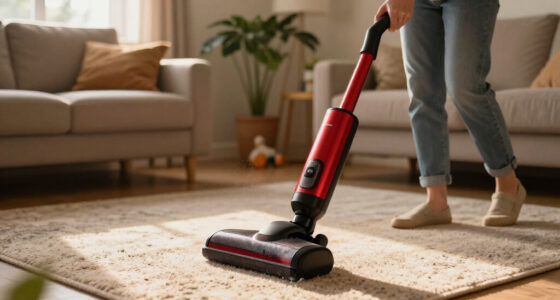

Pet dander mostly comes from tiny skin flakes, saliva, and urine proteins, not pet fur or hair. To really reduce allergens, focus on regular cleaning like vacuuming with HEPA filters, wiping surfaces with damp cloths, and washing your pet’s bedding often. Proper ventilation and air purifiers also help keep airborne dander down. By understanding these effective steps, you can create a healthier space—discover more tips to manage pet dander effectively.

Get cleaning gear delivered free with Prime
- Fast, free delivery on millions of items
- Prime Video, Amazon Music and more included
- Member-only deals all year
Key Takeaways
- Focus on cleaning dander proteins in saliva, urine, and skin flakes, not pet hair.
- Use HEPA vacuum cleaners and microfiber cloths to trap and remove airborne and surface dander.
- Regularly wash pet bedding, toys, and upholstery in hot water to eliminate allergens.
- Maintain proper ventilation and replace air filters to reduce airborne pet dander.
- Groom pets regularly to minimize loose skin flakes and dander shedding.
Understanding the Composition of Pet Dander
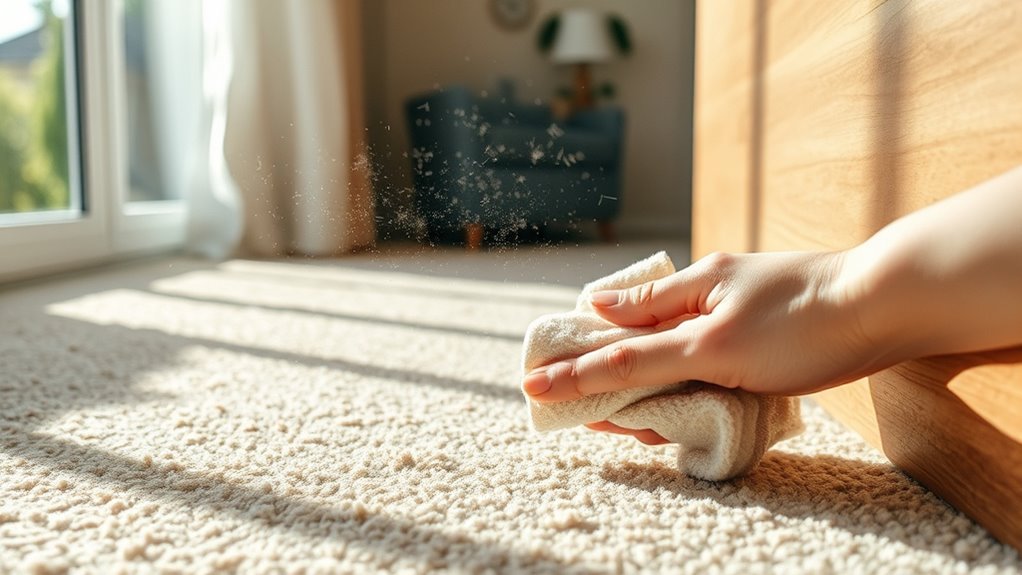
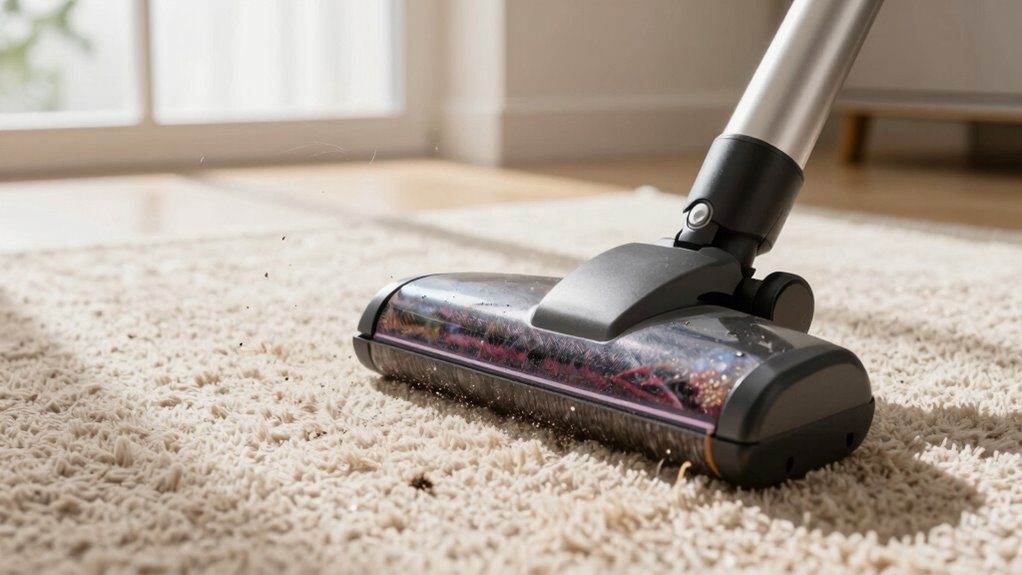
Understanding the composition of pet dander is essential for effective cleaning. Many pet hair myths suggest that fur is the main allergen, but that’s not entirely accurate. Dander vs fur is a common misconception; pet fur is just outer hair, while dander consists of tiny skin flakes and saliva particles. These microscopic particles become airborne easily and cling to surfaces, triggering allergies. Unlike long fur strands, dander is lightweight and remains suspended in the air longer. Recognizing the importance of airborne particles can also enhance your overall approach to managing pet-related allergens. Regular cleaning, including vacuuming with a HEPA filter and wiping surfaces, becomes more effective when you understand that pet dander is the primary culprit, not just pet hair or fur. Knowing that allergen particles can settle into soft furnishings highlights the need for targeted cleaning strategies. Additionally, understanding the composition of pet dander helps in choosing the most effective cleaning tools and techniques to reduce airborne allergen levels.
Why Hair Isn’t the Main Culprit in Allergies

Many people assume pet hair causes allergies, but the main problem is actually something else. It’s not the hair itself, but proteins in dander that trigger reactions. Understanding this helps you focus on cleaning the right sources for relief. Additionally, regular cleaning can reduce allergen levels effectively, making your environment safer and more comfortable. Using air filtration systems can further decrease airborne allergens and improve overall air quality. Being aware of how dander accumulates in your home can help you develop more targeted cleaning routines for allergy relief. Recognizing the role of dander’s composition can also guide you in choosing effective cleaning methods to minimize allergen presence. Implementing proper cleaning techniques can also prevent the buildup of allergenic proteins, reducing overall exposure.
Allergen Sources Beyond Hair
While pet hair often gets the blame for allergies, the real culprits are tiny particles called dander and skin flakes that pets shed constantly. These microscopic allergens cling to surfaces and are easily airborne. Beyond hair, sources like pet saliva and pet urine also contribute significantly to allergic reactions. When pets lick themselves, saliva containing allergens spreads onto fur and skin, then dries and becomes airborne. Pet urine, especially in accidents, releases proteins that linger in carpets and upholstery, intensifying allergy symptoms. To effectively reduce these allergens, focus on cleaning areas contaminated by saliva and urine. Regular washing of bedding, cleaning upholstery, and vacuuming with HEPA filters can help remove not only hair but these hidden allergen sources as well.
| Source | Description | Key Contaminants |
|---|---|---|
| Pet saliva | Licked fur and skin | Allergens in saliva |
| Pet urine | Accidents on carpets and furniture | Urinary proteins |
| Skin flakes | Shed from pet’s skin | Dander, skin flakes |
| Dander particles | Microscopic shed skin | Allergic proteins |
| Airborne particles | Dust and allergens in the air | Allergen spread |
Protein in Dander Drives Reactions
Although pet hair is visible and often blamed for allergic reactions, the real trigger lies in the proteins found in dander. These proteins cause protein reactions that activate your immune system, leading to allergy symptoms. It’s not the hair itself, but the allergen triggers attached to or embedded within the dander that provoke reactions. When pet dander becomes airborne, these protein particles easily settle on surfaces or are inhaled, intensifying allergies. Cleaning alone might remove hair, but it won’t eliminate these potent proteins. To truly reduce allergic responses, focus on cleaning methods that target and remove the protein-rich dander particles. Using specialized cleaning tools designed to capture microscopic particles can significantly enhance allergen removal. By doing so, you minimize allergen triggers and lessen the severity of your pet allergy symptoms.
Identifying Common Sources of Pet Skin Flakes
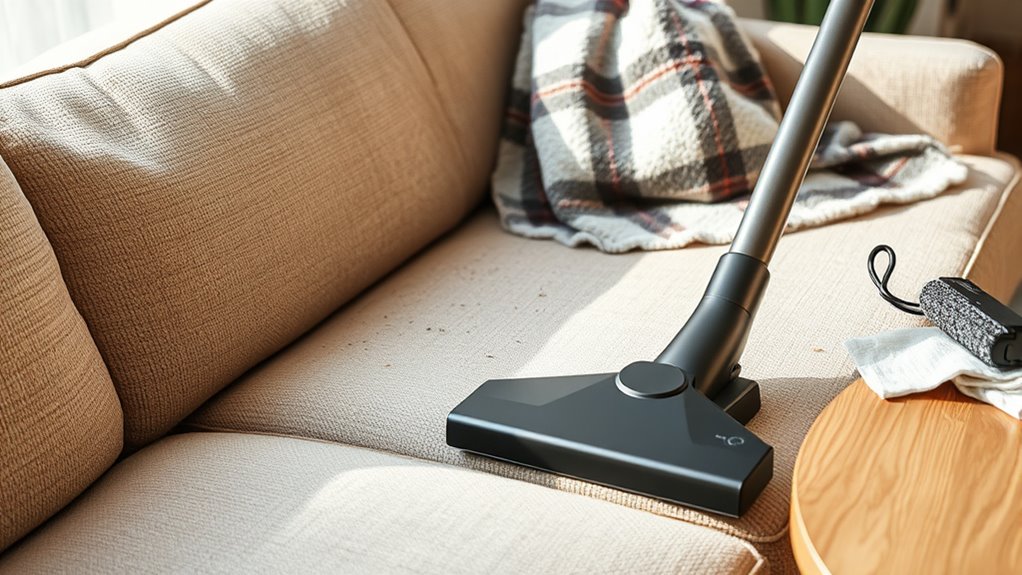
Pet skin flakes, commonly known as dander, often originate from specific sources within your home. Your pet’s skin constantly sheds, especially if they have thick fur or skin conditions. Regular pet grooming helps reduce loose skin flakes and minimizes their spread. Pay attention to areas where your pet spends most of their time, like bedding, furniture, and carpets. These spots tend to harbor the most dander. If you or someone in your household has allergies, consult with a doctor about allergy medications that can help manage reactions. Recognizing these common sources allows you to target your cleaning efforts more effectively. Implementing effective cleaning techniques can significantly reduce pet dander in your environment. Understanding pet dander can help you implement more effective cleaning strategies and improve indoor air quality. Additionally, using high-efficiency particulate air (HEPA) filters can capture airborne pet dander, further reducing allergen levels indoors. Regularly washing your pet’s bedding and toys also contributes to lowering the amount of dander buildup in your home. Incorporating proper piercing aftercare routines, such as using saline solutions and avoiding irritants, can also prevent the buildup of irritants that may contribute to skin issues and dander production.
Effective Cleaning Techniques to Minimize Dander
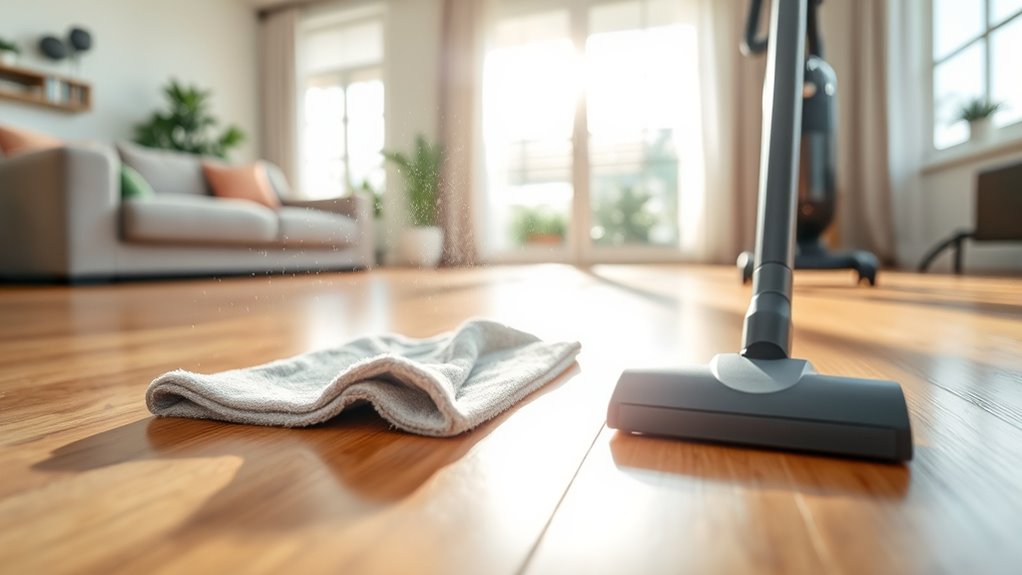
Once you’ve identified where pet skin flakes tend to accumulate, implementing effective cleaning techniques is key to keeping dander levels low. Regular pet grooming reduces shedding and loosens skin flakes, making cleaning easier. Focus on brushing your pet outside or in well-ventilated areas to minimize loose dander. When cleaning furniture, vacuum thoroughly with a HEPA filter to trap dander particles. Follow up with damp cloths or microfiber cloths to wipe down surfaces, preventing dander from becoming airborne again. Wash pet bedding and throw blankets frequently in hot water. Mattresses, cushions, and upholstered furniture should be vacuumed regularly and cleaned with appropriate fabric cleaners. Using specific cleaning tools like air purifiers with HEPA filters can further reduce airborne pet dander. Proper ventilation is also important to improve indoor air quality and dander buildup over time. Regularly inspecting and replacing filters in your heating and cooling systems can significantly improve indoor air quality, and ensuring proper air circulation helps to control pet dander levels. These targeted cleaning steps help control pet dander buildup and improve indoor air quality.
Choosing the Right Tools and Products for Dander Control
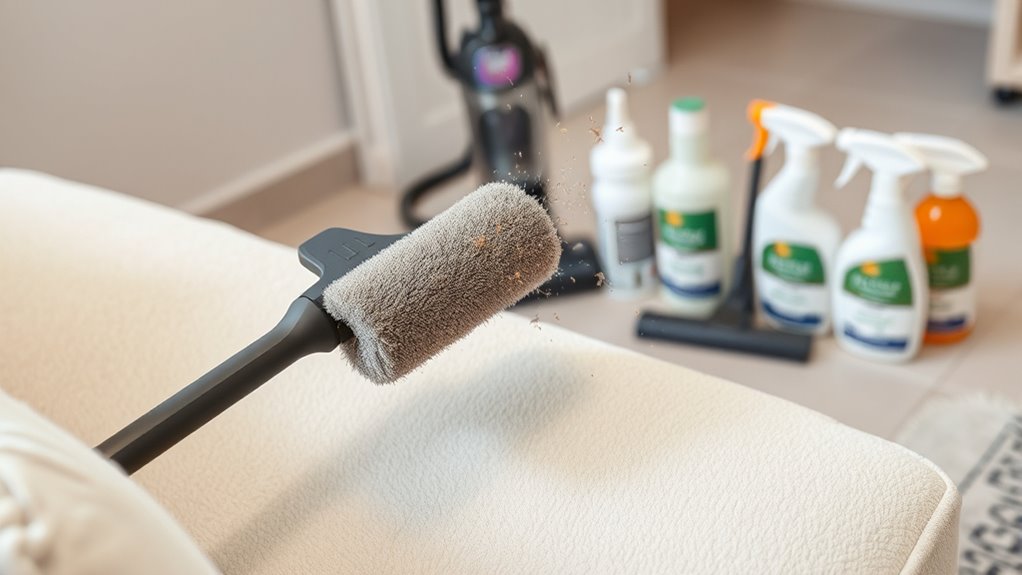
Choosing the right tools and products is essential for effectively controlling pet dander in your home. Use pet grooming tools like brushes with fine bristles to reduce loose dander during grooming sessions. Select cleaning products specifically designed to trap or neutralize allergens, such as HEPA vacuum cleaners and allergen sprays. The right equipment makes a significant difference in removing pet dander from surfaces and air. Here’s a quick guide:
| Tool/Product | Purpose |
|---|---|
| HEPA vacuum cleaner | Captures microscopic dander |
| Microfiber cloths | Traps dander from surfaces |
| Pet grooming brushes | Reduces loose hair and dander |
| Allergen-specific sprays | Neutralizes airborne allergens |
| Air purifiers | Improves air quality overall |
Regular Maintenance and Long-Term Strategies
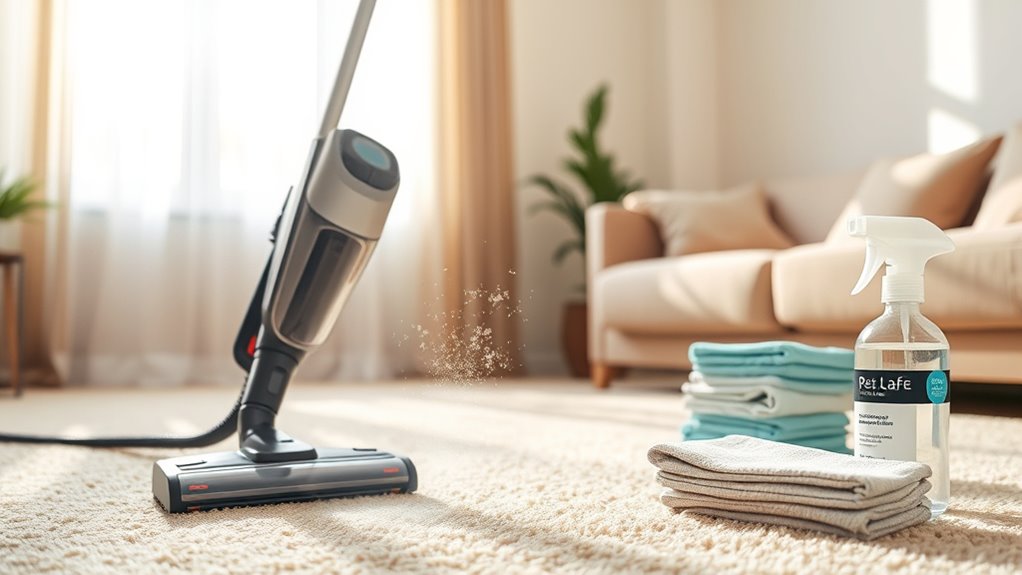
Maintaining a regular cleaning routine is key to controlling pet dander over the long term. You should vacuum frequently, use air purifiers to filter airborne particles, and wash bedding regularly. These strategies help reduce dander buildup and keep your home healthier for everyone. For optimal results, consider investing in a vacuum with HEPA filters, which can effectively trap microscopic allergens and improve indoor air quality over time. Incorporating air purifiers with advanced filtration technology can further reduce airborne pet dander and allergens, enhancing your indoor environment. Understanding air filtration principles can help you choose the most effective systems for your space.
Consistent Vacuuming Schedule
Establishing a consistent vacuuming schedule is essential for effectively reducing pet dander in your home. You should determine a vacuum frequency that targets high-traffic areas and places where pet fur and dander accumulate most. Ideally, vacuum at least twice a week, but more often if you have multiple pets or allergies. Stick to a regular cleaning schedule to prevent dander buildup and keep your environment healthier. Use a vacuum with a HEPA filter to trap tiny particles and ensure better air quality. Be diligent about reaching under furniture, along baseboards, and other hidden spots. Consistency is key; the more regularly you vacuum, the fewer allergens will linger, making it easier to maintain a dander-free space over the long term.
Use Air Purifiers
Using air purifiers is an effective way to continuously reduce pet dander in your home, but their benefits depend on proper regular maintenance. To maximize their effectiveness, you need to keep the filtration system clean and replace filters as recommended. Choose an air purifier with a high-efficiency particulate air (HEPA) filter for ideal dander removal. Position the device in high-traffic areas or bedrooms for better results. Regularly monitor the filter indicator and clean or swap filters promptly. Proper maintenance ensures your air purifier works at peak performance, reducing allergens and improving indoor air quality.
- Replace filters every 6-12 months
- Clean the exterior and air intake vents
- Ensure the unit is correctly positioned
- Use devices with a true HEPA filtration system
Regular Bedding Washes
Have you ever wondered how to keep pet dander levels down in your home over the long term? Regularly washing pet bedding is essential. Use hot water and a pet-safe detergent to remove dander buildup from blankets, cushions, and beds. This prevents dander from accumulating and spreading throughout your space. Don’t forget to wash or vacuum furniture covers and cushions regularly, as these are prime dander hotspots. Consistent furniture cleaning, including upholstery and fabric surfaces, helps reduce airborne particles. By making pet bedding washes and furniture cleaning part of your routine, you limit dander circulation and improve indoor air quality. This simple maintenance step considerably contributes to a healthier environment for you and your pets.
Creating an Allergens-Reduced Living Environment
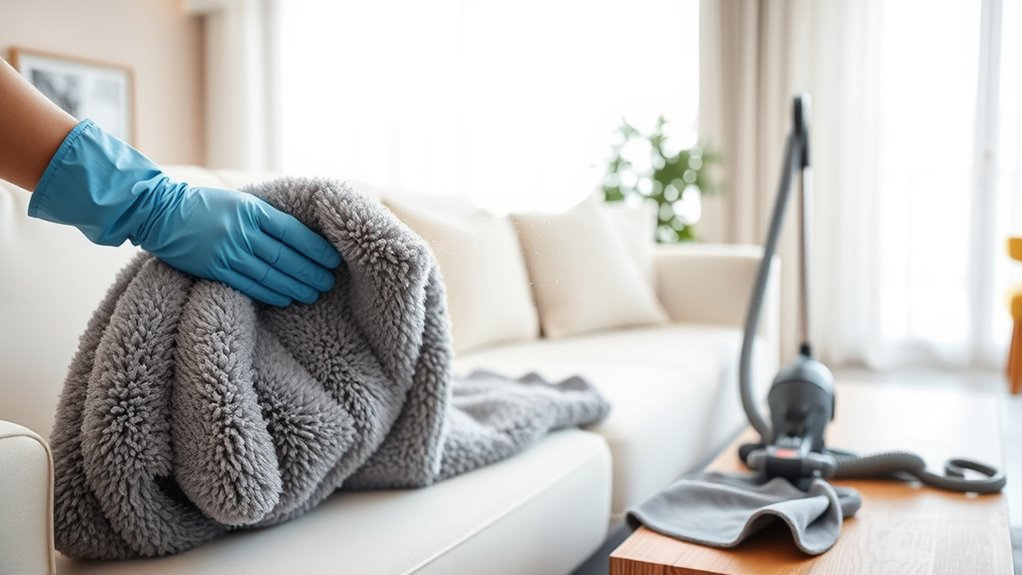
Creating an allergen-reduced living environment starts with regular cleaning routines that target pet dander. Focus on minimizing pet hair and understanding shedding patterns to reduce airborne allergens effectively. Consistent vacuuming with a HEPA filter can trap pet hair and dander before they settle. Use washable upholstery covers and slipcovers to prevent buildup. Maintain low humidity levels to limit mold growth and dust mites. Consider air purifiers with HEPA filters to continuously filter airborne allergens. Additionally, grooming your pet regularly can reduce shedding and dander release. By staying proactive with these steps, you create a healthier space that minimizes allergen exposure and keeps pet dander levels under control.
Frequently Asked Questions
How Long Does Pet Dander Stay Airborne After Cleaning?
Airborne pet particles can stay in the air for up to several hours after cleaning, depending on ventilation and airflow. If you don’t open windows or use air purifiers, lingering dander may remain in the air longer, increasing allergen exposure. To reduce airborne pet particles quickly, ventilate your space thoroughly and run an air purifier. This helps clear out lingering dander and improves indoor air quality faster.
Can Air Purifiers Completely Eliminate Pet Allergens?
Air purifiers considerably improve allergen removal, but they can’t completely eliminate pet allergens. Their effectiveness depends on the filter quality and placement. To maximize results, combine air purifiers with allergen removal techniques like regular cleaning, vacuuming with HEPA filters, and bathing your pet. You’ll reduce airborne dander and improve indoor air quality, but remember, no single solution is foolproof—ongoing maintenance is key for best results.
Are There Specific Breeds That Produce Less Dander?
Think of hypoallergenic breeds as gentle guardians, quietly reducing dander and offering relief. These breeds naturally produce less dander, making dander reduction easier for allergy sufferers. While no dog is completely allergen-free, choosing hypoallergenic breeds like Poodles or Bichon Frises helps minimize allergic reactions. Embrace these companions for a calmer, healthier home, knowing your choice plays a crucial role in managing pet allergens effectively.
What Are Natural Remedies to Reduce Pet Dander Indoors?
You can try natural remedies like homemade sprays and herbal remedies to reduce pet dander indoors. Mix water with a few drops of essential oils such as eucalyptus or lavender in a spray bottle, then lightly mist furniture and pet areas. Herbal remedies like chamomile or green tea sprays can soothe your pet’s skin and reduce dander production. Regularly grooming your pets also helps, combined with these natural solutions for better results.
How Often Should I Replace HVAC Filters for Allergy Control?
You should replace your HVAC filters every 30 to 60 days for maximum air filter maintenance and allergy control. Regularly switching filters helps trap pet dander, dust, and allergens, keeping your indoor air cleaner. Use allergy-friendly products and high-efficiency filters designed for allergy sufferers. Consistent replacement ensures your system runs efficiently, reduces allergy symptoms, and maintains a healthier environment for you and your pets.
Conclusion
By understanding what pet dander truly is and adopting targeted cleaning strategies, you can turn your home into a fortress against allergens. Think of your efforts as a diligent gardener tending to a delicate flower—each step helps keep the harmful particles at bay. With consistent maintenance and the right tools, you’ll create a living space where love for your pet doesn’t have to come with a side of sneezes.
Halloween Picks
halloween
As an affiliate, we earn on qualifying purchases.