If your robot vacuum wheels are slipping, start by checking for debris tangled around the wheels. Clear any dirt from the treads and inspect for wear. Make sure the cleaning area is free of obstacles and avoid high-pile carpets that reduce traction. Clean the sensors and check motor connections for damage or overheating. To find out more about maintaining peak performance, keep exploring effective tips for a better cleaning experience.

Get cleaning gear delivered free with Prime
- Fast, free delivery on millions of items
- Prime Video, Amazon Music and more included
- Member-only deals all year
Key Takeaways
- Inspect wheels for debris, hair, or entanglements, and remove them carefully with tweezers or a brush.
- Check wheel treads for wear or damage; replace wheel modules if treads are no longer visible.
- Clean sensors and optical encoders with isopropyl alcohol to ensure proper navigation and traction.
- Remove physical obstacles and clutter from the cleaning area to improve movement and sensor functionality.
- Avoid high-pile carpets and slippery surfaces that can affect wheel traction and overall performance.
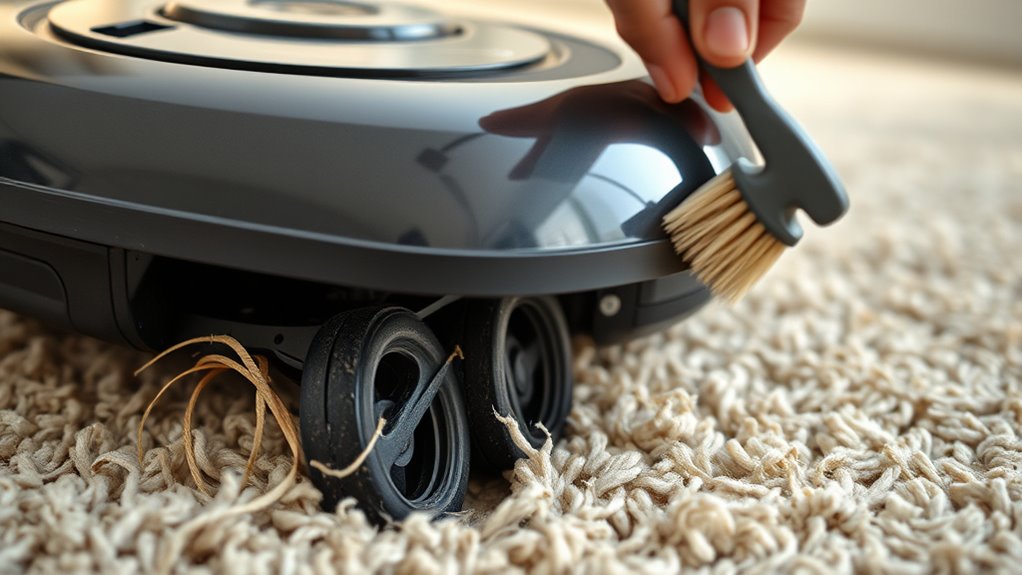
If you’ve noticed your robot vacuum wheels slipping, it can be frustrating as it struggles to navigate your floors. One of the most common causes of this issue is debris, hair, or string tangled around the wheels and axles. This buildup can lead to an imbalance that affects performance and traction. Regularly inspect the wheels for visible dirt or entanglements and remove them using tweezers or a brush.
Another crucial aspect to check is the wheel treads. If they’re dirty or worn, it can cause uneven movement or even lead to the vacuum wobbling. Ensure the tires are free of tears or excessive wear. If the treads are no longer visible, it’s time to replace the wheel modules. High-pile carpets or slippery floors can exacerbate these issues, so always keep that in mind when evaluating your vacuum’s behavior. Physical obstacles can also interfere with proper traction and navigation, so ensure your cleaning area is free from clutter. Regular maintenance can significantly improve your vacuum’s overall performance.
Check wheel treads for dirt and wear; replacing them may be necessary to ensure smooth vacuum operation on various surfaces.
Don’t overlook the importance of the sensors and optical encoders. Dirty sensors can lead to misreadings, causing your vacuum to veer off course. Clean the encoders with isopropyl alcohol to restore their functionality. Additionally, check for any cracks in the magnet disk on the motor. A damaged disk can disrupt the speed sensor and cause erratic movements.
Sometimes, the problem might lie with the motor itself. If you notice that one wheel isn’t spinning, it could be due to a failing wheel motor or overheating from debris buildup. Inspect the motor for loose wires or dark residue, which may indicate a potential failure. If necessary, you might need to solder or replace damaged connections.
It’s also essential to address uneven wheel resistance. If one wheel is more resistant than the others, it can lead to endless circling. Try pushing the wheels up and down to dislodge any trapped debris, and reset the vacuum by holding the SPOT and DOCK buttons for ten seconds.
Finally, consider the surfaces and obstacles in your home. High-pile carpets, wet floors, or physical obstructions can mimic obstacles, causing the vacuum to misinterpret its environment. Ensure your docking surface is flat and clear of any clutter to prevent navigation issues.
Frequently Asked Questions
How Often Should I Clean My Robot Vacuum Wheels?
You should clean your robot vacuum wheels at least once a month to maintain ideal performance. However, if you notice it struggling on carpets or picking up debris, clean them more frequently. Check for hair or dirt buildup and remove any obstructions. Regular maintenance not only extends the life of your vacuum but also ensures it operates efficiently on various surfaces, keeping your home clean and tidy.
Can I Use Oil to Lubricate the Wheels?
You shouldn’t use oil to lubricate your robot vacuum wheels. In fact, over 60% of users experience issues with wheel traction due to improper lubrication. Instead, focus on keeping the wheels clean and debris-free. If you notice wear or uneven movement, replace the wheels or clean them thoroughly. Regular maintenance will ensure your vacuum runs smoothly and effectively, prolonging its lifespan and enhancing its cleaning performance on various surfaces.
What Surfaces Are Best for Robot Vacuum Traction?
Hard, flat surfaces like tile, hardwood, and laminate are best for your robot vacuum’s traction. These surfaces allow smooth movement and reduce the risk of slipping. Low-pile carpets can also work well, but high-pile carpets may cause issues. Make sure your vacuum’s wheels stay clean and free from debris to maintain peak performance. If you provide a clutter-free environment, you’ll enhance your vacuum’s efficiency on these surfaces.
Do Robot Vacuums Work on Thick Carpets?
Oh sure, your robot vacuum’s going to glide effortlessly over thick carpets like a champion skater at the Olympics! In reality, though, it’s more like watching a toddler try to walk in oversized shoes. It struggles! While some models handle low-pile carpets like pros, thick ones can trip them up. You’ll want to check your vacuum’s specs to avoid turning your floor into an obstacle course. Stick to low-pile for the best results!
How Can I Tell if My Motor Is Damaged?
To tell if your motor’s damaged, listen for unusual noises like grinding or buzzing. If your vacuum struggles to move or suddenly stops, that’s a sign too. Check for overheating—if it feels hot to the touch, it might be malfunctioning. You should also inspect the motor connections for any visible damage or wear. If you notice any of these issues, it’s best to consult customer support or consider a replacement.
Conclusion
In the same way a car struggles on an icy road, your robot vacuum can slip and slide on tricky surfaces. Just like you’d equip your vehicle with winter tires, you can enhance your vacuum’s traction with simple fixes like cleaning the wheels or adjusting the floor settings. With a little effort, you’ll have your vacuum gliding smoothly across your floors again, making cleaning feel like a breeze instead of a bumpy ride.
Fall Picks
fall essentials
As an affiliate, we earn on qualifying purchases.