If you notice a smell coming from your vacuum hose, it’s likely due to hidden moisture trapped inside. This moisture can lead to microbial growth and unpleasant odors. Causes include residual water from cleaning damp surfaces or organic material buildup like food particles. Regularly cleaning or replacing filters, flushing with warm water, and ensuring everything dries completely can help. Want to tackle this odor issue effectively? There’s more to learn about maintaining your vacuum!

Get cleaning gear delivered free — and shop member deals
- Fast, free delivery on millions of items
- Access to Prime Big Deal Days deals on October 6–7
- Prime Video, Amazon Music and more included
Key Takeaways
- Trapped moisture inside the vacuum hose can lead to unpleasant odors and microbial growth.
- Residual water from cleaning wet surfaces contributes to persistent smells in the hose.
- Organic material buildup, such as food particles, can exacerbate odor issues in vacuum hoses.
- Regular cleaning and thorough drying of the hose are essential to prevent odor development.
- Inspecting for debris, dark streaks, or blockages can help diagnose and resolve odor problems.

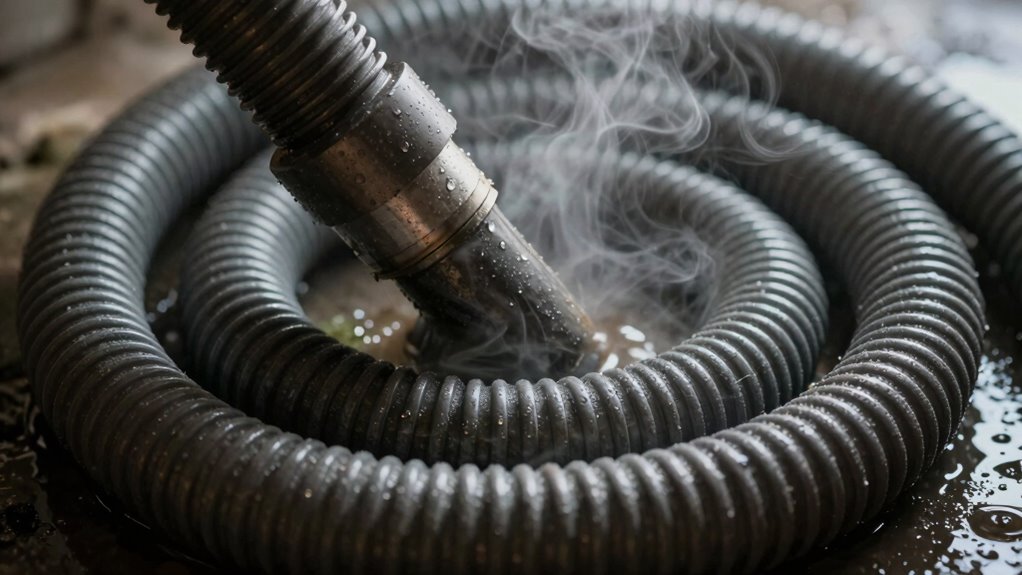
When you notice an unpleasant smell coming from your vacuum hose, it’s often a sign of trapped moisture or microbial growth inside. This issue usually arises after cleaning wet surfaces or vacuuming damp carpets, which can leave residual water in the hose. If you’ve cleaned recently, that moisture creates a film that encourages bacteria and mold to thrive, producing musty odors. The damp environment might also be a result of poor drying after rinsing removable parts or storing the vacuum in a humid area, like a basement. Regularly cleaning or replacing vacuum filters can also help mitigate odor issues and improve air quality.
If you frequently vacuum up spills or wet carpets before they’re fully dried, you drastically increase the chances of developing that unpleasant smell. Areas rich in organic material, such as kitchens or pet zones, are particularly problematic. Food particles and skin oils trapped in the hose contribute to microbial growth, while older or low-quality hoses made from PVC are more susceptible to degradation and odors. If you haven’t been diligent about changing filters or cleaning the hose, you’re allowing the buildup of odor sources.
You might notice a musty, moldy smell when you turn on the vacuum, which indicates moisture or biological growth inside the hose. If the smell persists even when the vacuum is dry, it could suggest off-gassing from the hose material itself. Inspecting the hose for visible debris, dark streaks, or algae-like films can also provide clues about microbial colonization. Reduced suction or intermittent airflow, combined with odor, points to blockages that retain moist debris, which exacerbates the issue.
A musty smell from your vacuum often signals moisture or microbial growth in the hose, indicating a need for thorough cleaning.
To tackle this problem, detach the hose and flush it with warm water. Following that, a 1:1 vinegar solution or a mild detergent rinse can help reduce biofilms. Make sure to thoroughly air-dry the hose before reassembling it. Using a long brush or a flexible cleaning snake can help remove trapped debris before washing, ensuring a deeper clean. After cleaning, you can run the vacuum on a scrap of towel with baking soda in the canister to absorb any lingering odors.
Frequently Asked Questions
How Can I Identify Moisture in My Vacuum System?
To identify moisture in your vacuum system, check for low suction at inlets, especially upstairs. Look for any signs of liquid or brown goo dripping from inlets, which indicates condensation. Pay attention to any unpleasant smells, as these can signal moisture issues. If you notice significant temperature differences between areas, it could exacerbate condensation. Regularly inspect your hoses and connections for wear or leaks, as they can also let moisture in.
What Are the Signs of a Failing Vacuum Hose?
You can spot a failing vacuum hose by looking for kinks or cracks near the fittings, which may cause product escape. If you notice discoloration or hardening, that’s a sign of aging. A significant drop in suction power or unexpected bursts indicates low-pressure issues. Additionally, if you see brown goo or smell mildew, it’s time to check your hoses. Regular maintenance and inspection can help prevent these problems from escalating.
How Often Should I Replace Vacuum Hoses?
You should replace vacuum hoses every 1 to 3 years, depending on usage and conditions. Curiously, about 30% of vacuum-related issues stem from old or damaged hoses. Regularly inspect them for signs of kinking, cracking, or discoloration. If you notice any wear, it’s best to replace the hose sooner. Keeping up with maintenance not only prolongs the life of your vacuum system but also guarantees ideal performance and efficiency.
Can Condensation Affect Vacuum Efficiency?
Yes, condensation can definitely affect your vacuum efficiency. When moisture builds up in the system, it creates blockages and reduces suction power. You might notice a decrease in performance, especially if condensation drips into the hoses or units. To maintain peak vacuum efficiency, guarantee proper insulation and regular maintenance. Keeping your system dry will help you avoid these issues and ensure it runs smoothly for longer periods.
What Materials Are Best for Vacuum Hoses?
When it comes to vacuum hoses, you’ll want the best materials that could rival superhero strength! Look for hoses made of reinforced rubber or polyurethane; they’re durable and resistant to kinking and cracking. These materials also withstand temperature extremes, ensuring consistent performance. If you’re using hoses in high-pressure situations, consider stainless steel braided options for added durability. Always check for flexibility and a good bend radius to prevent future problems.
Conclusion
Just like a forgotten garden hose left out in the rain, your vacuum hose can harbor hidden moisture, leading to unpleasant odors that linger long after you’ve cleaned. By addressing this unseen issue, you’re not just eliminating smells; you’re nurturing the health of your home. So, take a moment to inspect and dry your vacuum hose. In doing so, you’re not just maintaining a tool; you’re cultivating a fresh, inviting atmosphere that welcomes all who enter.
Fall Picks
fall essentials
As an affiliate, we earn on qualifying purchases.