
To prevent mold in your carpet cleaner hoses and nozzles, choose smooth, non-porous materials and avoid any designs that trap moisture. After use, flush hoses with hot water and force out remaining water. Hang them vertically to encourage drainage and keep the environment below 50% humidity. Store completely dry hoses in breathable racks. Regular checks for discoloration or odors can help maintain hygiene. Discover more tips to keep your equipment mold-free.

Get cleaning gear delivered free with Prime
- Fast, free delivery on millions of items
- Prime Video, Amazon Music and more included
- Member-only deals all year
Key Takeaways
- Choose smooth-bore, non-porous hoses made from materials like polyethylene or PVC to inhibit moisture retention.
- Flush hoses with hot water after use, then force-extract residual water to prevent mold growth.
- Hang hoses vertically with nozzles facing down to promote complete drainage and drying.
- Regularly inspect and clean nozzles, using antimicrobial solutions to eliminate potential biofilm and mold.
- Store hoses in a climate-controlled environment with humidity below 50% to reduce mold risk.

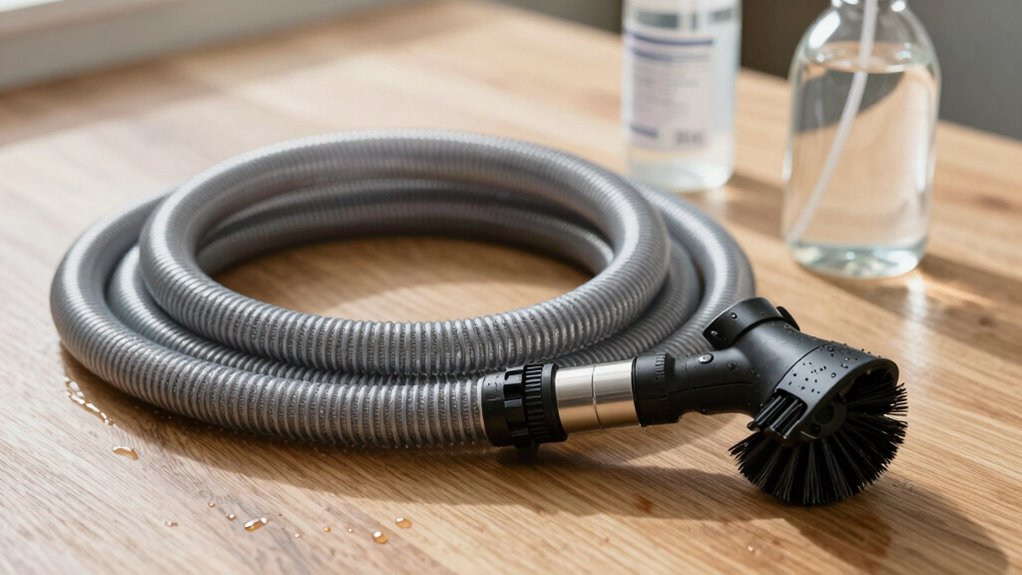
How can you effectively prevent mold from taking root in your carpet cleaner hoses? Start by selecting the right hoses. Choose smooth-bore, non-porous materials like polyethylene, PVC, or reinforced rubber. These materials resist microbial growth better than textile or foam-lined hoses. Ensure that your hoses have antimicrobial additives when available, as these help inhibit biofilm formation. It’s essential to avoid designs with low spots or U-bends, as these areas can trap moisture after use. Additionally, using at-home beauty technology can provide insights into maintaining cleanliness and hygiene.
After each cleaning session, flush your system with clean hot water to remove any residual liquid. Immediately force-extract any remaining water using your machine’s vacuum or compressed air. This step is vital because mold can begin to grow within 24 to 48 hours if humidity and nutrients are present. Once you’ve flushed the hoses, hang them vertically, ensuring that nozzles face down to promote gravity drainage and air circulation.
Flush your system with hot water after cleaning, extract residual moisture, and hang hoses vertically for optimal drainage and air circulation.
For nozzle and wand construction, opt for corrosion-resistant materials like stainless steel or non-porous plastics. These types limit surface degradation and pitting where mold can thrive. Design nozzles with minimal internal ledges or dead spots to ensure complete drainage after operation. Implement removable tips or snap-off end caps for thorough internal cleaning and visual inspection.
Maintain a rigorous cleaning schedule. Use EPA-registered antimicrobial solutions to disinfect hoses and nozzles periodically. Implement enzyme treatments or hot-water plus surfactant cleaning to prevent mature biofilm formation. Always follow the chemical contact-time directions and perform spot tests to avoid damaging your equipment. Regular cleaning is crucial in preventing mold growth.
Monitor your equipment regularly. Inspect the internal surfaces of hoses and nozzles before and after each job. Look for discoloration, slime, or musty odors that indicate microbial growth. Document your cleaning cycles to ensure you’re maintaining a consistent routine.
Lastly, store your equipment in a climate-controlled environment. Aim for indoor relative humidity below 50% to deter mold growth. Avoid coiling wet hoses; if coiling is necessary, ensure they’re completely dry first and use breathable racks. By following these steps, you can effectively reduce the risk of mold developing in your carpet cleaner hoses and nozzles, keeping your equipment in prime condition for every job.
Frequently Asked Questions
Can I Use Vinegar to Clean My Carpet Cleaner Hoses?
Yes, you can use vinegar to clean your carpet cleaner hoses. Vinegar’s natural acidity helps break down residues and neutralize odors. Just mix equal parts vinegar and water, then run the solution through the hoses. Let it sit for about 30 minutes before rinsing thoroughly with clean water. This method’s effective, but remember to dry the hoses completely afterward to prevent mold growth. Regular maintenance with vinegar can keep your equipment fresh and functional.
How Often Should I Inspect My Hoses for Mold?
You should inspect your hoses for mold before every job. This routine check helps you catch any discoloration, slimy residue, or musty odors early on. If you notice any signs of mold, replace the affected hoses or clean them thoroughly before using them again. Keeping a regular inspection schedule will guarantee your equipment stays in good condition and prevents cross-contamination during your cleaning tasks. Don’t skip this step; it’s vital for effective cleaning.
What Are the Signs of Mold in Carpet Cleaner Nozzles?
Mold can start growing in just 24–48 hours under the right conditions. When you inspect your carpet cleaner nozzles, watch for signs like discoloration, slimy residue, or a musty odor. If you notice these, it’s a clear indication of mold presence. Regularly checking your equipment helps you catch these issues early, ensuring a cleaner, healthier environment for your carpets and reducing the risk of spreading mold during your cleaning jobs.
Is It Safe to Store Hoses in a Damp Garage?
It’s not safe to store hoses in a damp garage. The moisture creates a perfect environment for mold growth, especially if any residual water is left inside the hoses. You should aim for a cool, dry place to store your equipment. If you must keep them in the garage, consider using dehumidifiers or air movers to reduce humidity and guarantee the hoses are completely dry before putting them away.
Can I Prevent Mold Without Special Cleaning Products?
You can definitely prevent mold without special cleaning products! Just make sure you dry your hoses and nozzles thoroughly after each use. Hang them up or store them in a well-ventilated area to keep moisture at bay. Regularly inspect for any debris or residue, and flush with warm water to eliminate organic materials. Remember, a little effort goes a long way in keeping mold away and ensuring your equipment stays in top shape!
Conclusion
By taking these simple steps, you can keep mold at bay and guarantee your carpet cleaner runs like a well-oiled machine. Think of your hoses and nozzles as the lifeblood of your cleaning routine; when they’re clear and invigorated, your carpets will shine like new. So, embrace these tips, and you’ll not only protect your equipment but also create a healthier home environment, turning your cleaning efforts into a gust of fresh air.
Halloween Picks
halloween
As an affiliate, we earn on qualifying purchases.