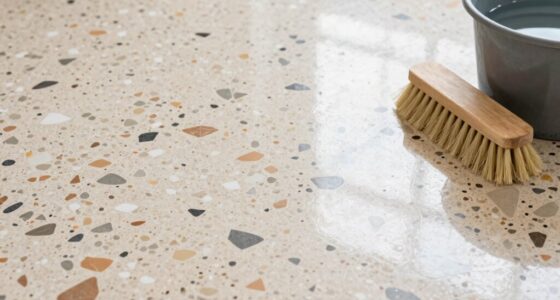
If you use acid cleaners on marble and travertine, you risk causing etching, which leaves dull, permanent spots on the surface. These stones contain minerals like calcium carbonate that react badly with acids from products like vinegar, lemon juice, or bathroom cleaners. This reaction dissolves the minerals, leaving behind dull patches and loss of shine. Want to protect your floors and keep them looking beautiful? Learn more about safe cleaning tips and how to prevent damage.
Key Takeaways
- Acid cleaners react chemically with calcium carbonate in marble and travertine, causing irreversible etching and dull spots.
- The low pH level of acids like vinegar and lemon juice dissolves mineral content, damaging the stone’s surface.
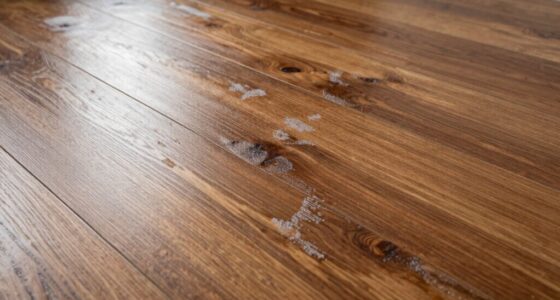
- Etching appears as dull, lightened patches or tiny craters, permanently affecting the stone’s shine and appearance.
- Harsh chemicals can weaken the surface and lead to discoloration, making regular cleaning with pH-neutral products essential.
- Professional restoration may be needed to remove etching and restore the natural luster of affected stone floors.

USANOOKS Microfiber Cleaning Cloth Grey - 12 Pcs (12.5"x12.5") - High Performance - 1200 Washes, Ultra Absorbent Microfiber Towel Weave Grime & Liquid for Streak-Free Mirror Shine - Car Washing Cloth
10x GRIP-ROOT WEAVE - TRAP MORE, WORK LESS: Ultra-absorbent microfiber towels for car Grip Root weave works like...
As an affiliate, we earn on qualifying purchases.
Understanding Natural Stone Materials
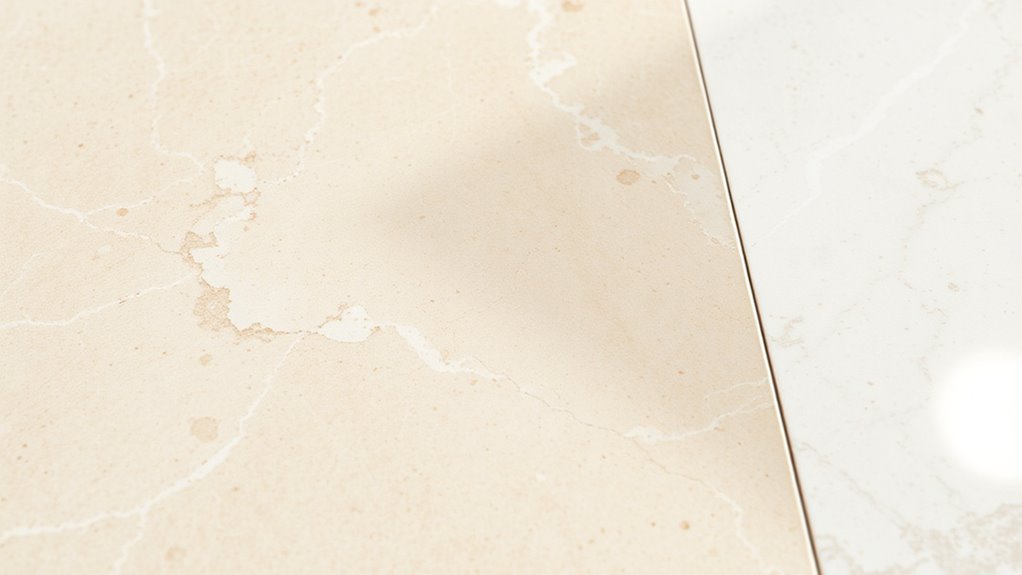
Natural stone materials have been used in flooring for centuries because of their durability and timeless beauty. When choosing between quartz vs granite, you’re selecting natural stones with unique properties; quartz is engineered and highly resistant to stains, while granite is a natural stone that’s exceptionally tough. Understanding polished vs honed finishes is also key: polished surfaces shine and reveal vibrant colors, but are more prone to showing scratches and etching. Honed finishes have a matte, softer appearance, making them better at hiding wear and damage. Both options enhance the stone’s natural look, but your choice depends on the desired aesthetic and maintenance needs. Additionally, proper sealing and cleaning techniques are essential to prevent acid etching, which can damage the surface and diminish its appearance over time. Recognizing the difference between these finishes and their impact on maintenance requirements helps in selecting the right style for your space. Being aware of natural stone properties can also guide you in choosing the most suitable material for high-traffic or moisture-prone areas. For example, understanding stone porosity can influence your decision for areas exposed to water or spills, and selecting a proper sealant can help protect against damage.

Amazon Basics Microfiber Cleaning Cloths, Ultra Absorbent, Lint Free, Streak Free, Non-Abrasive, Reusable and Washable, 16" x 12", Blue/White/Yellow, Pack of 24
Microfiber 16 x 12-inch cleaning cloth (24-pack); ideal for cleaning cars, trucks, boats, and more
As an affiliate, we earn on qualifying purchases.
The Chemistry Behind Etching Damage
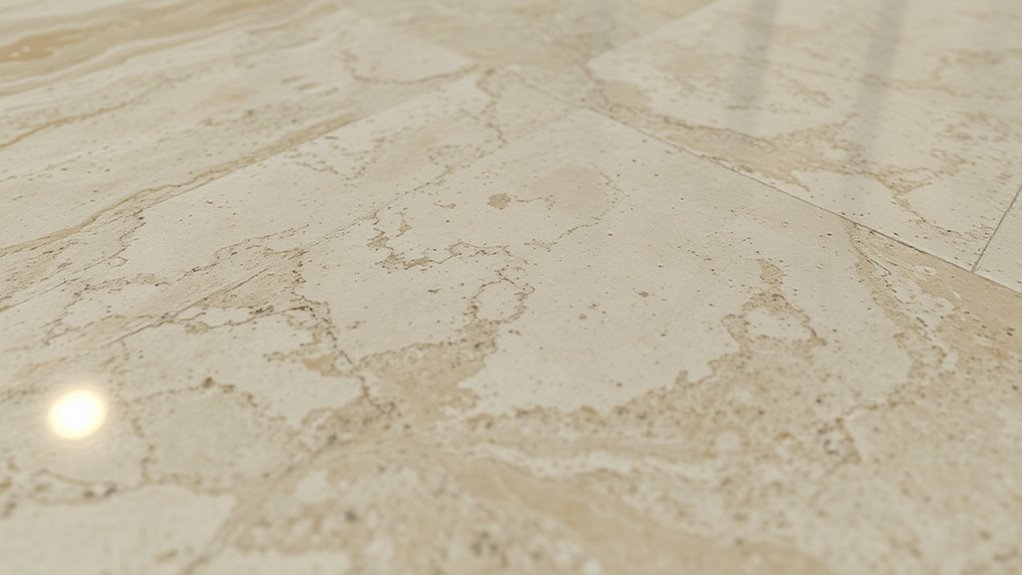
Etching damage occurs when acids react chemically with the minerals in stone, causing a dull, often irreversible mark on the surface. This happens because the pH levels of acids are low, meaning they are highly acidic. When you pour acid cleaners with low pH levels onto marble or travertine, acid reactions occur at the mineral level. These reactions dissolve calcium carbonate, the primary mineral in these stones, leading to tiny etch marks. The damage isn’t just superficial; it alters the stone’s microscopic surface structure, making it dull and less reflective. Because acid reactions change the stone’s surface chemistry, the etching is difficult to remove and can require professional restoration. Understanding this chemistry helps you avoid damage caused by harmful acids. Recognizing the chemical reactions involved can help in choosing safer cleaning methods and maintaining the natural beauty of your stone surfaces. Being aware of warranty considerations is also crucial, as some cleaning practices might void warranties or cause further damage if not done properly. Additionally, using acid-based cleaners on sensitive stones like marble and travertine can accelerate deterioration, so alternative cleaning methods are recommended.

10 Pack Microfiber Cleaning Cloths, Large 30" x 16" Absorbent Streak Free Lint Free Washable Reusable Towels for Floor Mop, Kitchen, Car, Windows, Glass, Stainless Steel, Multi-Purpose Rags, Blue
EXTRA LARGE SIZE: Each microfiber cleaning cloth measures a generous 30" x 16", providing more coverage for faster,...
As an affiliate, we earn on qualifying purchases.
Common Acidic Cleaners That Harm Stone Floors

Many common household cleaners contain acids that can damage stone floors if used improperly. These cleaners often have a low pH balance, making them too acidic for marble or travertine surfaces. For example, vinegar, lemon juice, and bathroom tile cleaners are popular but harmful options. Using these acidic cleaners regularly can lead to etching and dullness, especially if your cleaning schedule involves frequent scrubbing. It’s important to choose pH-neutral products designed for natural stone or stick to gentle, stone-safe solutions. Avoid products labeled as “cleaning acids” or “industrial cleaners,” as they can quickly compromise your floor’s finish. Regularly using inappropriate acidic cleaners can cause irreversible damage, so always check labels and follow recommended cleaning schedules to protect your investment. Additionally, understanding the pH levels of cleaning products can help prevent accidental etching and preserve the natural beauty of your stone floors.

Kenmore 81414 400 Series Pet Friendly Lightweight Bagged Canister Vacuum with Extended Telescoping Wand, HEPA, Retractable Cord, and 4 Cleaning Tools-Red
BAGGED CANISTER VACUUM: Designed to clean all areas and surfaces of your entire home, den, kitchen, car or...
As an affiliate, we earn on qualifying purchases.
Signs Your Stone Floor Has Been Etched

When acidic cleaners are used improperly, they can cause visible damage to your stone floors. You’ll notice your once-polished surface becoming dull and less reflective. Etched areas often appear as lightened spots or cloudy patches that don’t match the rest of the surface. You might see:
- Fine, shallow lines or etch marks on the surface
- Loss of gloss and shine, making the floor look matte
- Pitting or tiny craters in high-traffic areas
- Surface dullness that doesn’t respond to polishing
- Irregular patches that disrupt the uniform appearance
These signs indicate your stone has been etched, compromising its natural beauty and smooth feel. Recognizing these changes early helps prevent further damage and guarantees you can address the issue promptly. Understanding the causes of surface damage can help you take preventative steps to protect your stone floors, as being aware of material vulnerabilities is crucial for proper maintenance. Additionally, knowing how different cleaning agents interact with natural stone surfaces can assist in choosing appropriate products and avoiding future etching. Proper knowledge of stone surface reactions enables you to select cleaning methods that preserve the integrity of your flooring over time. Being familiar with proper cleaning techniques ensures you maintain your stone’s integrity over time.
Preventative Measures for Protecting Your Stone
To keep your stone floors looking their best, it’s essential to take proactive steps to safeguard them from damage. Regular sealing techniques create a barrier against stains and etching, helping preserve the stone’s natural beauty. Establishing maintenance routines ensures dirt and debris don’t scratch or dull the surface. Use mats at entryways to reduce grit and avoid dragging heavy furniture. Consistent cleaning with pH-neutral products prevents buildup that can harm the stone. Additionally, understanding the horsepower of electric dirt bikes can inform how much effort is needed for various maintenance tasks, ensuring your upkeep efforts are effective. Proper sealant application is crucial for creating an effective protective barrier against acids and spills. Here’s a quick guide:
| Protective Measure | Description |
|---|---|
| Sealing techniques | Apply sealant periodically to prevent stains |
| Maintenance routines | Regularly clean and inspect for damage |
| Mat placement | Reduce dirt and grit at entry points |
| Furniture protection | Use pads to prevent scratches |
Implementing these preventative strategies aligns with modern kitchen technology principles of automation and precision maintenance to extend the lifespan of your stone surfaces.
A comprehensive understanding of acid cleaners and their effects on different stone types can also help guide your cleaning choices and prevent etching.
Safe Cleaning Solutions for Marble and Travertine
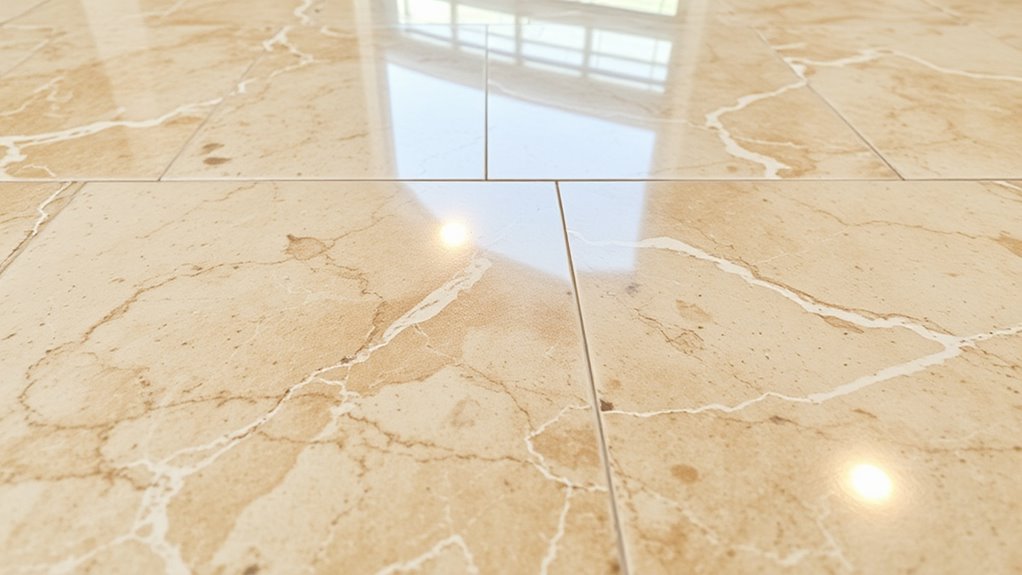
When cleaning your marble or travertine, choose gentle, pH-neutral solutions to protect the stone’s surface. Avoid harsh chemicals that can cause etching or discoloration. Using the right cleaning agents helps maintain your floors’ beauty and longevity. Additionally, selecting appropriate essential oils for cleaning can provide natural antimicrobial benefits without damaging the stone. Being aware of stone-specific cleaning techniques can further prevent damage and preserve the natural look of your floors. Implementing curiosity-driven methods in your cleaning routine can also enhance your understanding of the best practices, leading to better maintenance and care. Incorporating free-floating cleaning methods can help evenly distribute cleaning solutions, reducing the risk of etching and ensuring a thorough cleanse.
Gentle Cleaning Agents
Choosing the right cleaning agents is essential to protect the delicate surfaces of marble and travertine. Gentle cleaners with a balanced pH help prevent etching and maintain their natural beauty. When selecting a cleaner, think about the following:
- Mild, pH-neutral formulas that won’t damage the surface
- Non-abrasive pads or cloths for gentle scrubbing
- Avoiding harsh chemicals like vinegar or lemon juice
- Regularly scheduled cleaning to prevent buildup
- Using soft brushes for stubborn dirt without scratching
Ph-Neutral Solutions Preferred
Because pH-neutral solutions are gentle on marble and travertine, they’re the preferred choice for safe cleaning. These solutions maintain the proper pH balance, preventing harmful chemical reactions that cause etching or dullness. Using cleaners with an ideal pH around 7 ensures you avoid damaging the stone’s surface. This minimizes the risk of corrosion or discoloration caused by overly acidic or alkaline substances. When selecting a cleaner, always check the label for pH levels and opt for those designed specifically for natural stone. Properly balanced solutions preserve the stone’s integrity and appearance, making your cleaning routine safer and more effective. Maintaining chemical balance is essential to protect your stone from damage. Additionally, understanding cultural insights about natural stone use can help you better appreciate its value and proper care.
Avoid Harsh Chemicals
Using pH-neutral solutions helps protect marble and travertine from damage, but it’s equally important to steer clear of harsh chemicals that can harm these delicate stones. Many commercial cleaners contain strong acids or alkalis that can cause pH imbalance, leading to etching or discoloration. These chemicals may trigger unwanted chemical reactions on the surface, weakening the stone’s integrity. To keep your floors safe, avoid products with bleach, ammonia, vinegar, citrus, or abrasive powders. Instead, opt for gentle, stone-safe cleaners that preserve the natural beauty of your surfaces. Picture your marble or travertine gleaming without the risk of etching or dulling—this is achievable by choosing safe, non-reactive cleaning solutions. Protect your investment with mindful cleaning practices and avoid harsh chemicals altogether.
Professional Restoration and Repair Options
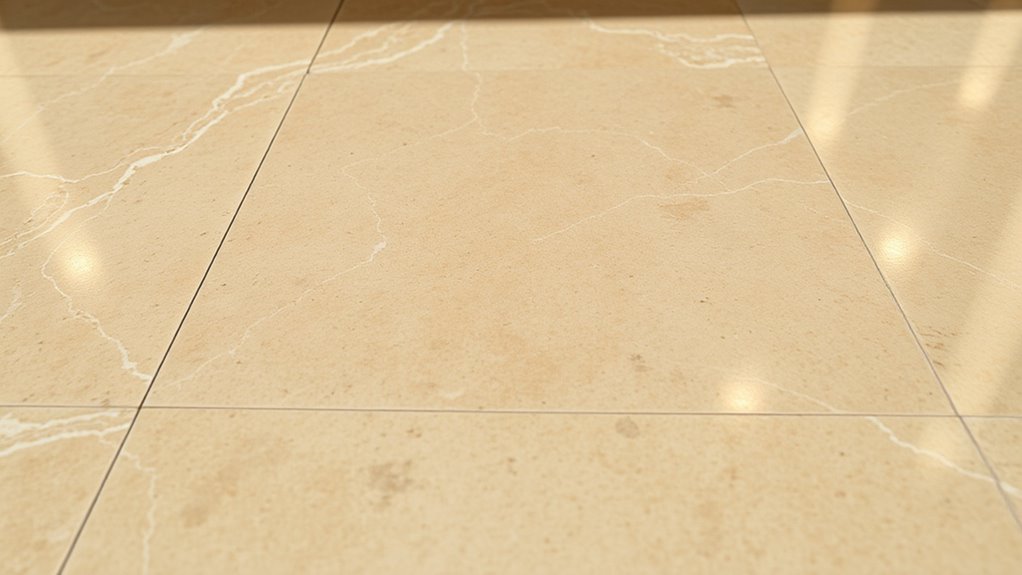
When your stone floors show signs of damage or wear, professional restoration and repair services can bring them back to their original beauty. Expert marble polishing removes scratches and restores shine, making your floors look new again. For travertine, sealing is essential to protect against future stains and etching. Professionals can assess the extent of damage and recommend appropriate solutions, such as honing or grinding, to smooth out surface imperfections. If the damage is extensive, they may perform patch repairs or re-grouting to restore the integrity of your stone. Regular maintenance, including professional sealing and polishing, prolongs your floors’ lifespan and preserves their natural beauty. Trusting experienced specialists ensures your stone surfaces remain stunning, durable, and well-protected for years to come.
Frequently Asked Questions
Can Etching Be Completely Reversed on Marble and Travertine?
Etching on marble and travertine can’t be completely reversed, but you can restore the surface through acid etch restoration and marble polishing. You’ll need to professionally polish the affected areas to remove the dull, etched spots. While polishing markedly improves the look, it may not perfectly match the original surface. Regular sealing and avoiding acid cleaners help prevent future etching, keeping your stone floors looking their best.
Are There Any Natural Remedies to Remove Acid Etch Marks?
Like a skilled alchemist, you can try natural remedies to diminish acid etch marks on marble and travertine. DIY solutions such as baking soda paste or a mixture of hydrogen peroxide and baking soda can gently lift the damage. Apply these carefully, let sit, then rinse thoroughly. While these remedies may not completely erase deep etches, they can markedly improve the appearance, giving your stone a renewed glow without harsh chemicals.
How Long Does It Take for Acid Damage to Become Visible?
You’ll typically notice acid damage within hours to days after exposure, as acid etch visibility becomes more apparent over time. The longer your stone encounters acid, the more likely the etch marks will stand out, especially on polished marble and travertine surfaces. So, it’s essential to clean up acid spills promptly and avoid acid-based cleaners, preventing visible etch marks from developing and causing lasting damage.
Do All Types of Acid Cleaners Cause the Same Level of Damage?
Surprisingly, not all acid cleaners cause the same damage. You’d think stronger acids would be more gentle, right? But in reality, acid strength and surface porosity determine the harm. Porous surfaces absorb more acid, increasing etching risks. So, even a mild acid can cause damage if your marble or travertine is highly porous. Always choose the right cleaner, and test a small area first—don’t trust the label alone.
Is Professional Sealing Enough to Prevent Acid Etching Long-Term?
Professional sealing helps protect your marble or travertine, but it isn’t foolproof against acid etching long-term. Sealant durability varies, and over time, it may wear down, making your stone vulnerable. Regular ongoing maintenance, including resealing as recommended, is essential to preserve the surface. You should also avoid acidic cleaners altogether to prevent damage, ensuring your floors stay beautiful and intact for years to come.
Conclusion
While your marble and travertine floors can bring elegance to your home, their beauty can quickly fade with acid etching. Protecting them isn’t just about avoiding damage; it’s about preserving their natural charm and history. By choosing safe cleaning methods and staying vigilant, you confirm your floors remain pristine and timeless. Because in the delicate dance between beauty and damage, your careful choices can mean the difference between a surface that shines and one that scars.