To remove sticky adhesive from floors without scratching the finish, start by softening the adhesive using a steam mop. This warms and loosens it. Next, apply a safe chemical solution like Goo Gone or a baking soda paste for extra absorption. Use a gentle scraper like a putty knife to lift the adhesive carefully. Always test on a small area first to avoid damage. Discovering more techniques can save you time and protect your floors even further.
Key Takeaways
- Use a steam mop to soften adhesive, allowing for easier scraping without scratching the floor’s finish.
- Apply Goo Gone or Sentinel 626 to dissolve the adhesive safely before scraping.
- Create a baking soda paste to absorb oily residues and enhance adhesive removal.
- Utilize a gentle putty knife for scraping after soaking to minimize the risk of scratches.
- Always test your chosen method in a small, inconspicuous area to avoid damage to the flooring.

Removing sticky adhesive from floors can feel intimidating, especially when you’re enthusiastic to restore your space. Thankfully, you have several effective methods at your disposal, each with its own advantages. One of the best approaches is using a steam mop. It heats instantly and softens mastic adhesive on hardwood floors, making removal a breeze. After steaming, you can easily scrape the softened adhesive cleanly with a putty knife. This method minimizes damage compared to manual scraping, leaving your floor smooth. Keep in mind, though, that a steam mop has a limited water capacity, so you’ll need to refill it frequently during the process.
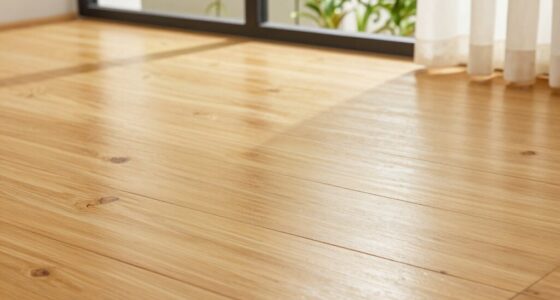
Using a steam mop is an effective and gentle way to remove sticky adhesive from hardwood floors.
If you prefer chemical solutions, products like Goo Gone work wonders in dissolving peel-and-stick tile adhesive. It’s less harsh than alternatives like Goof Off, making it a safer choice for your floors. For tougher adhesives, try Sentinel 626, which is effective on vinyl and carpet glue and has low VOCs. Flood the area with the remover and let it soak for 45 to 90 minutes, or even up to five hours for maximum effectiveness. Agitating the solution with a broom can help it penetrate better for easier scraping later.
For a more household-friendly approach, consider creating a baking soda paste. After applying Goo Gone, sprinkle baking soda over the area to absorb the oily residue. This combination enhances the removal process when scrubbed with a brush or sponge. After the paste does its job, follow up with a degreaser and soap to ensure your floor is spotless.
Manual scraping methods are an option, but they can be tedious and time-consuming. A manual floor scraper may shave off the mastic, but it often leaves residue and can produce small chips across your floor. Instead, opt for a putty knife after soaking to cleanly remove adhesive without risking scratches. Always remember to test any method on a small area first to ensure you won’t damage the finish. Additionally, using a steam mop is an excellent way to soften adhesives without scratching your floors.
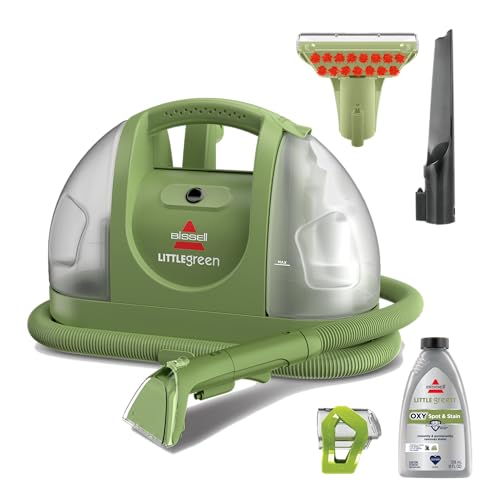
BISSELL Little Green Multi-Purpose Portable Carpet Cleaner, 1400B
- Trusted Brand: America's #1 portable cleaning brand
- Mess Removal: Removes 100+ common stains and messes
- Powerful Cleaning: Triple action formula for stains and odors
As an affiliate, we earn on qualifying purchases.
Frequently Asked Questions
Can I Use a Heat Gun Instead of a Steam Mop?
Yes, you can use a heat gun instead of a steam mop. Just be cautious, as heat guns can get very hot and may damage the floor’s finish if not used carefully. Hold the gun a few inches away from the adhesive, heating it until it softens. Then, use a putty knife to scrape it off gently. Always test a small area first to verify it doesn’t harm your floor’s surface.
How Do I Test Adhesive Removal Methods on My Floor?
“Better safe than sorry.” To test adhesive removal methods on your floor, start by applying your chosen solution on a small, inconspicuous area. Wait the recommended time, then gently scrape or wipe the adhesive. Observe for any damage or discoloration. If all’s well, proceed with the full area. Always remember to wear gloves and ventilate the space, especially when using chemical removers. Your floor’s finish deserves careful attention!
What Should I Do if the Adhesive Remains Stubborn?
If the adhesive remains stubborn, try soaking it longer with a chemical remover like Sentinel 626 or Goo Gone. Flood the area again and let it sit for up to five hours for better penetration. After soaking, agitate the area with a broom before scraping gently with a putty knife. If needed, repeat the process a few times until the adhesive completely lifts. Always clean up residue with a shop vac afterward.
Are There Eco-Friendly Adhesive Removers Available?
If you’re looking for eco-friendly adhesive removers, you’ve got some great options. Products like Goo Gone are less chemical-heavy and can effectively dissolve sticky residues. You might also try vinegar or a baking soda paste, which are safe and gentle on surfaces. Always test a small area first to make certain it won’t damage your floors. So, grab your supplies and get ready to tackle that adhesive without harming the environment!
How Long Does It Take for the Adhesive to Fully Dissolve?
It typically takes 45 to 90 minutes for the adhesive to fully dissolve, depending on the product you’re using. If you’re using something like Sentinel 626, soaking for up to 5 hours can make the scraping process much easier. Just make sure you apply enough remover to flood the area, and don’t forget to agitate it with a broom before scraping for the best results. Patience pays off!

BISSELL Little Green Mini Portable Carpet Cleaner, 4075
- Supports Pet Foundation: Every purchase helps save pets
- Removes Pet Stains: Tackles spills and pet stains
- Allergen Removal: Removes dander, dust, pollen
As an affiliate, we earn on qualifying purchases.
Conclusion
In summary, getting rid of sticky adhesive from your floors doesn’t have to be a hassle. With the right techniques, you can restore your floors to their former glory without scratching the finish. Just remember, patience is key—like waiting for your favorite song to play on the radio. So gather your tools, follow the steps, and soon enough, your floors will shine like a new penny, free from any stubborn residue.

Shark Steam & Scrub Steam Mop, All-in-One Hard Floor Cleaner, Grey, S8001
- Effective Scrubbing and Sanitizing: Removes stains and sanitizes floors
- Three Steam Modes: Light, Normal, Deep cleaning options
- Built-in LED Headlights: Illuminates hidden debris
As an affiliate, we earn on qualifying purchases.
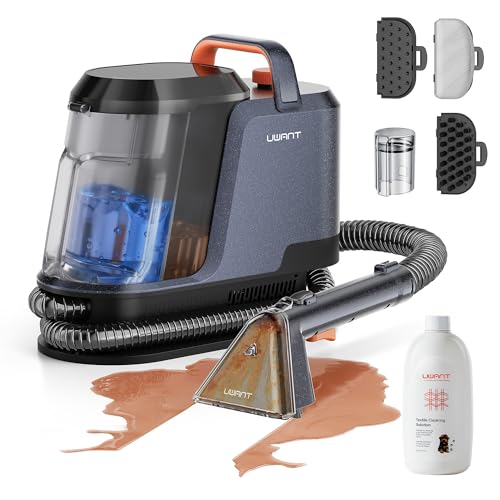
Uwant Carpet Cleaner Machine 18Kpa Portable Carpet Cleaner for Cars Couch, 2in1 Water Tank Upholstery Cleaner, Spot Cleaner with Cleaning Tools Set of 1
- High Suction Power: 18Kpa for deep stain removal
- Efficient Cleaning: 50% faster cleaning with upgraded suction
- Dual Water Tanks: Separate clean and waste water tanks
As an affiliate, we earn on qualifying purchases.