Hardwood floor haze is a dull film caused by residue, wax buildup, or trapped moisture. To remove it safely, mix warm water with vinegar and use a microfiber mop. Avoid excess water to prevent damage and make sure proper ventilation while cleaning. If haze persists, try a commercial wax remover, but always follow instructions carefully. You’ll also want to keep up with routine maintenance to prevent future issues; keep exploring for more tips on preserving your floors.
Key Takeaways
- Hardwood floor haze can result from residue, wax buildup, moisture, or grime from cleaning processes.
- Identify haze sources by checking for cloudiness, sticky surfaces, or changes in humidity.
- Gently clean using a vinegar-water solution and a microfiber mop, ensuring thorough rinsing.
- For wax buildup, use a commercial wax remover and ensure proper ventilation during the process.
- Maintain clarity by using pH-neutral cleaners, controlling humidity, and avoiding steam mops.

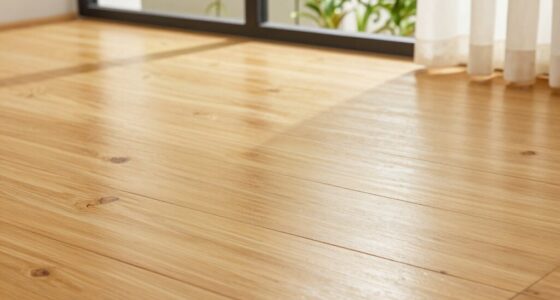
When you notice a cloudy or hazy appearance on your hardwood floors, it’s often a sign of underlying issues that need addressing. This haze typically stems from a range of causes, including residue left behind by incompatible cleaning products, wax buildup from repeated applications, or even moisture trapped beneath a recently applied finish. If you’ve been mopping with dirty water, that can also spread grime, leading to stickiness and dullness. Identifying the root cause is essential for effective removal.
To pinpoint the source of the haze, start by examining the floor closely. If you see cloudy lines between the boards or a uniform dullness across the surface, that’s often a sign of a surface film or residue. A sticky feel after mopping usually indicates leftover cleaning products, while persistent haze may mean you need a deeper clean. Pay attention to any recent mopping or environmental conditions like humidity, which could contribute to high moisture content related cloudiness. Additionally, using energy-efficient solutions can help in maintaining a balanced environment that prevents excess moisture.
Examine your hardwood floors for cloudy lines or dullness to identify surface residue or cleaning product buildup.
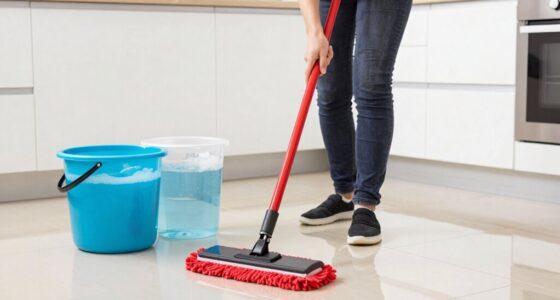
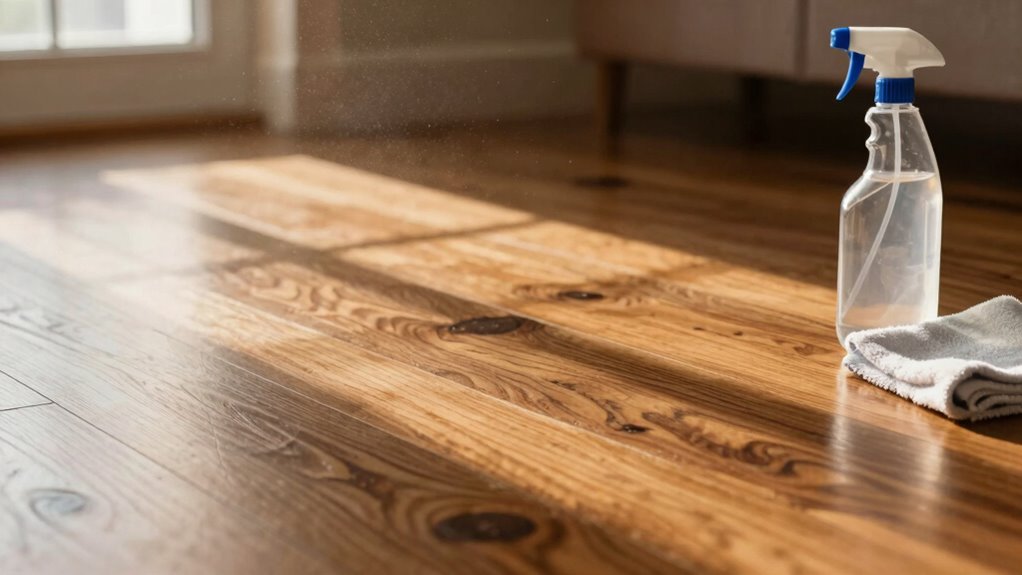
Once you’ve identified the cause, it’s time to act. For surface residue, mix warm water with vinegar and use a microfiber mop to gently cleanse the area. Rinse thoroughly to ensure no surfactant films remain, but be careful to avoid excess water, as saturating the wood can lead to more problems. If you’re dealing with wax buildup, consider using a commercial wax remover according to the manufacturer’s instructions. Ensure proper ventilation and allow the area to dry completely to avoid trapping moisture.
If your haze persists, it might be due to trapped solvents or moisture beneath a finish. In that case, you may need to buff the surface and recoat it; however, if the issue remains after that, professional sanding could be necessary to restore clarity. Always remember to follow recommended cleaning practices to prevent recurrence. Use pH-neutral cleaners that align with your finish manufacturer’s guidelines, and maintain ideal humidity levels in your home.
Lastly, regular maintenance is key to keeping your hardwood floors looking their best. Implement a light cleaning routine to prevent buildup and avoid using steam mops, which can force vapor into the seams. By being proactive with your cleaning methods and staying aware of your environment, you can help maintain the beauty of your hardwood floors and prevent that unsightly haze from returning.

ROPVACNIC Robot Vacuum and Mop Combo 5200Pa Suction Robotic Cleaner
- 2-in-1 Vacuum and Mop: Advanced electronic mopping technology
- Personalized Water Adjustment: Four-stage water control system
- Smart Control Options: Multiple cleaning modes and app control
As an affiliate, we earn on qualifying purchases.
Frequently Asked Questions
Can Hardwood Floor Haze Be Prevented Completely?
You can’t completely prevent hardwood floor haze, but you can substantially reduce its likelihood. Use only manufacturer-approved cleaners and limit water exposure. Maintain indoor humidity levels between 35-55% and allow proper drying times after cleaning or refinishing. Regularly dust mop and perform light maintenance to avoid buildup. By staying proactive with these practices, you’ll keep your floors looking their best and minimize the chances of developing haze over time.
What Types of Finishes Are Most Prone to Hazing?
Water-based finishes, oil-based finishes, and wax coatings are most prone to hazing. You’ll notice water-based finishes can cloud up with humidity, while oil-based finishes may trap solvents, leading to cloudy patches. Wax coatings build up over time, creating a dull film. Each type has its unique challenges, so you’ll want to choose wisely and maintain your floors properly to prevent that frustrating haze from spoiling their beauty.
How Often Should I Clean My Hardwood Floors?
You should clean your hardwood floors regularly, ideally once a week, to keep them looking their best. Use a microfiber mop with a pH-neutral cleaner for routine maintenance, and don’t forget to dust mop between cleanings to prevent dirt buildup. If you notice heavy traffic or spills, clean those areas promptly. Additionally, consider a deeper clean every few months to tackle any stubborn grime or residue that might accumulate over time.
Are There Specific Brands of Cleaners Recommended for Hardwood Floors?
Think of your hardwood floors as a canvas; choosing the right cleaner is like selecting the perfect paintbrush. For hardwood floors, brands like Bona, Murphy Oil Soap, and Bruce are highly recommended. They maintain the finish and enhance your floor’s natural beauty without leaving a haze. Always check for compatibility with your specific finish, and remember, a gentle touch goes a long way in preserving that pristine look you love.
Is Hardwood Floor Haze Harmful to My Health?
Hardwood floor haze isn’t directly harmful to your health, but it can be a sign of underlying issues, like residue from cleaning products. If you’re sensitive to chemicals, the haze might irritate your respiratory system or skin. It’s best to address the haze promptly to maintain a clean environment. Regular cleaning with compatible products can help prevent buildup and keep your floors looking great, improving your overall indoor air quality.

MONSGA Robot Vacuum and Mop, 90 Days Self-Emptying with 8000Pa Suction
- High Suction Power: 8000Pa maximum suction for deep cleaning
- Anti-Tangle Brush System: Dual design reduces hair wrap and knots
- Automatic Carpet Boost: Increases suction on carpets for embedded debris
As an affiliate, we earn on qualifying purchases.
Conclusion
In summary, tackling hardwood floor haze is like clearing the morning fog to reveal a sunlit landscape. With the right methods and a bit of patience, you can restore your floors to their original brilliance. Remember, whether you choose natural solutions or commercial cleaners, always test in a small area first. Your hardwood deserves the best care, so embrace the journey to reclaim its beauty and let your floors shine like the stars on a clear night.
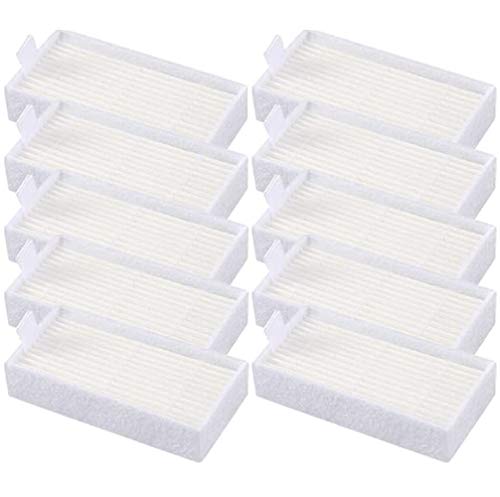
10pcs HEPA Filters Replacement for ILIFE V3s V3s pro V5 V5s V5s Pro V5s Pro 2 V5s Plus Noisz S5 Robotic Vacuum Cleaner ILIFE V3s pro Filters ILIFE Robot Vacuum Filter
- Compatible with various ILIFE models: Fits V3, V3s, V5, V5s, Pro versions
- High-quality filter material: Efficient and durable HEPA filters
- 100% compatible with original filters: Ensures perfect fit and performance
As an affiliate, we earn on qualifying purchases.

Filter Replacement for iRobot Roomba e, i and j Series i7 i7+/plus i3 i3+ E5 E6 E7 i4 i6 i6+ i8 i8+ Robot Vacuum Cleaners parts, 9 Pack High Efficiency 4639161 Filters
- Compatible Models: Fits iRobot Roomba E, I, J series
- High Efficiency Filtration: Filters 99.9% of dust and particles
- Effective Particle Capture: Catches particles as small as 0.3 microns
As an affiliate, we earn on qualifying purchases.