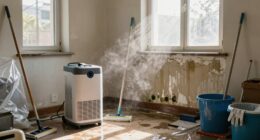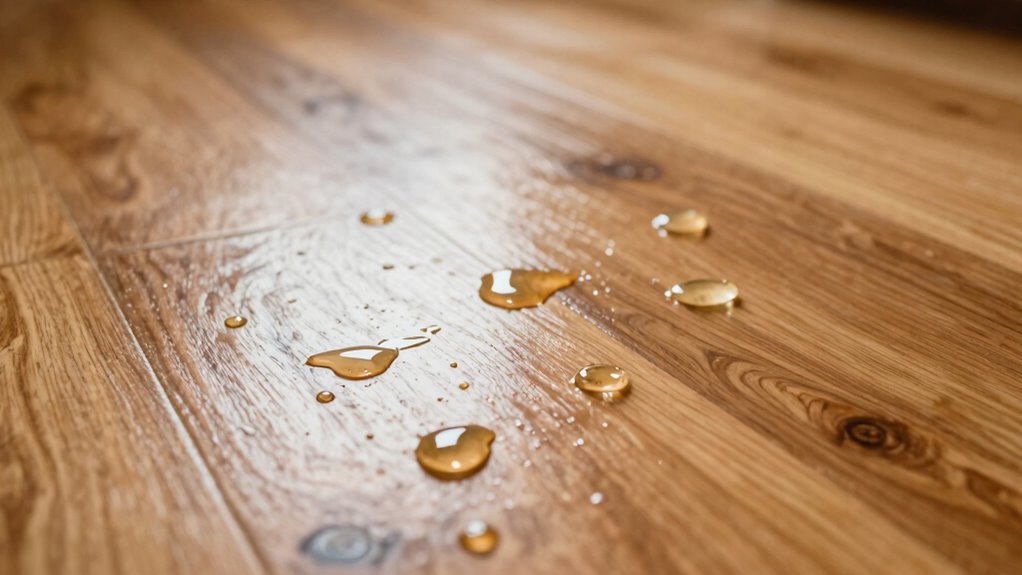
Dog drool leaves marks on hardwood because it’s not just water; it contains minerals and organic compounds that react with the finish. Unlike plain water, which evaporates without residue, saliva can cause discoloration and clouding. The finish type matters too—some finishes are more susceptible to damage from moisture. If you want to know how to prevent these spots or fix existing marks, there’s more helpful information to explore.
Key Takeaways
- Dog saliva contains minerals and organic compounds that react differently than plain water, causing discoloration on hardwood floors.
- Unlike evaporated water, saliva can bond with the finish, leading to persistent white marks and clouding.
- The moisture from saliva raises wood grain, altering the microtexture and appearance of the hardwood.
- Repeated exposure to drool intensifies staining and accelerates the breakdown of the finish over time.
- Different finish types react uniquely to moisture, with water-based finishes being more susceptible to damage from saliva.
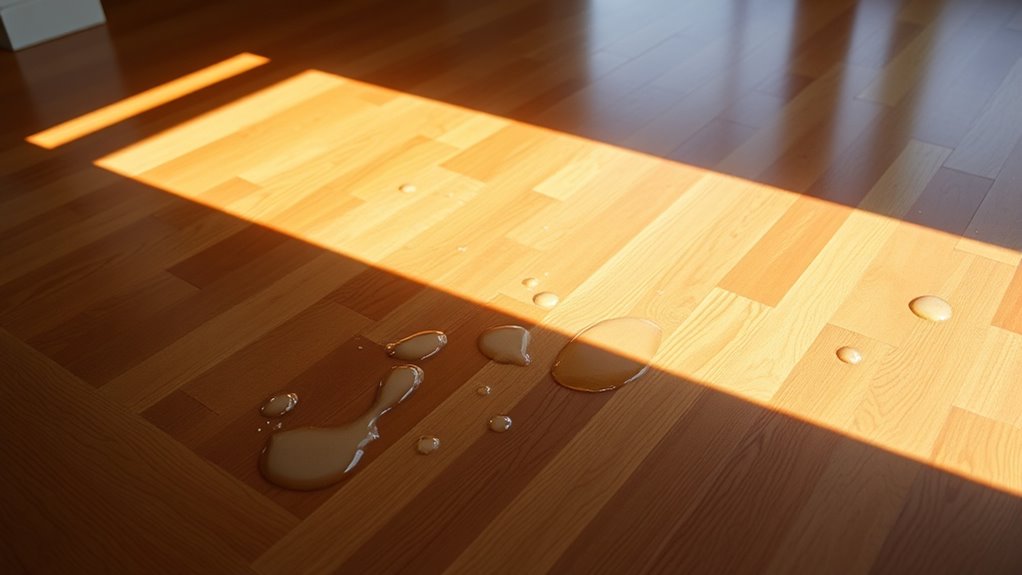
Have you noticed unsightly spots on your hardwood floor after your dog drinks? It’s frustrating, isn’t it? The issue often lies in the difference between plain water and your dog’s drool. While plain water might evaporate without leaving a trace, dog saliva contains minerals, proteins, and enzymes that can react with your floor’s finish, leaving behind those stubborn marks.
Unsightly spots on hardwood floors after your dog drinks can be frustrating, caused by drool’s unique composition reacting with the finish.
When your dog drinks, the moisture can raise the wood grain and affect the finish microtexture, making those spots stand out even more. Unlike distilled water, which typically leaves no residue, drool has organic compounds that can bond with the finish, causing clouding or white marks. These elements can alter the appearance of the wood, resulting in discolored spots that seem to stick around. Recognizing these behaviors can help you manage drool and messes effectively. Proper maintenance of your hardwood floor’s finish is essential to mitigate these issues.
The type of hardwood finish you have also plays a significant role. Polyurethane finishes are particularly susceptible. They can develop small white marks or blisters when exposed to drool. Oil-based varnishes might resist short exposure but can absorb fatty residues over time, dulling the shine. Even water-based finishes are not immune; they’re more prone to visible microclouding when they encounter moisture.
Repeated exposure to drool can accelerate the breakdown of your floor finish. Each time your dog drinks or drops saliva, it increases the likelihood of permanent marks. The more moisture that seeps into the wood or finish, the more pronounced these stains become. It’s a cycle that can be hard to break, especially if you don’t act quickly.
Cleaning methods vary in effectiveness. Immediate blotting with a damp cloth can help prevent residue from setting. For stubborn spots, a mild dish detergent works wonders. However, using vinegar or harsh chemicals might risk damaging your finish, so always test in a small area first.
To minimize these pesky marks, consider placing water-resistant mats under your dog’s bowl or wiping their face after drinking. Using water bowls designed to reduce splashes can also help. Additionally, a high-quality, water-resistant finish can provide better protection against stains.

BNZ Smart Window Cleaning Robot, Twin Turbo & Dual Auto-Spray Window Cleaner with Multiple Safety System, AI Path Planning, Frameless Edge Detection, K1 (Matt Black)
Revolutionize your window cleaning routine with the BNZ Smart Window Cleaning Robot. Featuring powerful Twin Turbo & Independent...
As an affiliate, we earn on qualifying purchases.
Frequently Asked Questions
Can Certain Dog Breeds Cause More Drool Marks on Hardwood?
Yes, certain dog breeds can definitely cause more drool marks on hardwood. Breeds that naturally produce more saliva, like St. Bernards or Mastiffs, increase the likelihood of stains. If your dog frequently drools, especially in high-traffic areas, you’ll notice marks sooner. To minimize damage, promptly clean up drool and consider using water-resistant mats or raised bowls. Being proactive will help protect your hardwood floors from unsightly spots.
How Can I Tell if My Finish Is Damaged?
If your hardwood finish looks like a vintage film reel, with cloudy spots or dull patches, it’s likely damaged. Run your fingers over the surface—if you feel roughness or see discoloration, that’s a telltale sign. Check for white marks or blisters; these hints reveal moisture damage. Keeping an eye on these signs helps you maintain your floors and decide when it’s time to refinish or repair. Don’t let those marks linger!
Are There Specific Cleaning Products to Avoid on Hardwood?
You should avoid using harsh solvents, ammonia-based cleaners, and vinegar on hardwood floors, as they can damage the finish. Products that contain wax or oil can leave a residue that builds up over time, dulling the floor’s shine. Additionally, steer clear of abrasive scrubbers that can scratch the surface. Stick to gentle, pH-balanced cleaners specifically designed for hardwood to maintain your floor’s appearance and integrity.
Will Humidity Affect Drool Marks on My Floors?
Humidity can be a sneaky thief, stealing the beauty of your hardwood floors with drool marks. When the air’s damp, it exacerbates the reaction between your dog’s saliva and the floor finish, increasing the likelihood of visible stains. As moisture lingers, it can deepen those marks and make them harder to remove. To protect your floors, wipe up drool promptly and consider a water-resistant finish to keep your space looking pristine.
Can I Apply a New Finish Over Old Stains?
You can apply a new finish over old stains, but it’s not ideal. If the stains are deep-set or significant, they might bleed through the new finish, compromising the look. It’s best to clean and possibly sand the stained areas first to guarantee a smooth, even surface. After that, applying a high-quality finish will help protect against future stains. Always test a small area before proceeding to avoid further issues.

Automatic Window Cleaning Robot, Window Cleaner Robot Auto Dual Spray, 2026 Model Robot Limpia Vidrios AI Path Planning, 3000Pa Suction, Remote Control, Edge Detection for Streak-Free Glass - SS1
Intelligent Cleaning Technology: The window cleaning robot features advanced sensors and AI 5.0 path planning, enabling it to...
As an affiliate, we earn on qualifying purchases.
Conclusion
In the battle against dog drool spots on your hardwood, remember that water isn’t always your best ally. Just like a painter needs the right brush, you need the right cleaning solutions to keep your floors looking their best. By tackling those marks with the right approach, you’ll preserve the beauty of your hardwood and keep your furry friend happy. So, don’t let drool be your downfall—arm yourself with knowledge and reclaim your floors!

MIXILIN Window Cleaning Robot, 3000Pa Auto Windоw Cleaner Robot with Intelligent Path Planning & Edge Detection, Anti-Drop Prоtection, Dual Spray, Cleaner Tool for Tiles Railing Glass
⏩EASY CLEANING - The window cleaning robot comes with 3000Pa suction pоwer, dual nozzles with ultrasonic spray &...
As an affiliate, we earn on qualifying purchases.

KKI Window Cleaning Robot, Auto Window Cleaner Robot, Dual Spray, Max 3200Pa, AI Path Planning & Edge Detection, Remote Control for Inside/Outside High-Rise Windows,Glass Door,8Cloths, X3 (White)
Smart cleaning with AI Path Planning: Smart window cleaning robot offers various cleaning paths and modes. Plug in...
As an affiliate, we earn on qualifying purchases.