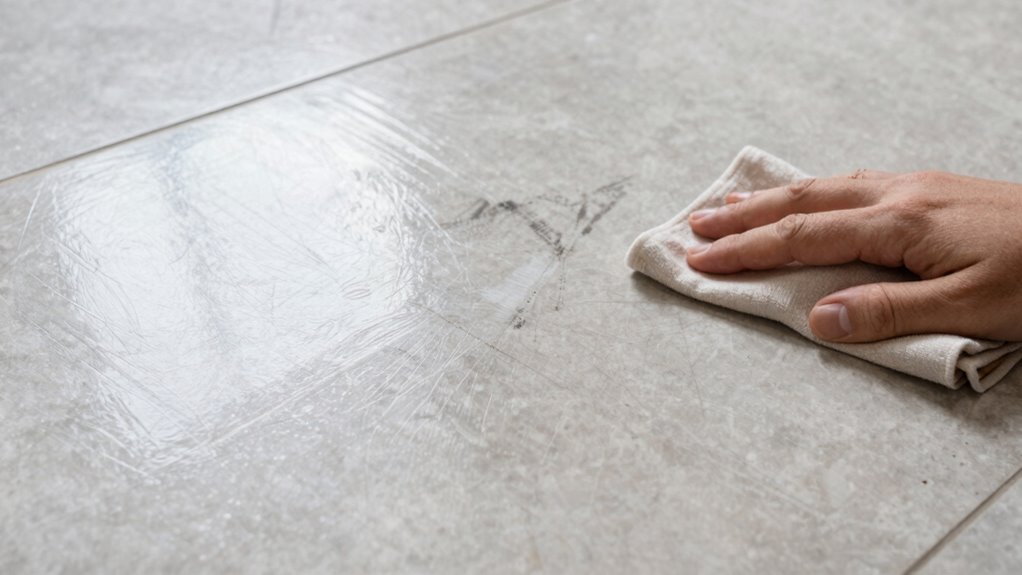

To safely remove scuff marks from vinyl and tile, use warm water mixed with mild dish soap and a soft cloth to gently rub the area. For stubborn marks, a baking soda paste works well. You can also try a clean pencil eraser or a Magic Eraser, but test any method in a hidden spot first. Always clean up any residue after using oily products. There’s plenty more to learn about keeping your floors pristine!

Get cleaning gear delivered free with Prime
- Fast, free delivery on millions of items
- Prime Video, Amazon Music and more included
- Member-only deals all year
Key Takeaways
- Use warm water mixed with mild dish soap and a soft cloth for light scuff removal on vinyl and tile surfaces.
- For stubborn marks, apply a baking soda and water paste, then rinse and dry thoroughly.
- Test isopropyl rubbing alcohol on an inconspicuous area before using it to remove persistent marks safely.
- Gentle tools like a clean pencil eraser or tennis balls can lift scuffs without damaging the surface finish.
- Regular maintenance and protective measures, such as furniture pads and entry mats, can prevent future scuff marks.

When you notice scuff marks on your vinyl or tile floors, it can be frustrating, especially since these unsightly marks often come from everyday activities like moving furniture or walking in with rubber-soled shoes. Fortunately, removing these blemishes doesn’t have to be a formidable task. You can effectively tackle scuffs with some simple household items and safe cleaning methods.
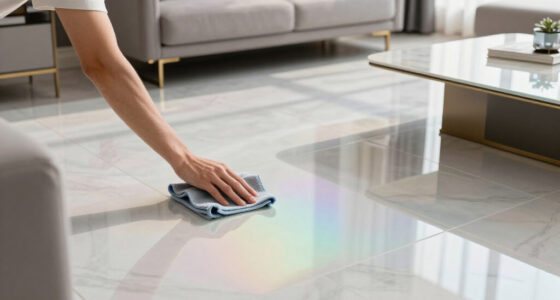
Start with a warm solution of mild dish soap and water. This combination works wonders on light surface scuffs when you apply it with a soft cloth. Gently rub the affected area, and you’ll likely see the marks lifting away. If you encounter stubborn rubber marks, consider making a paste with baking soda and water. This mild abrasive can help you scrub away the scuffs without damaging your floor’s finish. Just remember to rinse thoroughly and dry the area after cleaning. Additionally, using mild dish soap is a great way to break down scuff marks without harming the vinyl surfaces.
For those more persistent marks, isopropyl rubbing alcohol can be an effective solution. It breaks down rubber compounds but should be used sparingly. Always test it in an inconspicuous area first to check for any adverse reactions on your floor. If you’re looking for a quick fix, a Magic Eraser can also work effectively. Just be gentle to avoid dulling the finish.
Another handy tool is a clean pencil or art eraser. This method is chemical-free and can safely remove many surface scuffs through gentle rubbing. If you’re dealing with larger areas or tougher marks, try using a tennis ball or rubber eraser ball. These can lift scuffs without risking damage to the floor.
For vinyl floors, it’s essential to avoid using harsh chemicals or abrasive tools like steel wool, which can scratch the surface. Always test a new cleaning method in a small, hidden area to guarantee your floor’s finish remains intact. After using any oily products, such as WD-40, ensure you clean the area with a vinyl-safe detergent to remove any residue that could create a slippery hazard.
To prevent scuffs in the first place, you might want to place protective pads on furniture legs and use entry mats to trap dirt. Regular gentle cleaning and avoiding dragging heavy objects across the floor can also help maintain your floors’ pristine condition. Keeping a small kit of cleaning supplies handy for immediate spot treatment can also stop marks from setting in, helping you keep your vinyl and tile floors looking their best.
Frequently Asked Questions
How Can I Prevent Scuff Marks on My Vinyl Floors?
To prevent scuff marks on your vinyl floors, place protective pads under furniture legs and use entry mats to trap dirt. Regularly clean with a soft mop and pH-neutral cleaner to avoid buildup. Avoid dragging heavy items; instead, lift them or use sliders for easy movement. Encourage soft-soled footwear indoors, and keep a small cleaning kit handy for quick touch-ups. These steps will help maintain your floors’ appearance and longevity.
Can I Use Bleach to Remove Scuff Marks?
Using bleach to remove scuff marks is like trying to put out a fire with gasoline—it’ll only make things worse! Bleach can seriously damage your vinyl floors, dulling the finish and ruining their look. Instead, opt for pH-neutral cleaners or mild solutions like dish soap mixed with water. These methods are safe and effective, helping you keep your floors looking great without the risk of harm. Trust me, your floors will thank you!
Are There Any Eco-Friendly Cleaning Options Available?
Yes, there are eco-friendly cleaning options available. You can mix mild dish soap with warm water to lift scuffs and grime safely. A baking soda paste works as a gentle abrasive for tougher marks. Isopropyl rubbing alcohol can also be effective on stubborn rubber scuffs, but use it sparingly. Additionally, consider using vinegar diluted with water for a natural cleaner. Always test any solution in a hidden area first to guarantee safety.
How Often Should I Clean My Vinyl and Tile Floors?
You should clean your vinyl and tile floors at least once a week to keep them looking their best. If you have high foot traffic or pets, consider cleaning more frequently, even a few times a week. Regular gentle cleaning prevents dirt buildup and scuffs, making it easier to maintain their appearance. Always use pH-neutral cleaners and a damp mop to protect the floor’s finish and avoid excess water that could cause damage.
What Should I Do if the Scuffs Won’T Come Off?
If the scuffs won’t come off, try using isopropyl rubbing alcohol on a soft cloth, testing it in an inconspicuous area first. If that doesn’t work, gently rub a baking soda paste or a magic eraser over the marks. For persistent scuffs, consider using WD-40, but clean the residue afterward. If all else fails, you might need to consult a professional or look into repair kits for deeper damage.
Conclusion
In summary, removing scuff marks from vinyl and tile can be simple if you follow the right methods. Imagine hosting a family gathering, only to notice unsightly marks on your floors. By using safe, effective techniques, you can restore your space and create a welcoming atmosphere for your loved ones. With just a little effort, you can transform your floors from dull to dazzling, ensuring that every moment spent there is cherished and memorable.
Columbus Day / Indigenous Peoples' Day Picks
long weekend sales
As an affiliate, we earn on qualifying purchases.