To protect your floors from salt and winter grime, start by using coarse scraper mats outside to capture larger debris, followed by absorbent mats inside for moisture. Implement a shoe-removal policy and provide boot trays to minimize tracking. For maintenance, clean mats regularly and use neutral cleaners to tackle salt residue. Seal hardwood and stone surfaces for additional protection. There’s more to effective winter floor care that can help keep your entryways pristine.

Get cleaning gear delivered free with Prime
- Fast, free delivery on millions of items
- Prime Video, Amazon Music and more included
- Member-only deals all year
Key Takeaways
- Use coarse scraper mats outside to remove large snow and salt particles before entering buildings.
- Place absorbent mats inside to capture residual moisture and salt, extending matting length in high-traffic areas.
- Implement a shoe-removal policy in sensitive areas with boot trays and benches to minimize tracking of grime.
- Clean and maintain mats regularly, using neutral-pH cleaners to prevent salt residue buildup on floors.
- Seal hardwood and natural stone floors to guard against moisture and salt damage during winter months.

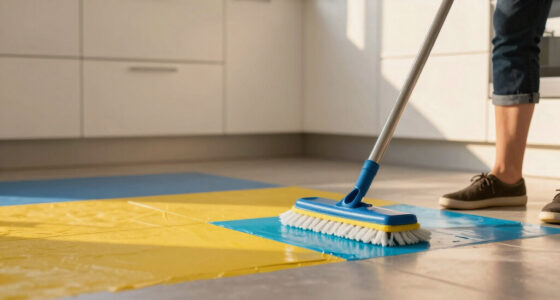
As winter approaches and snow begins to accumulate, it is essential to protect your floors from the damaging effects of salt and grime tracked in from outside. Salt crystals can act like abrasive grit, scratching your floors and leaving them vulnerable to further damage. To combat this, you need an effective entrance matting strategy. Start by laying down coarse scraper mats outside your entryway. These mats will help remove large snow and salt particles from footwear before they make their way inside. Once you’re through the door, have an absorbent mat ready to trap any residual moisture and dissolved salts.
Protect your floors this winter with effective entrance matting to combat salt and grime damage.
Consider the layout of your entrance. Aim for at least 15–20 feet of combined matting in high-traffic areas to maximize the removal of debris before it reaches your floors. Remember to clean and launder these mats frequently, as saturated mats lose their effectiveness and can become sources of salt transfer. Use non-slip mats with drainage capabilities to prevent pooling and reduce slip risks. Salt infiltrates most flooring types, causing structural damage and surface deterioration when it is tracked indoors. Additionally, maintaining color accuracy in your flooring finish can help ensure it withstands the winter wear.
Implementing a shoe-removal policy in sensitive areas can further minimize tracking. Boot trays and benches at the entrance encourage guests to remove wet footwear, keeping your floors cleaner. Consider providing indoor-only slippers if your space has strict cleanliness needs, and make sure to place clear signage that directs visitors to matting and boot stations.
Maintaining your floors during winter requires diligence. Sweep or vacuum high-traffic entrances multiple times each day, especially during storms, to remove abrasive salt crystals. Use neutral-pH cleaners to dissolve salt residue without harming your floor’s finish. Avoid using excessive water when mopping; instead, use a damp mop to prevent spreading any leftover salt.
Different flooring materials have specific vulnerabilities during winter. For hardwood, apply water-resistant sealants to create a protective barrier. Natural stone and tile benefit from penetrating sealers to prevent staining. If you have laminate or vinyl, limit moisture exposure to avoid warping. Concrete surfaces need extra attention; consider seasonal sealing to protect against salt damage.
Finally, stock the right cleaning products and equipment. Choose floor neutralizers that effectively dissolve specific ice-melt chemistries, and invest in vacuums with soft-surface attachments for safe cleaning. By following these steps, you can greatly reduce the impact of winter grime and salt on your floors, ensuring they remain in good condition throughout the season.
Frequently Asked Questions
What Type of Ice-Melt Is Safest for Indoor Use?
The safest ice-melt for indoor use is magnesium or potassium chloride. These options are less corrosive than sodium chloride, reducing damage to floors and surrounding surfaces. Always check product labels for indoor suitability and use them sparingly to minimize tracking. Additionally, consider using a layered mat system at entryways to catch any residue. Regularly clean mats and surfaces to keep your indoor environment safe and clean during winter months.
How Often Should Mats Be Replaced During Winter?
Think of your mats like sponges—once they’re saturated, they’re just spreading mess around. You should replace or deep clean your mats every two to four weeks during winter, depending on traffic. If you notice them looking worn or failing to absorb moisture effectively, it’s time for a change. Regular maintenance keeps your entryway clean and protects your floors from damage caused by salt and grime. After all, a clean entrance sets the tone for your home!
Can I Use Homemade Cleaners for Salt Residue?
Yes, you can use homemade cleaners for salt residue. A mixture of equal parts white vinegar and water works well. It effectively breaks down salt without damaging your floors. Just dampen a cloth or mop with the solution and wipe the affected areas. Make sure not to saturate the floors; too much water can cause damage. Always test your homemade cleaner on a small, inconspicuous area first to verify compatibility with your floor type.
What Are the Best Materials for Entrance Mats?
The best materials for entrance mats include durable rubber for scraping debris, absorbent microfiber for moisture retention, and nylon or polypropylene for easy cleaning. Coarse scraper mats work well outside to capture snow and salt, while plush wiper mats inside help absorb moisture. Look for mats with non-slip backing to enhance safety. Layering these materials in high-traffic areas guarantees effective dirt and moisture removal, protecting your floors from winter grime.
How Can I Prevent Slipping on Wet Floors?
You’d think wet floors are a slip-and-slide paradise, but they’re actually a recipe for disaster. To prevent slipping, you’ve gotta be proactive. Use non-slip mats, keep your floors dry, and make certain of proper drainage. Encourage everyone to wear appropriate footwear that grips well. Install warning signs to remind folks of the risk. Regularly clean and maintain the area to minimize moisture and hazards. With these steps, you can turn that slippery situation around!
Conclusion
By taking simple steps to protect your floors near entryways, you can keep your home looking fresh all winter long. Think of your floors as the canvas of a modern masterpiece; they deserve to shine even in the harshest conditions. Just like a knight donning armor to face battle, equip your floors with mats, regular cleaning, and protective treatments. With a little effort, you’ll make sure they withstand the winter grime and shine bright for years to come.
Halloween Picks
halloween
As an affiliate, we earn on qualifying purchases.