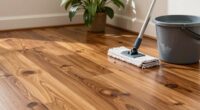
If your floors feel sticky after cleaning, it’s likely due to using too much cleaning solution or ignoring dilution recommendations. When you don’t dilute properly, residues from detergents can build up, leaving a gummy film on your floors. Always follow the manufacturer’s instructions for mixing solutions. Rinsing your floors with clean water after mopping can help, too. To explore more ways to keep your floors clean and residue-free, you’ll want to keep going.
Key Takeaways
- Overusing cleaning solutions or ignoring dilution instructions leads to residue buildup, causing sticky floors.
- Alkaline cleaners with a pH above 8 can create a gummy film on surfaces.
- Rinsing floors with clean water after mopping is essential to remove detergent residue.
- Regularly changing mop water and using clean mop heads prevents spreading dirt and grime.
- A vinegar-water mixture can help dissolve sticky residue left from cleaning products.

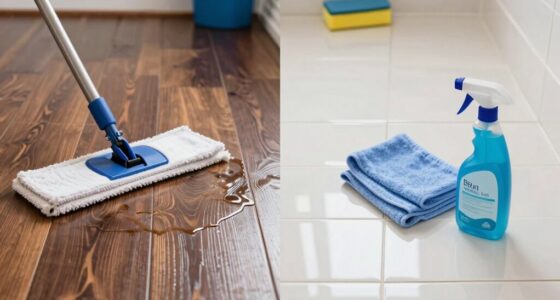
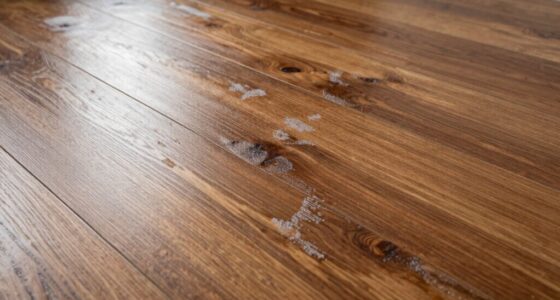
If you’ve ever cleaned your floors only to find them sticky afterward, you’re not alone. Many people face this frustrating issue, often due to common mistakes in their cleaning routine. One major culprit is the overuse of cleaning solutions. When you don’t follow the manufacturer’s dilution recommendations, you can end up with a gummy residue that clings to your floors, making them feel sticky rather than clean. It’s easy to get carried away with spray mops or products like the Swiffer Wet Jet, but using too much detergent can redeposit soap film and ruin your hard work.
Many struggle with sticky floors due to overusing cleaning solutions and neglecting dilution guidelines.
Another factor contributing to sticky floors is the type of cleaner you use. If you’re applying alkaline cleaners with a pH above 8, you might be setting yourself up for failure. These strong solutions can leave behind a sticky film that’s tough to remove. It’s vital to match your cleaner to the specific material of your flooring. For example, hardwood floors are particularly sensitive to harsh pH cleaners, so always opt for pH-neutral options that won’t cause residue buildup. Additionally, color accuracy in cleaning solutions can impact the effectiveness and appearance of your cleaning results.
Rinsing is just as important as cleaning itself. Skipping this step often leaves behind detergent residue that can cloud your floors and make them feel tacky. After mopping, always rinse your floor with clean water. If you see heavy residue, don’t hesitate to repeat the rinse 2-3 times. Using hot water can be especially effective, particularly on wood floors, as it helps dissolve any leftover soap buildup. Preventive measures, such as using a two-bucket method and changing mop water frequently, can greatly reduce the risk of sticky floors.
Dirty mop water can also be your enemy. Reusing the same water throughout your cleaning can spread dirt and grime rather than eliminate it. Regularly change your mop water, especially in heavily soiled areas, and consider sweeping or vacuuming first to minimize contamination.
To prevent sticky floors in the future, follow the exact dilution ratios on cleaner labels, and always rinse your floors with clean water post-cleaning. It’s wise to wring your mop thoroughly to avoid excess dripping, and ensure you’re using a clean mop head. If you do find yourself facing sticky floors, a vinegar-water mixture can help dissolve the residue, or you could use an ammonia solution for tougher spots. Alternatively, a steam mop can work wonders on compatible flooring types. By taking these steps, you can enjoy clean, residue-free floors and avoid the frustration of stickiness after cleaning.
Frequently Asked Questions
How Often Should I Clean My Floors to Prevent Stickiness?
You should clean your floors at least once a week to prevent stickiness. If you have pets or kids, consider cleaning more frequently. Make sure to use the right cleaner for your floor type and follow the manufacturer’s dilution recommendations. Always rinse after cleaning to remove any leftover detergent. Additionally, changing your mop water regularly will help you avoid spreading dirt and grime, keeping your floors cleaner and stick-free.
What Tools Are Best for Cleaning Without Causing Residue?
To clean without leaving residue, you need the right tools. A microfiber mop excels in trapping dirt, while a steam mop sanitizes without chemicals. In contrast, traditional mops might spread dirty water. Always use pH-neutral cleaners suited to your flooring; harsh products can lead to sticky buildup. Finally, remember to rinse thoroughly—this prevents leftover soap from clouding your surfaces. With these tools and practices, you’ll achieve a spotless, residue-free floor.
Can I Use Homemade Cleaners Safely on All Floor Types?
You can’t use homemade cleaners safely on all floor types. While some natural solutions work well on specific surfaces, others may damage sensitive materials like wood or tile. Always match your homemade cleaner to the floor type, avoiding harsh ingredients that could leave residues or cause discoloration. Test on a small area first, and remember to rinse thoroughly afterward to prevent any buildup. Safety and compatibility are key for effective cleaning.
How Do I Store My Cleaning Solutions to Maintain Effectiveness?
To sustain the effectiveness of your cleaning solutions, store them in a cool, dry place, away from direct sunlight. Keep the bottles tightly sealed to prevent evaporation or contamination. Label each container clearly with the contents and the dilution ratio, if applicable. Avoid mixing different solutions unless specified, as this can create harmful reactions. Regularly check expiration dates and replace any expired products to guarantee peak cleaning performance.
What Signs Indicate I Need to Change My Mop Water?
When your mop water starts to resemble mud, it’s time to change it. If you notice your floors aren’t getting cleaner or if the water looks dirty after just a few passes, don’t hesitate to refresh it. Additionally, if your mop head feels grimy or you’re spreading dirt around, it’s a clear sign. Regularly changing your mop water keeps your cleaning efforts effective and guarantees your floors shine like new!
Conclusion
In conclusion, if you’ve got sticky floors after cleaning, it’s time to rethink your dilution game. Mixing your cleaning solutions too weak can leave behind a residue that makes your floors feel tacky, no matter how hard you scrub. Remember, a little goes a long way, so don’t skimp on following the directions. By fine-tuning your approach, you’ll be back to smooth sailing in no time. Keep your floors sparkling and stick-free!