Cat urine crystals can cause persistent odors, even after cleaning, because they often embed in surfaces or litter, releasing odor-causing compounds over time. If you don’t fully eliminate the crystals, that smell can linger. Bacteria from past urinary infections may also contribute to unwanted scents. Cleaning may not remove all traces of these crystals, leading to a quick return of the odor. Understanding the root causes can help you tackle the problem effectively.

Get cleaning gear delivered free — and shop member deals
- Fast, free delivery on millions of items
- Access to Prime Big Deal Days deals on October 6–7
- Prime Video, Amazon Music and more included
Key Takeaways
- Urine crystals can embed in surfaces, causing persistent odors even after cleaning efforts.
- Residual crystals may release odor-causing compounds over time, contributing to lingering smells.
- Bacteria from previous urinary tract infections can produce ammonia-like odors, complicating odor issues.
- Concentrated urine can quickly reform crystals if hydration and dietary issues are not addressed.
- Thorough cleaning may not eliminate all sources of odors, especially if underlying conditions persist.

When it comes to your cat’s health, understanding urine crystals is essential, especially since they can lead to serious complications. These microscopic minerals, primarily struvite (composed of magnesium ammonium phosphate), can form in your cat’s urine and are often favored by a neutral-to-alkaline pH. While small amounts are normal, high concentrations can bind with bladder mucus, creating blockages that could threaten your cat’s well-being. Recent advancements in nanotechnology may offer innovative solutions for monitoring and managing such health issues in pets.
Crystals can fuse into larger bladder stones, risking urinary obstruction, particularly in male cats with narrower urethras. The formation of these crystals is typically influenced by urine supersaturation with minerals like magnesium, phosphorus, calcium, and ammonia. If your cat’s urine is supersaturated, it indicates a potential for crystalluria, which can lead to irritation and discomfort. Urinary obstruction can occur when these crystals accumulate and block the urethra, especially in male cats.
Crystals can merge into larger stones, risking urinary blockage, especially in male cats with narrower urethras.
Several factors can contribute to the development of these crystals. Diet plays a significant role; high-mineral diets or insufficient water intake can lead to concentrated urine, enhancing crystallization. Additionally, conditions like urinary tract infections can raise urine pH and lead to struvite crystal formation. It’s necessary to ensure your cat has access to fresh water and a balanced diet to mitigate these risks.
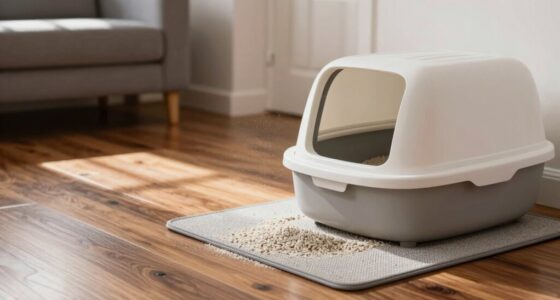
You might notice an unpleasant odor returning even after you’ve cleaned your cat’s litter box. The reason for this is that crystals can embed in surfaces or remain undetected, releasing odor-causing compounds even after cleaning. If bacteria from previous infections persist, they can produce ammonia-like odors that cleaning might not eliminate. Furthermore, concentrated urine crystals can reform quickly if the underlying issues related to diet or hydration aren’t addressed.
Diagnosis typically involves a urinalysis to detect crystals, assess urine pH, and measure mineral levels. High specific gravity can indicate concentrated urine prone to crystallization. If your cat shows signs of discomfort, such as straining to urinate or blood in the urine, it’s essential to consult your veterinarian. Persistent crystalluria can indicate long-term risks for urinary stones, especially if underlying factors remain uncorrected.
Treatment may involve prescription diets designed to dissolve struvite crystals, increased hydration, or even surgical removal for larger stones. By understanding the nuances of cat urine crystals and their implications, you can take proactive measures to help maintain your cat’s health and comfort.
Frequently Asked Questions
Can Cat Urine Crystals Affect Other Pets in the Household?
Yes, cat urine crystals can affect other pets in the household. If your cat has a urinary issue, the odor and potential health problems might affect your other pets’ behavior and health. They could become stressed or anxious due to changes in their environment or the presence of odors. Additionally, if other pets are exposed to contaminated areas, they might develop urinary issues or infections themselves. Keeping a clean environment is essential for all pets’ well-being.
Are There Home Remedies for Preventing Cat Urine Crystals?
Are you looking for ways to prevent cat urine crystals at home? You can try a few remedies! Increase your cat’s water intake by providing fresh water daily and considering a water fountain. Feeding a balanced diet low in minerals can also help. Encourage regular bathroom breaks and maintain a stress-free environment. Adding wet food to their diet can further boost hydration. Remember, consult your vet for tailored advice to keep your cat healthy!
How Often Should I Take My Cat for Urinary Health Check-Ups?
You should take your cat for urinary health check-ups at least once a year, but more frequent visits may be necessary if your cat has a history of urinary issues or is at higher risk, like older or overweight cats. Regular vet visits help catch problems early, ensuring your cat stays healthy. Keep an eye on your cat’s behavior and hydration, and consult your vet if you notice any changes.
What Are the Signs That My Cat Has Urinary Crystals?
You might notice your cat straining to urinate, with little success, or maybe they’re frequenting the litter box but producing only a few drops. Watch for signs of discomfort, like vocalizing or excessive grooming around their genital area. If you spot blood in their urine or observe them hiding, it’s a red flag. Pay attention to changes in appetite or lethargy, too—these can indicate urinary crystals causing distress in your feline friend.
Can Stress Management Help Reduce My Cat’s Risk of Urine Crystals?
Yes, stress management can help reduce your cat’s risk of urine crystals. By creating a calm environment and providing plenty of enrichment, you can minimize stress-related behaviors that contribute to urinary issues. Make certain your cat has access to fresh water and consider interactive toys or scratching posts to keep them engaged. Regular playtime and a stable routine also help them feel secure, ultimately promoting better urinary health and reducing the likelihood of crystal formation.
Conclusion
In the battle against cat urine crystals, you’ve got to stay vigilant. Just like a stubborn ghost, the odor can linger long after you think you’ve banished it. It’s not just about cleaning; it’s about understanding the hidden depths of your cat’s health and habits. By tackling the root causes and committing to regular maintenance, you can reclaim your space and keep the unwelcome scent at bay. Your home deserves to smell like happiness, not litter box blues!
Fall Picks
fall essentials
As an affiliate, we earn on qualifying purchases.