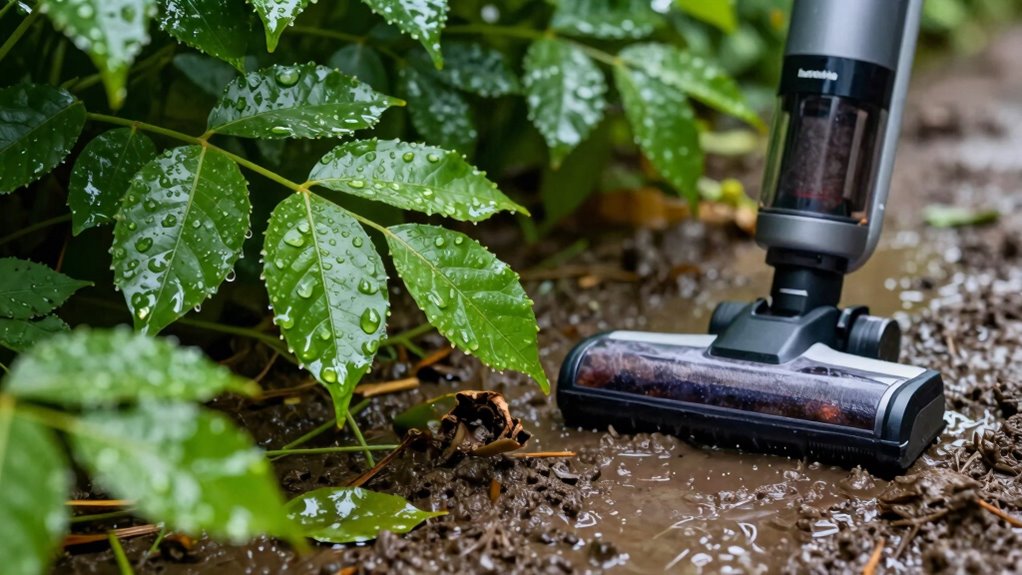

Vacuuming wet leaves and mud can be a challenge, but you can do it efficiently. Start by clearing obstacles and waiting for sunny days to reduce moisture. Keep your nozzle about an inch above the leaves and use higher throttle settings for better suction. Break large piles into smaller sections, and empty your vacuum bag frequently to prevent clogs. For more tips on effective techniques and equipment handling, explore further into the best practices for cleanup.
Listen free for 30 days with Audible
Thousands of audiobooks and originals — cancel anytime.
As an affiliate, we earn on qualifying purchases.
Key Takeaways
- Use a wet/dry shop vac with a larger tank capacity to handle mixed debris and prevent frequent emptying.
- Wait for sunny days to reduce moisture in leaves, making them lighter and easier to vacuum.
- Keep the vacuum nozzle about an inch above wet leaves to ensure consistent suction and avoid clogs.
- Break large wet leaf mats into smaller piles before vacuuming to improve efficiency and minimize clogging.
- Adjust the vacuum height and use higher airflow settings to prevent blockages while picking up wet leaves and mud.
When the leaves turn soggy and the ground becomes muddy, tackling your outdoor cleanup can feel overwhelming. You might be tempted to fire up your vacuum and plunge in, but without the right approach, you could end up with a clogged mess instead. First, it’s essential to assess your yard for large sticks, rocks, or compacted clumps of leaves. Removing these obstacles by hand will protect your equipment and make your job easier.
Wet leaves weigh much more than dry ones—up to five times more—so fill your tarps only halfway. If you’ve got a wet/dry shop vac, you’re already ahead of the game. These vacuums are designed to handle mixed wet leaves, mud, and debris, thanks to their water-safe design and larger tank capacity. If you’re using a standard leaf vacuum, know that it’ll struggle with wet material, as they tend to stick and clog the intake.
Before you start vacuuming, consider drying conditions. If possible, wait for a sunny day to lower moisture content, making your job smoother. When you do start, keep the nozzle about an inch above the leaf layer, moving side to side. This technique helps maintain consistent suction and prevents immediate blockages. If you have to deal with wet leaves, use higher throttle settings to increase airflow and reduce clogs. Additionally, using a powerful leaf blower can help clear out large piles of wet leaves before vacuuming.
Another smart approach is to break up large mats of wet leaves into smaller piles with a rake or broom. This will make it easier for your vacuum to pick them up without overloading. Don’t forget to empty your collection bag frequently; wet leaves fill bags faster and can become heavy, risking damage to your equipment.
If you find yourself with stubborn clogs, remember to turn off your vacuum and follow the manufacturer’s instructions to safely clear them. Keeping a bucket of clean water nearby can help lubricate your system during difficult jobs. After you finish, verify your vacuum is completely dry to prevent rust and mold.
Finally, consider mulching wet leaves instead of bagging them directly. Shredded leaves make excellent mulch and can enrich your compost pile. By taking these steps, you’ll navigate the challenges of wet leaves and mud like a pro, ensuring both your yard and your equipment stay in great shape.
Frequently Asked Questions
What Type of Vacuum Is Best for Wet Leaves and Mud?
A wet/dry shop vac is your best bet for tackling wet leaves and mud. Its water-safe design and larger tank capacity handle the mixed debris without clogging. If you’re dealing with heavier loads, consider a gas-powered model for stronger suction. Just remember to clear the area of large debris first, and work slowly to avoid jams. Regularly empty the tank to keep everything running smoothly and efficiently.
How Often Should I Clean My Vacuum Filter?
You should clean your vacuum filter every three to six months, but it’s best to check it more frequently if you use your vacuum often or for heavy-duty tasks. If you notice decreased suction or clogged performance, clean it immediately. Regular maintenance will enhance your vacuum’s efficiency and prolong its lifespan. Always follow the manufacturer’s guidelines for specific cleaning instructions to guarantee peak performance and avoid damaging your filter.
Can I Compost Wet Leaves Directly?
Composting wet leaves is like trying to bake a cake without the right ingredients; it just won’t turn out right. You can compost wet leaves, but it’s essential to balance them with dry materials, like shredded paper or straw, to prevent sogginess and odors. Mixing in carbon-rich browns helps the compost break down efficiently. So, don’t just toss those wet leaves in; mix them well for a thriving compost pile!
What Safety Gear Should I Wear While Vacuuming?
When vacuuming, you should wear hearing protection and safety goggles to shield your ears and eyes from noise and debris. If you’re working with gas-powered equipment, use a dust mask to avoid inhaling particles. Sturdy, non-slip footwear is essential to prevent slips on muddy surfaces. Gloves can protect your hands from sharp objects or materials. Always prioritize your safety to make certain a smooth and injury-free vacuuming experience.
How Do I Prevent My Lawn From Being Damaged?
To prevent lawn damage, keep in mind that a foot can exert up to 100 pounds of pressure. Use lightweight equipment and avoid working on muddy areas to minimize soil compaction. When vacuuming, place boards or paths to distribute your weight. Regularly check the weather forecast and wait for drier conditions if possible. Additionally, alternate between vacuuming and blowing leaves to reduce the risk of compacting the grass beneath.
Conclusion
In conclusion, tackling wet leaves and mud doesn’t have to be a chore. With the right techniques, you can keep your vacuum running smoothly, like a well-oiled machine. Remember to clear your path, use the right attachments, and take your time. It’s all about finding that sweet spot between efficiency and care. So, roll up your sleeves, embrace the mess, and soon enough, your yard will be looking spick and span again!
Fall Picks
fall essentials
As an affiliate, we earn on qualifying purchases.