
To tackle sand in your car, start by removing loose items and floor mats. Use a high-suction wet/dry shop vac with the right attachments for efficiency. Vacuum carpets and mats with overlapping strokes, switching to crevice tools for tight spots. Empty the vacuum regularly to maintain suction, and use compressed air for stubborn areas like vents. Follow up with a stiff-bristle brush to lift any leftover sand. Want to discover more tips for keeping your car sand-free?
Listen free for 30 days with Audible
Thousands of audiobooks and originals — cancel anytime.
As an affiliate, we earn on qualifying purchases.
Key Takeaways
- Prepare your vacuum and tools, clearing loose debris for optimal performance before starting the cleaning process.
- Use overlapping vacuum strokes on carpets and mats, switching to crevice tools for tight spaces and seams.
- Empty the vacuum canister frequently to maintain suction power and effectiveness during the cleaning.
- Consider using compressed air to dislodge sand from hard-to-reach areas, then vacuum the debris afterward.
- Implement preventative measures like protective towels and removable mats to minimize future sand accumulation in your vehicle.

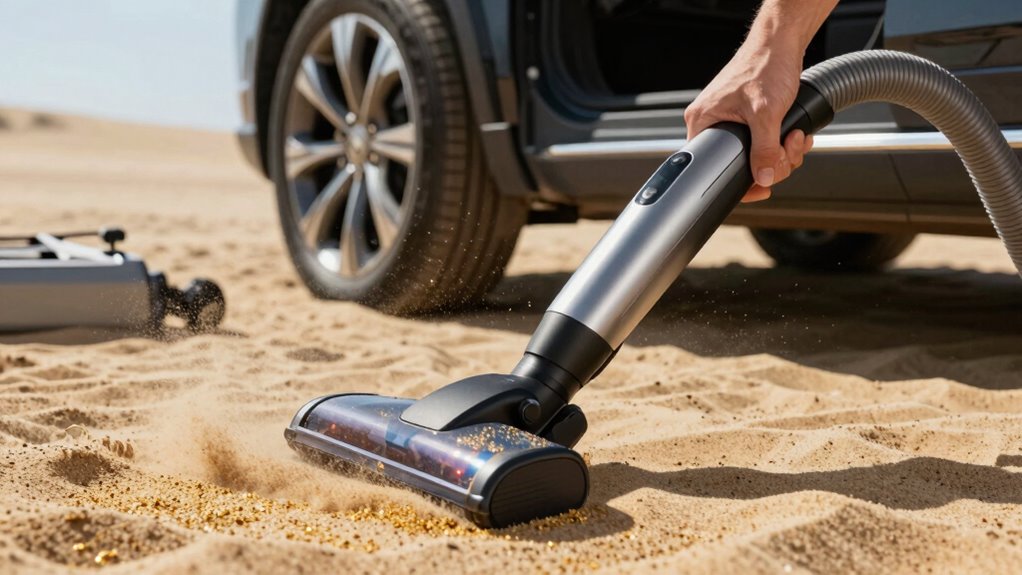
How do you keep your car sand-free after a beach day? It can be a challenge, but with the right tools and a solid plan, you can make it happen. Start by gathering a high-suction wet/dry vacuum, preferably a shop vac. This will outperform smaller handheld models when it comes to deep sand extraction. Make sure to have a crevice tool, a brush attachment, and a wide floor head for efficient vacuuming. Regular maintenance is key to keeping your vehicle in top shape, including upgrades to your cleaning tools.
Before you plunge into cleaning, prepare your space. Remove loose items from your car, take out the floor mats, and shake them outdoors to eliminate bulk sand. If possible, work in a well-ventilated garage or outside to contain the mess. Park on a flat surface and recline the seats to access seams and under-seat areas easily. Select the right vacuum settings and attach the necessary tools before you begin.
Prepare your space by removing loose items and floor mats, then work in a ventilated area to manage the mess effectively.
Start your cleaning with a two-stage approach. First, agitate the carpet fibers using a stiff-bristle brush to lift embedded sand. Once you’ve loosened the particles, begin vacuuming. Use overlapping strokes across the carpet, then switch to the crevice tool to tackle seams, crevices, and under the seats. Don’t hesitate to repeat vacuum passes until you notice a significant reduction in visible sand. Frequent emptying of the vacuum canister will maintain peak suction performance.
For tight spots, compressed air can work wonders. Blow air into vents, under seats, and seat tracks to dislodge sand, then vacuum the area afterward. Microfiber towels, slightly dampened, can help pick up any residual sand from hard-to-reach places like cup holders. For deep-set sand, consider using a vibrating palm sander—without sandpaper—next to the vacuum nozzle. This professional trick helps lift sand from stubborn fibers.
Additionally, using protective towels on seats and floors during beach trips can significantly reduce the amount of sand that enters your vehicle.
Once you’ve tackled the dry cleaning, you might need to follow up with wet extraction. Use a carpet extractor or machine shampoo for any remaining grit. A pH-appropriate cleaner can help if organic soils are present. After extraction, groom the carpet fibers with a brush and perform a final vacuum once everything’s dry.
To prevent future sand buildup, consider using removable rubber mats and non-fabric seat covers during beach trips. Implementing a quick clean-up routine will save you time and effort down the road. With these strategies, you can keep your car sand-free and enjoy your beach days to the fullest.
Frequently Asked Questions
How Often Should I Vacuum My Car After a Beach Visit?
You should vacuum your car immediately after a beach visit to prevent sand from embedding deep into the carpets and upholstery. A quick clean can save you from a more extensive cleaning later on. If you don’t have time for a thorough vacuum, at least do a quick sweep with a portable vacuum. Doing this regularly will help maintain a clean interior and make it easier to manage any sand that gets in.
Can I Use a Regular Household Vacuum for Sand Removal?
You can use a regular household vacuum for sand removal, but it’s like trying to catch smoke with your bare hands. While it might work in a pinch, its suction power often falls short against stubborn sand. You’ll find yourself battling grit and grains that cling to your carpets. For the best results, a shop vac or car detailing vacuum will save you time and energy, leaving your car clean and sand-free.
What Type of Floor Mats Are Best for Preventing Sand?
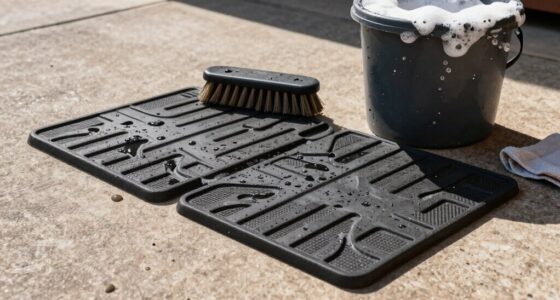
Rubber floor mats are your best bet for preventing sand in your car. They have a non-slip surface that traps sand and dirt, making cleanup easier. Look for mats with raised edges to contain spills and debris. If you prefer carpet mats, choose ones with a dense weave that can resist sand getting embedded. Regularly shake them out and vacuum to maintain cleanliness and keep your car sand-free.
Is There a Way to Remove Sand From Car Upholstery?
“An ounce of prevention is worth a pound of cure.” To remove sand from your car upholstery, start by using a crevice tool to get into tight seams and corners. A stiff-bristled brush can help agitate the sand, making it easier for your vacuum to suck it up. Don’t forget to check under the seats and cushions, as hidden sand often lurks there. Regular maintenance will save you from deeper cleaning later.
How Can I Stop Sand From Accumulating in My Vehicle?
To prevent sand from accumulating in your vehicle, install rubber floor mats and seat covers, as they act as barriers. Make it a habit to shake off shoes and towels before entering. After beach trips, vacuum immediately to prevent deep embedding. Keep a portable vacuum handy for quick clean-ups. Regularly check and clean hard-to-reach spots, like under seats, to make sure sand doesn’t settle in hidden areas.
Conclusion
Now that you’ve tackled the sandy mess, your car’s interior is as good as new, shining like the sun after a storm. With a little patience and the right tools, you’ve turned a gritty situation into a smooth ride. Remember, it’s all about consistency—vacuum regularly to keep those pesky grains at bay. You’ve conquered the sand battle, so hit the road and enjoy the journey without the unwelcome crunch beneath your feet!
Fall yard work Picks
leaf blowers
As an affiliate, we earn on qualifying purchases.