Activated carbon isn’t designed to trap dust particles but excels at adsorbing gases, odors, and chemicals thanks to its highly porous structure. When you use it in air or water filters, it captures VOCs, chlorine, pesticides, and other harmful substances by attracting them to its vast surface area. Its ability to trap these pollutants makes it essential for purification systems. Keep exploring to discover how this versatile material truly works and helps keep your environment clean.
Key Takeaways
- Activated carbon primarily adsorbs gases, odors, and chemical contaminants, not dust particles.
- Its porous structure traps volatile compounds via Van der Waals forces, not dust.
- Dust removal requires physical filters like HEPA, which capture particles based on size.
- Activated carbon enhances air or water purification by targeting odors and chemical pollutants.
- It should be used with dust filters for comprehensive air cleaning, as it doesn’t trap dust.

Shark Cyclone PET Handheld Vacuum, Navy Blue/Grey, CH701
- Powerful Suction: HyperVelocity suction for deep cleaning
- Lightweight Design: Only 1.6 lbs for easy handling
- Cordless Convenience: No cords, easy to maneuver
As an affiliate, we earn on qualifying purchases.
Understanding the Composition and Formation of Activated Carbon
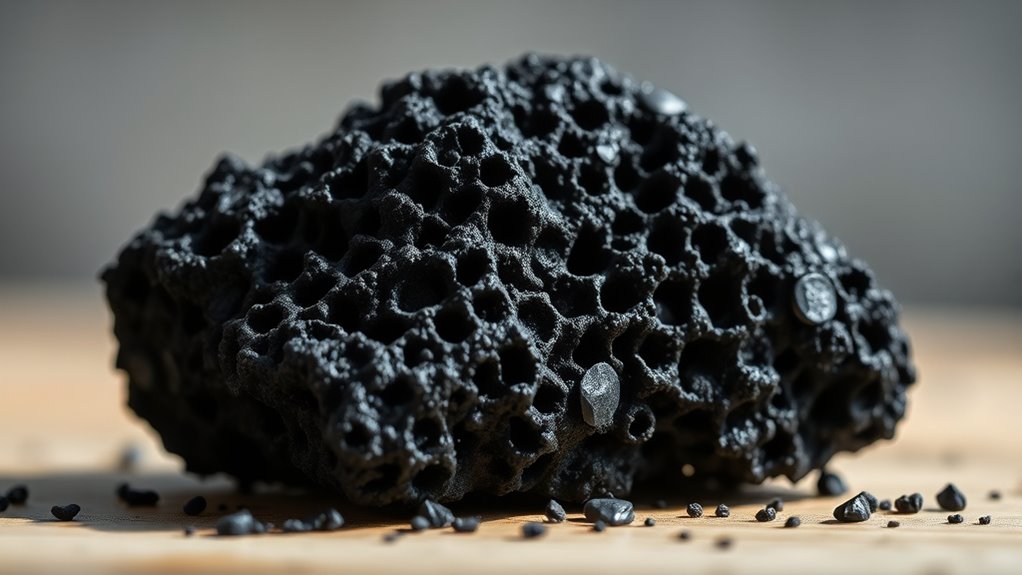
Activated carbon is a porous form of carbon that is highly effective at adsorbing impurities due to its large surface area. Its porous structure contains countless tiny holes and channels, which increase its ability to trap molecules. During production, you start with carbon-rich materials like wood, coconut shells, or coal. These materials undergo activation, either chemically or physically, creating an extensive network of pores. This process amplifies the surface area dramatically, often reaching hundreds of square meters per gram. This extensive surface area provides more active sites for adsorption, making activated carbon highly efficient at capturing contaminants. Understanding its composition and formation** helps you appreciate why it’s so effective at filtering and purifying air, water, and other substances. Additionally, the type of raw material used can influence the specific properties and effectiveness of the activated carbon produced, impacting its adsorption capacity and suitability for different applications. The activation process itself can be tailored to enhance specific characteristics, depending on the intended use of the activated carbon. Recognizing the importance of raw materials** can help in selecting the best type of activated carbon for particular purification needs.

dormzie Handheld Vacuum Cordless, Car Vacuum with 19000Pa Powerful Suction,1.3 lbs Lightweight, Type-C Charge, Multiple Accessories for Car Home Office Pet
- Lightweight and Cordless: Weighs only 1.3 lbs for easy handling
- Powerful Suction: 19000Pa suction with high-speed brushless motor
- Multiple Modes: Two suction modes for different cleaning needs
As an affiliate, we earn on qualifying purchases.
How Activated Carbon Adsorbs Gases and Odors

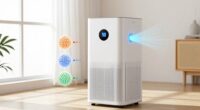
Gases and odors are drawn into the porous structure of activated carbon, where they encounter numerous active sites that facilitate adsorption. Its granular structure provides a large surface area, enhancing its capacity to trap molecules. The pore size plays a vital role, as smaller pores attract and hold smaller gas molecules and odorous compounds more effectively. When gases enter the pores, they are attracted to the carbon surface through Van der Waals forces, causing them to stick and be removed from the air or water. This process is physical adsorption, which is reversible. The combination of extensive surface area, diverse pore sizes, and active sites allows activated carbon to efficiently adsorb a wide range of gases and odors, making it highly effective for purification. Smart home technology can incorporate activated carbon filters in air purifiers and HVAC systems to improve indoor air quality. Additionally, porous structure is crucial in determining the effectiveness of activated carbon in various applications, as it directly influences the adsorption capacity. Understanding adsorption mechanisms helps optimize its use across different industries. A large surface area is essential for maximizing adsorption efficiency, especially in industrial applications where purification is critical.

Shark WANDVAC Cordless Hand Vac, Black, WV201BK
- Brand Leadership: Shark is the top US hand vacuum brand
- Powerful Suction: High-speed brushless motor for strong suction
- Lightweight Design: Weighs only 1.4 lbs for easy handling
As an affiliate, we earn on qualifying purchases.
Applications in Air and Water Purification Systems

Have you ever wondered how air and water purification systems remove pollutants effectively? It all comes down to the unique carbon structure created during the activation process. This process increases the surface area of activated carbon, making it highly porous and capable of trapping contaminants. In air purification, activated carbon adsorbs volatile organic compounds (VOCs), odors, and gases, improving indoor air quality. For water treatment, it removes chlorine, pesticides, and other harmful chemicals, ensuring clean drinking water. The activation process enhances the carbon’s adsorptive properties, allowing it to target specific pollutants efficiently. Thanks to its tailored carbon structure, activated carbon remains a essential component in both air and water purification systems, providing safe environments and healthier living conditions. surface area plays a crucial role in how effectively activated carbon can trap contaminants. Additionally, the porous structure of activated carbon allows it to accommodate a large number of pollutant molecules, increasing its effectiveness in purification applications. Understanding the activation process can help optimize the use of activated carbon for different filtration needs. Moreover, the adsorption capacity is directly influenced by these structural features, making it vital to select the right type of activated carbon for specific pollutants. The activation method used can be tailored to enhance certain properties, depending on the desired application.

Shark Pet Cordless Stick Vacuum, Grey, IX141
- HyperVelocity Suction: Powerful accelerated suction for deep cleaning
- Long Runtime: Up to 40 minutes of cordless cleaning
- Versatile Floor Cleaning: Effective on both floors and carpets
As an affiliate, we earn on qualifying purchases.
The Role of Activated Carbon in Medical and Industrial Uses
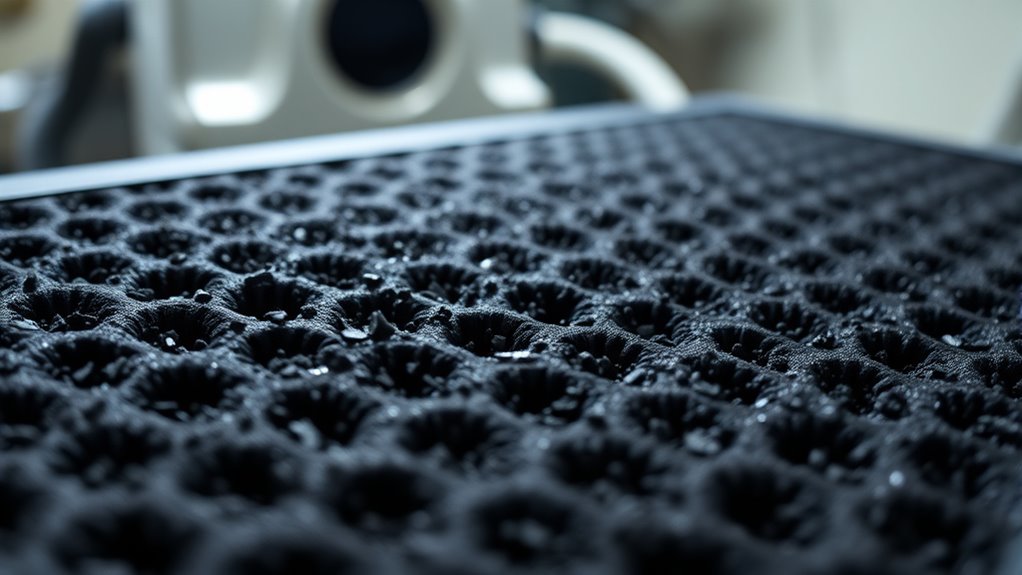
Activated carbon plays a vital role in both medical and industrial applications due to its exceptional adsorptive properties. In medicine, it’s used in emergency treatments for poisonings and overdoses, trapping toxins before they reach your bloodstream. Industry-wise, activated carbon filters gases and liquids, ensuring safety and purity. You’ll also find activated carbon in cosmetics, where it detoxifies and clears skin, and in agriculture, where it improves soil quality by adsorbing harmful substances. Its adsorption capacity is what makes it so effective across various fields. This capacity is largely influenced by its porous structure, which provides a vast surface area for adsorption. Its large surface area enhances its ability to trap contaminants efficiently. The surface chemistry of activated carbon also plays a crucial role in determining its effectiveness in different applications. Here’s a quick look:
| Application | Purpose | Example |
|---|---|---|
| Medical | Toxin removal | Emergency poison treatment |
| Industrial | Filtration | Gas and water purification |
| Cosmetics | Skin detoxification | Activated carbon masks |
| Agriculture | Soil enhancement | Adsorbing pesticides |
This versatility makes activated carbon invaluable across many fields.
Clarifying Common Misconceptions About Activated Carbon

Many people believe that activated carbon is a universal solution that can remove all toxins and impurities, but this isn’t quite true. While it’s effective for some tasks, activated carbon isn’t designed for dust filtration; it mainly targets gases, odors, and chemical contaminants. It doesn’t trap dust particles like a filter or HEPA system. Additionally, many assume it can completely mask odors, but it actually absorbs certain molecules rather than simply covering smells. Activated carbon works best when used as part of a system tailored to specific contaminants, not as a catch-all solution. Understanding these limitations helps you use activated carbon correctly and avoid misconceptions about its capabilities in air purification and odor control.
Frequently Asked Questions
Can Activated Carbon Remove Radioactive Contaminants?
Yes, activated carbon can assist with radioactive filtration by removing certain radioactive contaminants. It effectively traps specific radioactive particles and gases, aiding in contaminant removal from air or water. However, its efficiency depends on the type of radioactive material and its chemical properties. For thorough radioactive cleanup, specialized filtration systems are often necessary, but activated carbon remains a valuable component in reducing radioactive contamination in various environments.
Is Activated Carbon Effective Against All Types of Chemicals?
Activated carbon isn’t a magic bullet; it’s more like a selective sponge. While it’s effective against many chemicals, its adsorption limitations mean it doesn’t work equally on all substances. Its chemical specificity causes it to prefer certain contaminants over others, so some chemicals slip through the cracks. You should consider this when using activated carbon, as its effectiveness depends on the specific chemicals you’re trying to remove.
How Long Does Activated Carbon Typically Last Before Replacement?
Your activated carbon typically lasts between 1 to 3 months before needing replacement, depending on usage and the type of contaminants it absorbs. Keep an eye on the carbon lifespan, as saturation reduces its effectiveness. To maintain peak performance, replace it regularly based on the recommended replacement frequency for your specific application. Factors like air quality and volume also influence when you should change the carbon.
Does Activated Carbon Pose Any Health Risks During Use?
Using activated carbon generally doesn’t pose significant health risks, but you should be mindful of inhalation risks. Breathing in dust from the carbon can cause irritation or respiratory issues, especially if the dust becomes airborne during handling or replacement. To stay safe, wear a mask and handle the material in a well-ventilated area. If you notice any irritation or health concerns, consult a healthcare professional promptly.
Can Activated Carbon Be Regenerated and Reused Indefinitely?
You can regenerate activated carbon, but it won’t last forever. Imagine the carbon’s lifespan as a busy sponge soaking up impurities—eventually, it gets saturated. The regeneration process involves heating or chemical treatment to burn off trapped contaminants, restoring its absorbency. However, each cycle slightly reduces its effectiveness, meaning you can’t reuse it indefinitely. Over time, the carbon’s capacity diminishes, making replacement necessary for peak filtration.
Conclusion
Remember, activated carbon isn’t just for dust; it’s a sophisticated material that quietly works behind the scenes. While it may seem simple, its true power lies in how it tames gases, odors, and impurities you might not even notice. Don’t overlook its subtle influence—you’ll find it plays a vital role in keeping your air, water, and health in harmony. Sometimes, the most unassuming tools have the most profound impact.