Upholstery water rings form when moisture evaporates unevenly, leaving behind minerals and residues that disrupt the fabric’s texture. This often happens after spills or cleaning with tap water. To prevent them, use distilled water, clean larger areas for uniform drying, and guarantee thorough moisture extraction. Maintaining good air circulation can also help. Want to know more about tackling these pesky stains and keeping your upholstery looking fresh? There’s much more to uncover!
Key Takeaways
- Water rings form from uneven moisture evaporation, leaving behind dirt, minerals, or detergent residues on upholstery.
- Accidental spills or excessive moisture during cleaning can lead to visible water rings on fabric surfaces.
- Use distilled water for cleaning to prevent mineral deposits that exacerbate stain visibility.
- Clean larger areas around stains to ensure even wetting and drying, minimizing ring formation.
- Maintain good ventilation and consider applying protective encapsulants to safeguard against future stains.
Upholstery Water Rings
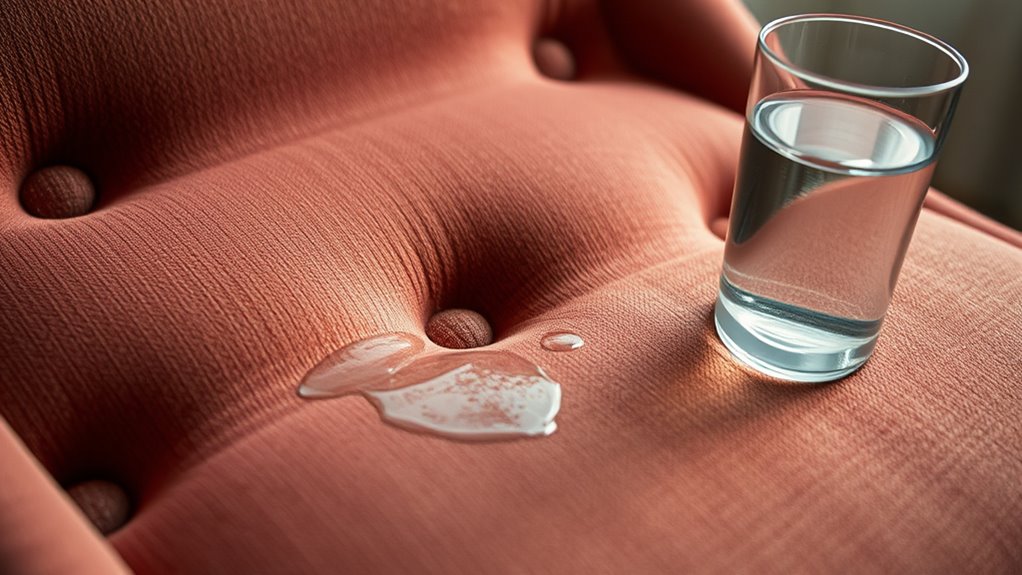
When you notice unsightly water rings on your upholstery, it can be frustrating, especially if you’re unsure how they got there. These rings often appear as lighter or darker circular stains, a result of moisture evaporating unevenly from the fabric. This process leaves behind minerals, detergent residues, or dirt, which culminate in those annoying ring-shaped marks. You might find these spots forming after cleaning, spills, or even from using tap water, as the moisture disrupts the natural texture and sheen of the upholstery fibers. Maintaining true vehicle performance is akin to ensuring your upholstery remains free from such stains.
Water rings develop through a specific mechanism. When you clean a small area without blending it into a larger section, the edges of that damp spot dry faster than the center. This uneven drying causes dirt, oils, and residues to be mobilized and pooled at the edges, ultimately showing up as visible rings when the moisture evaporates. If you’ve used tap water, minerals like calcium and magnesium can leave deposits on the fibers during this drying phase, exacerbating the issue. Additionally, the minerals in tap water can contribute significantly to the formation of these stains.
Several common scenarios can lead to the formation of water rings. Accidental spills from drinks, coffee, or even wet items can saturate your upholstery. If you’ve attempted steam cleaning or DIY washing, you may have used too much water without extracting it fully. High humidity levels can also cause slow moisture absorption in poorly ventilated areas, making it easier for water rings to form. Residual dirt and body oils can further complicate matters, creating an environment where water rings flourish.
The materials used in your upholstery can heighten vulnerability to these problems. Fabrics absorb moisture quickly, leading to discoloration and uneven drying. Foam padding can trap water, promoting bacteria and mildew growth, while wooden frames may swell or crack from prolonged exposure. Even leather can show surface marks from water, impacting its appearance and longevity.
To prevent water rings, consider using distilled water for cleaning to avoid mineral deposits from tap water. Clean larger areas around any stains to ensure uniform wetting and drying, and always extract moisture thoroughly after cleaning. It’s also vital to maintain good ventilation and use air conditioning in humid environments. Applying protective encapsulants after cleaning can create an additional barrier against future stains. By taking these steps, you can keep your upholstery looking pristine and extend its lifespan.
Frequently Asked Questions
Can Water Rings Be Removed From Upholstery Fabric?
Yes, you can eliminate water rings from upholstery fabric. Start by dampening a clean cloth with distilled water and gently dab the stained area, blending into the surrounding fabric. Avoid soaking it. Once damp, use a fan or hairdryer on a low setting to dry the area thoroughly. If the stain persists, consider using a mild upholstery cleaner. Always test any product on a hidden area first to ensure it won’t damage the fabric.
What Types of Fabrics Are Most Prone to Water Rings?
Imagine a canvas of colors, vibrant yet vulnerable to the whims of water. When it comes to fabrics, natural fibers like cotton and linen are most prone to water rings. Their absorbent nature makes them magnets for moisture. Velvet and silk can also fall victim, as their delicate textures show stains easily. If you’ve got these materials, be extra cautious with spills and cleaning to keep your upholstery looking pristine.
How Can I Identify Water Rings Versus Other Stains?
To identify water rings versus other stains, look for circular, lighter or darker marks that contrast with the surrounding fabric. Water rings often have a halo effect and may appear after cleaning or spills. In contrast, other stains typically have irregular shapes and colors. If the stain feels sticky or greasy, it’s likely not a water ring. Use a clean, damp cloth to gently test the area; water rings should lift easily.
Are There Home Remedies for Treating Water Rings?
Yes, there are home remedies for treating water rings. You can mix equal parts of white vinegar and water in a spray bottle. Lightly spray the affected area, then gently blot with a clean cloth. Another option is to use a damp cloth with a bit of dish soap, followed by rinsing with a clean damp cloth. Always test any solution on an inconspicuous area first to verify it won’t damage your upholstery.
How Long Does It Take for Water Rings to Form?
Water rings can form in as little as a few hours after moisture evaporates unevenly from your upholstery. If you’ve spilled something or cleaned a spot without drying it properly, those rings might appear quickly. Factors like humidity and the type of fabric also influence the speed of formation. To avoid them, act fast—blot spills, ensure adequate ventilation, and dry the area thoroughly. Keeping an eye on moisture levels helps too!
Conclusion
In the world of upholstery, water rings are reminders of careless moments, like footprints in the sand that fade but leave a mark. By taking simple precautions—using coasters, blotting spills, and maintaining humidity—you can protect your furniture‘s beauty and keep your space inviting. Just as a well-tended garden flourishes, so too can your upholstery shine without the blemish of water rings. Nurture your surroundings, and they’ll reflect the care you put into maintaining them.