
You can safely wash most area rugs made from wool, nylon, or polyester using gentle vacuuming and spot cleaning with mild solutions, like diluted dish soap or vinegar. However, avoid soaking natural fibers like jute or sisal, which can warp or stain easily. Using harsh chemicals or excessive moisture can damage delicate fibers and fade dyes. Stay aware of your rug’s material, and explore tips that protect and maintain its beauty and longevity.

Get cleaning gear delivered free — and shop member deals
- Fast, free delivery on millions of items
- Access to Prime Big Deal Days deals on October 6–7
- Prime Video, Amazon Music and more included
Key Takeaways
- Wash machine-washable rugs made of durable fibers like nylon or polyester for easy cleaning.
- Avoid washing natural fiber rugs like jute or sisal, as they can shrink, warp, or get damaged.
- Spot clean spills immediately with mild solutions to prevent stains from setting and fibers from weakening.
- Do not use harsh chemicals or aggressive scrubbing, which can fade dyes and break fibers.
- Consult manufacturer guidelines or a professional for delicate or antique rugs to prevent damage.
Understanding Rug Materials and Their Cleaning Needs
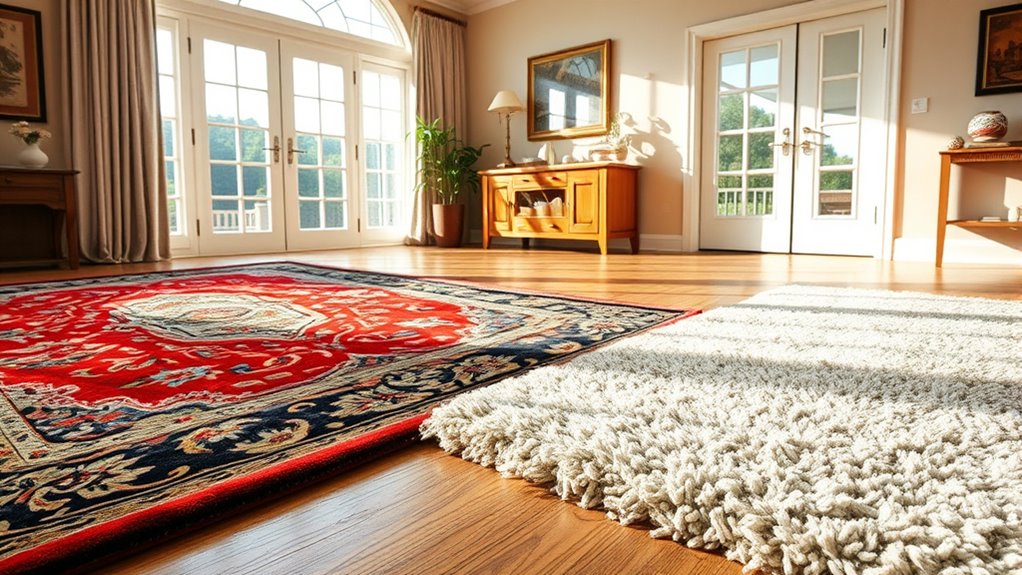
Since different rug materials have unique characteristics, understanding these differences is essential for proper cleaning and maintenance. Fiber types vary in texture, durability, and how they respond to cleaning methods. For example, wool fibers are naturally stain-resistant and resilient, making them easier to clean without harsh chemicals. Synthetic fibers like nylon and polyester often offer high stain resistance and are more resistant to fading and wear. Conversely, natural fibers such as jute or sisal may be less resistant to stains and require gentler cleaning methods to avoid damage. Recognizing these differences helps you select appropriate cleaning techniques, preventing damage and prolonging your rug’s lifespan. Knowing the specific fiber type guarantees you use the right products, maintaining both the appearance and integrity of your area rug. Additionally, understanding sustainable cleaning practices can help minimize environmental impact while caring for delicate materials. Being aware of fiber-specific cleaning requirements ensures that you avoid common mistakes that could compromise your rug’s durability. Incorporating knowledge about rug material properties can further refine your cleaning approach, ensuring longevity and beauty. Furthermore, considering professional cleaning options may be beneficial for delicate or valuable rugs that require specialized care.
Safe DIY Cleaning Techniques for Common Area Rugs

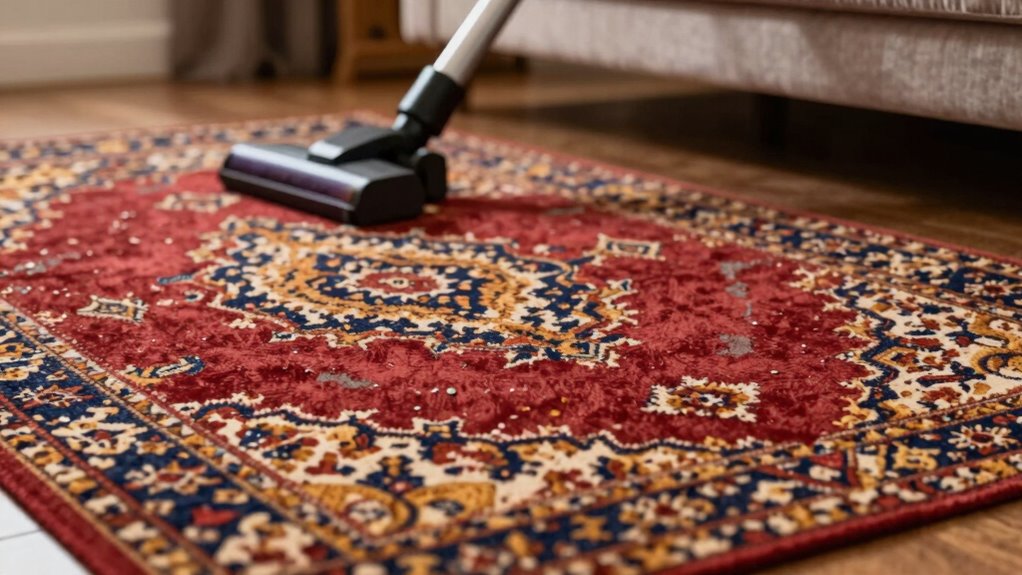
Cleaning your area rugs at home can be effective and safe when you use the right DIY techniques. Start with gentle vacuuming to remove loose dirt and debris. For stain removal, act quickly—blot spills with a clean cloth, avoiding rubbing, which can embed stains further. Use a mixture of mild dish soap and water for spot cleaning, testing it first on a small, hidden area to prevent damage. For stubborn stains, a DIY cleaning solution like white vinegar and baking soda can help lift grime without harsh chemicals. Always avoid excessive moisture, which can cause mold or damage. Proper color accuracy and regular maintenance and prompt stain removal are key to keeping your rugs fresh and clean. Using appropriate cleaning techniques can prevent damage and extend the life of your rugs. Regular maintenance practices, such as rotating rugs and avoiding direct sunlight, also help preserve their appearance. Additionally, understanding the benefits of curiosity can inspire you to explore new cleaning methods and solutions. Developing a cleaning routine tailored to your rug’s material and type can significantly improve longevity. With proper DIY cleaning, your rugs stay beautiful longer.
When to Seek Professional Rug Cleaning Services
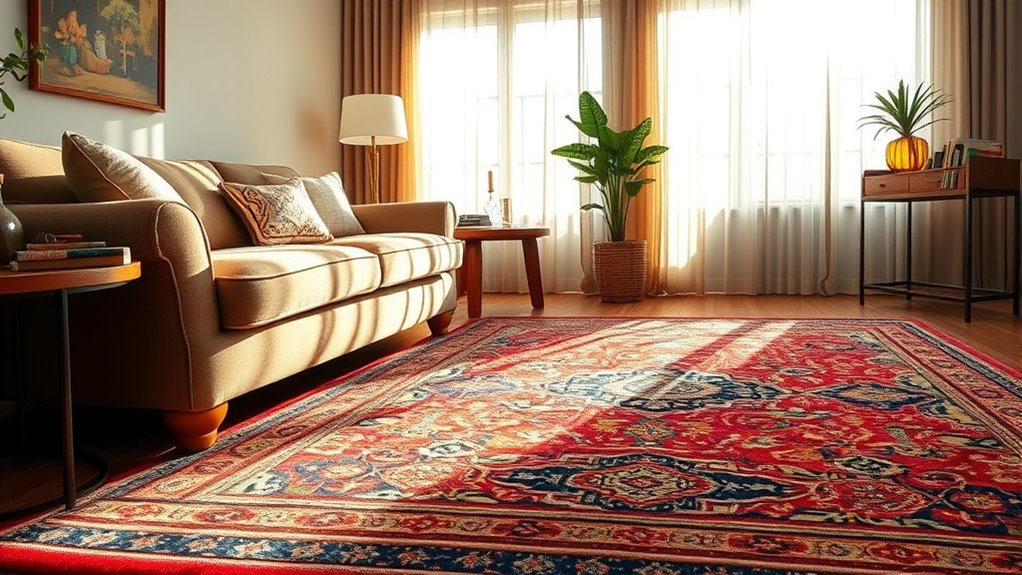
While regular DIY cleaning keeps your rugs looking good, there are times when professional help is essential. If your rug has intricate weaving techniques or delicate materials, a professional cleaner can prevent damage. Rugs with fragile or aged fibers may lose integrity with improper cleaning. Additionally, if your rug’s dyes lack stability or are prone to bleeding, professionals can use specialized methods to preserve color and prevent fading. Deep stains, strong odors, or mold growth also warrant expert attention, as improper cleaning can worsen these issues. When dealing with antique or valuable rugs, it’s best to leave the job to professionals who understand the nuances of rug weaving techniques and dye stability, ensuring your rug’s longevity and beauty.
Common Mistakes That Can Damage Your Rugs
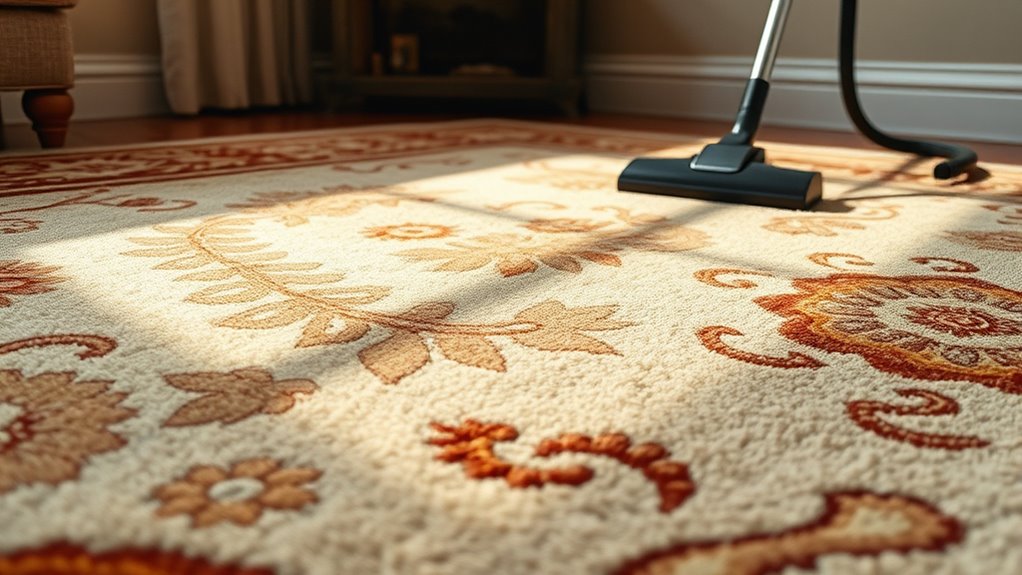
Many common mistakes can unintentionally harm your rugs if you’re not careful. For example, rushing stain removal after pet accidents can spread the stain or damage fibers. Using harsh chemicals or scrubbing too aggressively can weaken rug fibers and cause fading. Additionally, improper cleaning methods might lead to mold or warping. To ensure safe cleaning practices, it’s important to understand proper maintenance and select appropriate methods for your rug type. Regularly checking manufacturer guidelines can help prevent damage. Proper cleaning techniques are essential to avoid common pitfalls. For example, employing smart-home integrations can help monitor and optimize your cleaning routines for different rug types. Being aware of the electric power involved in cleaning equipment can help prevent accidental damage. Here’s a quick comparison:
| Mistake | Consequence |
|---|---|
| Using bleach on stains | Fading and fiber damage |
| Over-wetting during cleaning | Mold and fiber deterioration |
| Ignoring pet accidents | Stains set, odors persist |
| Skipping regular vacuuming | Dirt embeds, fibers wear out |
| Using wrong cleaning solutions | Damage to dyes and fibers |
Avoid these errors to protect your rugs’ longevity and appearance.
Tips for Maintaining the Longevity and Appearance of Your Rugs
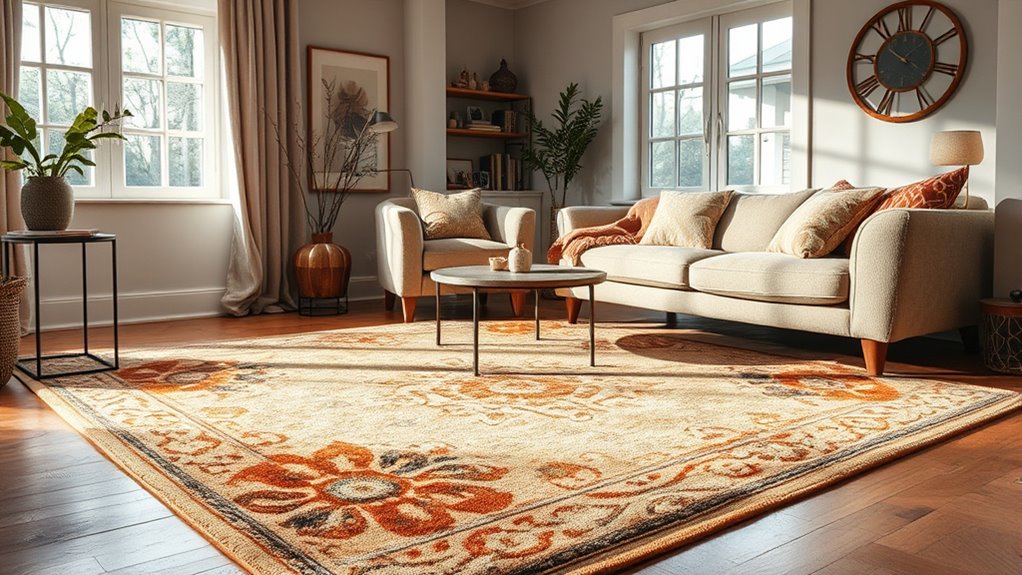
To keep your rugs looking their best for years to come, regular maintenance is essential. Start by choosing a rug design that complements your decorating styles, which can help you spot dirt and wear more easily. Vacuum your rug frequently to prevent dirt buildup that can dull colors and damage fibers. Rotate it every few months to ensure even wear, especially if you have high-traffic areas. Protect your rug from direct sunlight to prevent fading and consider placing a rug pad underneath for added stability and longevity. Address spills immediately with appropriate cleaning methods, avoiding harsh chemicals that can harm the fibers. Proper care tailored to your rug’s design and your decorating style will preserve its beauty and extend its lifespan.
Frequently Asked Questions
How Often Should I Vacuum My Area Rugs?
You should vacuum your area rugs at least once a week for proper maintenance. If you have pets or high foot traffic, increase the vacuum frequency to twice a week to keep dirt and debris at bay. Regular maintenance tips include using a gentle suction setting and rotating the rug periodically to prevent uneven wear. Staying consistent with vacuuming helps preserve your rug’s appearance and prolongs its lifespan.
Can I Machine Wash All Types of Area Rugs?
You can’t machine wash all types of area rugs—irony at its finest. While some durable rugs handle machine wash rugs with ease, delicate rug care demands gentler methods. Think twice before tossing that antique or wool rug into your washer; it could be ruined. Always check tags or manufacturer instructions. For delicate rugs, hand washing or professional cleaning is your best bet for preserving beauty and longevity.
Are There Specific Stains That Are Impossible to Remove?
Some stains are nearly impossible to remove, especially stubborn stains like ink, pet urine, or wine. You might try stain removal techniques, but these often fall short, leaving marks behind. For best results, act quickly and avoid scrubbing too hard, as it can worsen the stain. In cases of tough stains, professional cleaning may be your best bet, since certain marks resist even the most careful home efforts.
What Are Eco-Friendly Cleaning Options for Rugs?
To clean your rugs eco-friendly, opt for natural fiber options like jute or wool, which are biodegradable and sustainable. Use non-toxic cleaners such as vinegar, baking soda, or mild soap to avoid harsh chemicals. These options effectively remove dirt and stains without harming the environment or your health. Regular vacuuming and spot cleaning with non-toxic solutions keep your rugs fresh while supporting eco-conscious living.
How Can I Prevent Fading and Color Loss Over Time?
You can prevent fading and color loss by protecting your rug from direct sun exposure, which accelerates colorfastness deterioration. Use window treatments like curtains or blinds to block sunlight during peak hours. Regularly rotate your rug to ensure even wear and color preservation. Additionally, choose eco-friendly UV protectant sprays that help maintain vibrant colors and extend your rug’s lifespan, keeping it looking fresh and new over time.
Conclusion
By understanding your rug’s material and knowing what you can safely wash, you preserve its beauty and longevity. While DIY methods are tempting, they can sometimes cause damage—like neglecting professional care when needed. Balancing these choices means you protect your investment and enjoy a vibrant, cozy space. In the end, mindful maintenance combines the art of gentle cleaning with expert intervention, ensuring your rugs remain both stunning and durable for years to come.
Fall Picks
fall essentials
As an affiliate, we earn on qualifying purchases.