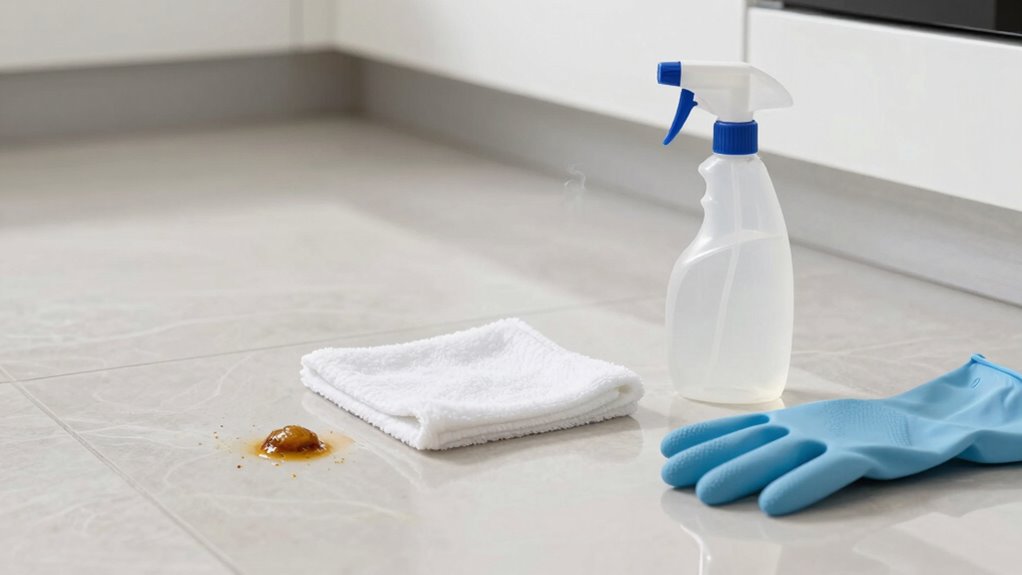
When cleaning pet vomit, act quickly to prevent spreading odors. Start by wearing rubber gloves and scrape up excess vomit with paper towels or a dustpan. Blot the area with a clean cloth to absorb liquids—don’t scrub! Apply a vinegar-and-water solution, let it sit for 15 minutes, then blot again. After that, sprinkle baking soda to absorb lingering smells. For tough stains, an enzymatic cleaner can help. There are effective methods to keep your space fresh—you’ll find more tips ahead.

Get cleaning gear delivered free — and shop member deals
- Fast, free delivery on millions of items
- Access to Prime Big Deal Days deals on October 6–7
- Prime Video, Amazon Music and more included
Key Takeaways
- Wear rubber gloves to ensure hygiene and prevent spreading bacteria during cleanup.
- Carefully scrape excess vomit without pushing it deeper into carpet fibers to minimize odor.
- Blot remaining liquids with a clean cloth, avoiding scrubbing to prevent further spreading of stains.
- Use a vinegar and water mixture to neutralize odors, letting it sit before blotting.
- Sprinkle baking soda on the area after treatment to absorb lingering odors effectively.

Pet Vomit Cleanup
Dealing with pet vomit can be a frustrating experience, but acting quickly can make all the difference. When you first spot the mess, grab your rubber gloves and the necessary tools—paper towels, a dustpan, or even some cardboard. Carefully scrape up the excess vomit, trying not to push it deeper into your carpet fibers. Once you’ve done that, take a clean cloth or paper towels to blot any liquids remaining on the surface. Remember, scrubbing will only make things worse, so stick to blotting.
After you’ve removed the bulk of the vomit, it’s time to tackle the stain and odor. A simple mixture of equal parts white vinegar and water can work wonders. Cleaning solutions like this are often effective for various types of stains. Apply this solution with a clean cloth or sponge directly to the stained area and let it sit for about 15 minutes. Once that time has passed, blot it dry with another clean cloth. If the stain persists, don’t hesitate to repeat the process. Just be sure to test the vinegar mix on an inconspicuous area first to avoid any unwanted discoloration.
Tackle stains and odors with a vinegar and water solution—it’s simple and effective!
If you’re still hunting for a solution, consider using baking soda. After you’ve blotted up the stain, sprinkle baking soda generously over the affected area. This will help absorb any lingering odors. For more stubborn stains, mix baking soda with water to create a paste. Apply this paste to the stain and let it sit for 30 minutes before blotting it up. Vacuum the area afterward to remove any remaining residue.
For deeper cleaning, enzymatic cleaners can be a game-changer. These products contain bacteria that break down bile, food, and odors. Saturate the stained area with an enzymatic cleaner, then agitate it with a soft brush or the bottle bottom to ensure it penetrates the fibers. After agitating, apply a damp white towel to help lift away any remaining residue. Commercial pet vomit stain removers can also be very effective if home remedies fail.
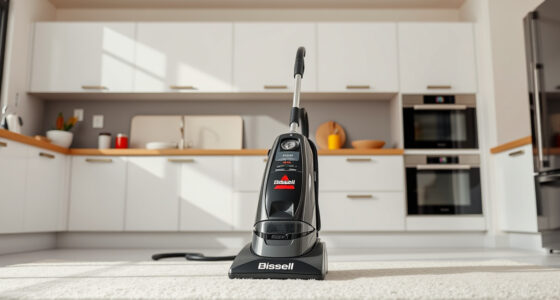
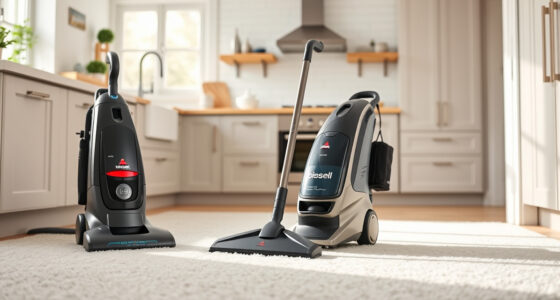
When all else fails, commercial products like Nature’s Miracle or Rocco & Roxie can save the day. These are specifically designed to target pet messes effectively. If you’re facing stubborn stains, you might also consider using a portable carpet cleaner like the Bissell Little Green HydroSteam Pet. Just remember, avoid using steam on vomit, as heat can set the odors and stains into the fibers.
Finally, always treat messes promptly to prevent permanent odors. Your swift actions will go a long way in keeping your home fresh and clean.
Frequently Asked Questions
Can I Use Bleach to Clean Pet Vomit Stains?
No, you shouldn’t use bleach to clean pet vomit stains. Bleach can damage your carpet and might not effectively remove the odor. Instead, focus on using vinegar solutions or baking soda to treat the stain. These methods are safer for your carpets and can help neutralize odors without causing further damage. Always test any cleaning solution on a small, hidden area first to verify it won’t harm your flooring.
How Do I Prevent My Pet From Vomiting Again?
To prevent your pet from vomiting again, it’s essential to balance their diet like a tightrope walker, ensuring the right mix of nutrients and avoiding sudden changes. You’ll want to monitor their eating habits, splitting meals into smaller portions, much like savoring a fine meal rather than gulping it down. Regular vet check-ups can catch health issues early, while reducing stress in their environment creates a calm oasis, keeping your furry friend feeling their best.
Are There Specific Carpet Types That Are Harder to Clean?
Yes, some carpet types are harder to clean than others. For instance, plush or shag carpets can trap stains and odors deep within their fibers, making removal difficult. Similarly, carpets made from natural fibers like wool absorb spills more readily, complicating the cleaning process. Synthetic carpets often resist stains better, but if you act quickly, you can minimize damage on any type. Always test cleaning solutions on a small area first!
What Should I Do if My Pet Eats Vomit?
If your pet eats vomit, don’t panic! First, keep an eye on them for any signs of distress like vomiting or diarrhea. It’s best to abstain from food for a few hours to let their stomach settle. After that, offer bland food like boiled chicken and rice. If they seem unwell, contact your vet. It’s like a game of survival—stay calm and guarantee your furry friend’s health is your top priority!
How Can I Mask the Smell of Vomit While Cleaning?
To mask the smell of vomit while cleaning, sprinkle baking soda over the affected area; it absorbs odors effectively. You can also mix equal parts white vinegar and water in a spray bottle, lightly misting the area. The vinegar smell dissipates as it dries, helping neutralize the odor. For extra freshness, consider using an air freshener or scented candle nearby, but make sure it doesn’t interfere with your cleaning efforts.
Conclusion
Now that you’ve tackled the mess, don’t let the lingering odor haunt your home. As you take a deep breath, you might wonder if the smell will return, creeping back into your space. But with the right techniques and a little patience, you can reclaim your sanctuary. Keep your supplies handy and stay vigilant; the next little accident might be just around the corner. Will you be ready? Only time will tell, but you’ve got this!
Fall Picks
fall essentials
As an affiliate, we earn on qualifying purchases.