To allergy-proof your bedroom, focus on five surfaces: bedding, flooring, window treatments, upholstered furniture, and humidity control. Use dust-mite-proof covers for bedding and wash linens weekly in hot water. Opt for hard floors instead of carpet, and choose washable window treatments. Minimize upholstered furniture and declutter your space to reduce allergens. Finally, keep humidity below 50% to prevent dust mites and mold growth. Discover more tips to create your allergy-free haven.
Key Takeaways
- Encase pillows, mattresses, and box springs in dust-mite-proof covers to reduce allergen exposure significantly.
- Choose hard flooring options like hardwood or tile, and remove carpeting to minimize dust mite reservoirs.
- Opt for washable window treatments, like cotton or synthetic curtains, to facilitate regular cleaning and allergen removal.
- Replace upholstered furniture with easier-to-clean materials like leather or wood to reduce dust and allergens.
- Maintain indoor humidity below 50% using dehumidifiers and air purifiers to inhibit dust mites and improve air quality.
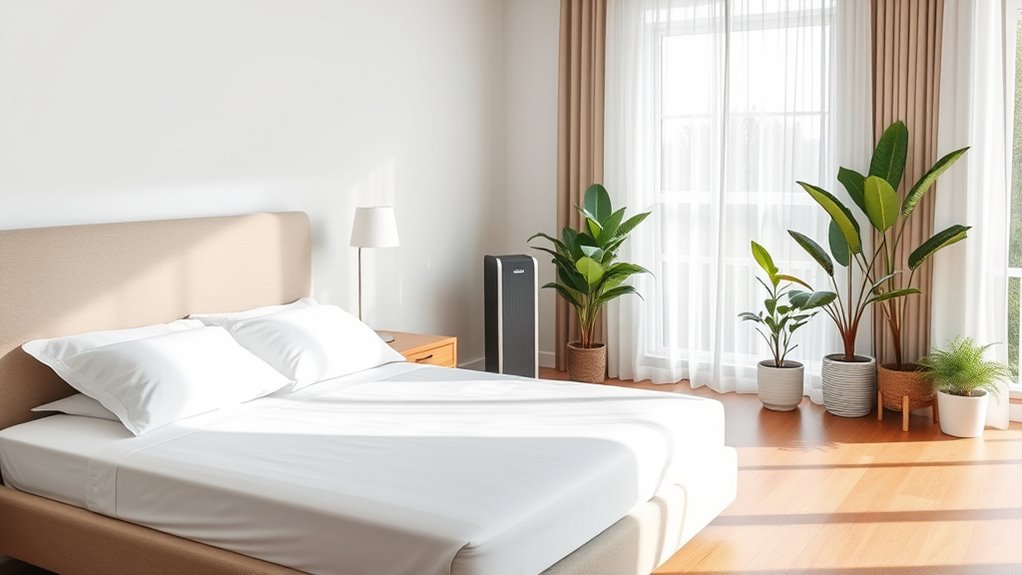
Allergy-proofing your bedroom is essential for creating a healthier sleep environment. Start with your bedding. Encase your pillows, mattress, and box springs in dust-mite-proof covers. These impermeable encasements can reduce dust mite levels by more than 70%, making a significant difference for allergy sufferers. Wash your sheets, pillowcases, and blankets weekly in water that’s at least 130°F (54°C) to eliminate dust mites. Don’t forget to dry your bedding on a hot cycle; this step is crucial for killing any remaining allergens. If you’re using wool or feather bedding, consider switching to synthetic materials, which are less likely to harbor allergens.
Allergy-proof your bedroom by encasing bedding in dust-mite covers and washing weekly in hot water to reduce allergens.
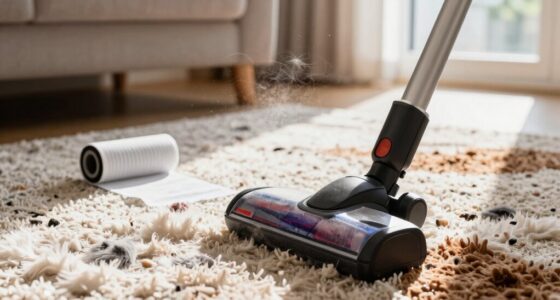
Next, look at your flooring. If you have carpeting, it’s wise to remove it. Opt for hardwood, linoleum, or tile, as bare floors drastically reduce dust mite allergens. If you must keep carpeting, choose low-pile options and vacuum weekly with a HEPA filter vacuum. Regular vacuuming can significantly enhance your efforts to maintain a clean environment. Wash any area rugs regularly to maintain a clean environment. Keeping your floors clear of clutter and dust is vital for reducing allergens in your bedroom.
Window treatments also play a key role in allergy-proofing. Avoid heavy drapes where allergens can thrive. Instead, use washable curtains made from plain cotton or synthetic fabric. Replace horizontal blinds with washable roller shades for easier maintenance. During pollen season, keep your windows closed and make sure to clean window frames and sills to remove any mold or dust buildup.
Consider your upholstered furniture as well. If possible, replace fabric sofas and chairs with leather, wood, or plastic options. These materials are less likely to trap dust and allergens. If you can’t avoid upholstered items, make sure to clean them regularly. Minimize the amount of furniture in your bedroom to reduce potential allergen reservoirs.
Humidity control is another crucial factor. Keep the humidity below 50% to inhibit dust mites and mold growth. Use a dehumidifier if necessary, and fix any leaks promptly to avoid moisture problems. Additionally, invest in an air purifier with a HEPA filter to help remove allergens and particulates from the air. Regular vacuuming with a HEPA filter can further improve air quality.
Frequently Asked Questions
How Often Should I Replace My Mattress for Allergy Management?
You should replace your mattress every 7 to 10 years for effective allergy management. Over time, mattresses accumulate dust mites, mold, and other allergens, which can trigger your symptoms. When you buy a new mattress, opt for hypoallergenic materials and encase it with dust-mite-proof covers. Regularly clean your bedding and maintain a low-humidity environment to keep allergens at bay. Staying proactive about your mattress’s condition can markedly improve your sleep quality and overall health.
What Types of Synthetic Materials Are Best for Bedding?
When it comes to bedding, think of synthetic materials as your armor against allergies. Opt for polyester or nylon, as they’re less likely to harbor dust mites and allergens. Microfiber is another great choice, known for its softness and durability. You’ll want to avoid wool or down, which can trap allergens. Remember to wash everything regularly in hot water to keep your sleep environment fresh and allergy-free.
Can Indoor Plants Affect Allergy Symptoms in the Bedroom?
Yes, indoor plants can affect your allergy symptoms in the bedroom. While some plants purify the air, others can trigger reactions due to mold growth in the soil or pollen release. If you’re sensitive, it’s best to choose low-pollen, low-mold options like snake plants or peace lilies. Keep an eye on humidity levels, as excessive moisture can lead to mold, exacerbating allergy symptoms. Regularly check and maintain your plants to minimize issues.
Are There Specific Air Purifiers Recommended for Allergy Sufferers?
Yes, you should look for HEPA air purifiers, as they effectively capture allergens like dust mites, pollen, and pet dander. Choose models with a CADR (Clean Air Delivery Rate) suited for your room size, and consider those with activated carbon filters to reduce odors. Regularly replace filters and check the noise level, especially if you’re using it in your bedroom. Investing in a quality air purifier can markedly improve your indoor air quality.
How Can I Identify Hidden Allergen Sources in My Bedroom?
To identify hidden allergen sources in your bedroom, start by checking for dust mites in bedding, carpets, and upholstered furniture. Inspect areas like window sills and behind furniture for mold or dust accumulation. Look for leaks or damp spots that may encourage mold growth. Also, pay attention to pet dander if you have pets. Regularly cleaning and maintaining low humidity can help you spot potential allergen hotspots before they become a problem.
Conclusion
By focusing on these five surfaces, you can transform your bedroom into a sanctuary for better sleep and health. Remember, it’s not just about dusting off the old books or swapping out pillows; it’s about creating a space where allergens don’t stand a chance. So, grab your trusty feather duster like you’re in a Victorian novel, and let’s make your bedroom a fortress against allergies. Breathe easier and enjoy the comfort of a peaceful, allergy-free retreat!