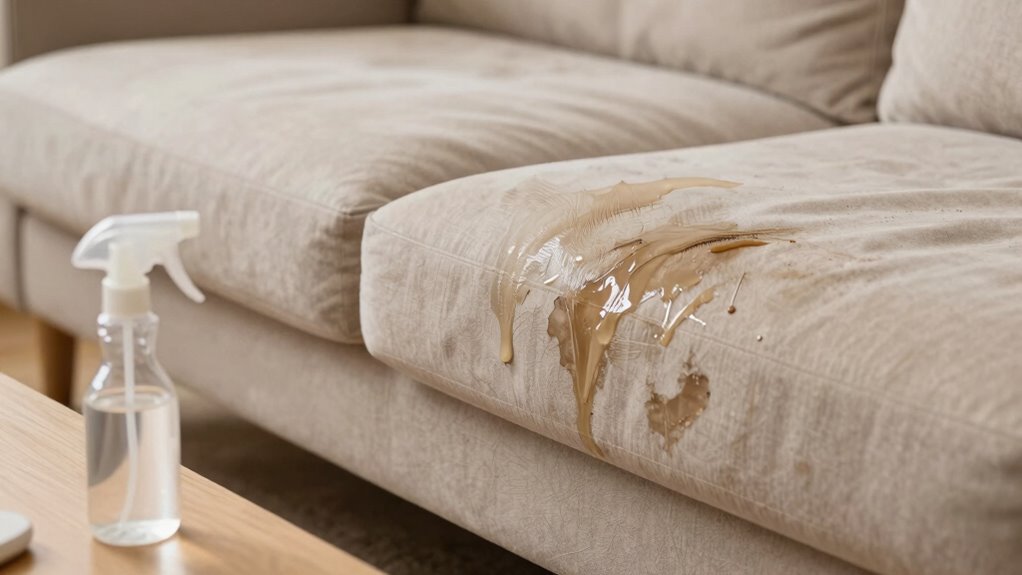

To remove dog drool stains without spreading them, quickly blot the stain with a clean, absorbent cloth, pressing firmly from the outside toward the center. Avoid rubbing, as this can worsen the stain. If the cloth gets saturated, switch to a fresh one to prevent redepositing drool. For fabric upholstery, use a mix of warm water, mild dish soap, and vinegar. With the right techniques, you can keep your furniture looking fresh and clean. More tips await!

Get cleaning gear delivered free with Prime
- Fast, free delivery on millions of items
- Prime Video, Amazon Music and more included
- Member-only deals all year
Key Takeaways
- Blot the drool stain immediately with a clean, absorbent cloth, pressing firmly from the outside toward the center to prevent spreading.
- Use a suitable cleaning solution, like warm water with mild dish soap and vinegar, applied to a cloth instead of directly on the fabric.
- Choose cleaning methods based on upholstery type; microfiber resists stains better than cotton, while leather requires gentle care with damp cloths.
- For persistent odors, apply baking soda, let it sit for 24 hours, and then vacuum to absorb lingering smells.
- Regular professional cleaning and protective treatments can help maintain upholstery and prevent future drool stains from setting in.

Have you ever noticed unsightly drool stains on your upholstery after your dog gets a little too excited? It’s frustrating, but the good news is that you can tackle those stains effectively if you act quickly. Start by blotting the drool immediately with a clean, absorbent white cloth or paper towel. Press firmly, but don’t rub; that’ll just spread the drool. Work from the outside of the stain toward the center to minimize its size. If your cloth becomes saturated, switch to a fresh one to keep absorbing without redepositing the drool.
Depending on your upholstery type, your approach may vary. Microfiber and synthetic fabrics resist absorption better than natural fibers like cotton, making them easier to clean. For leather or faux leather, gently wipe the surface with a damp cloth, using cool water or a leather-safe cleaner. You want to avoid soaking the material, as excess moisture can damage the finish and push the drool deeper into seams. Understanding these challenges aids in selecting appropriate cleaning techniques for upholstery cleaning. Additionally, ensuring proper ventilation considerations in your cleaning space can help fabrics dry more effectively.
Your cleaning method should adapt based on upholstery type—synthetic fabrics are easier to handle than natural fibers.
Once you’ve blotted up the excess, it’s time to apply a cleaning solution. For fabric upholstery, mix two cups of warm water with one tablespoon of mild dish soap and one tablespoon of white vinegar. Dab this solution onto a cloth, not directly onto the fabric, and gently blot the area. If you’re dealing with a more stubborn stain or odor, consider using an enzymatic cleaner that breaks down saliva’s organic compounds.
For leather, you can also use a leather-specific cleaner. After cleaning, always follow up with a conditioner to restore the leather’s luster and prevent cracking. If a lingering odor persists, sprinkle baking soda over the area and let it sit for about 24 hours before vacuuming it up. You can also spray a diluted vinegar solution to neutralize odors naturally.
Remember that prevention is key. If your upholstery has a stain-resistant treatment, it’ll help prevent drool from soaking in. Regular professional cleaning can also keep your furniture looking fresh and free from odors. Finally, consider applying a hydrophobic protector after cleaning to shield your upholstery from future drool disasters. By taking these steps, you’ll keep your furniture looking great, even with your enthusiastic pup around.
Frequently Asked Questions
Can I Use Bleach on Dog Drool Stains?
You shouldn’t use bleach on dog drool stains. Bleach can damage upholstery, discolor fabrics, and create uneven patches. Instead, stick to milder cleaning solutions like dish soap and vinegar to treat the stain effectively. Blot the area gently to lift the drool without spreading it. Always test any cleaner on a small, hidden area first to make sure it won’t harm your fabric. This way, you’ll keep your upholstery looking great!
How Can I Prevent Future Drool Stains?
To prevent future drool stains, you might think you need a crystal ball, but it’s simpler! Regular grooming keeps your pup’s mouth cleaner, so brush them often. Train your dog to use a designated drool area—maybe a mat that you can wash easily. Consider using waterproof covers on your furniture; they’re stylish and drool-proof. And hey, if your dog’s a champion drooler, maybe invest in a bib—because who doesn’t love a fashionable pup?
Will Dog Drool Damage My Upholstery Fabric?
Yes, dog drool can damage your upholstery fabric over time if not addressed. The moisture and enzymes in saliva can weaken fibers, leading to discoloration and odors. If you notice drool stains, tackle them quickly to minimize potential harm. Regular cleaning and using protective treatments can help shield your upholstery from future damage. Keeping your fabric clean guarantees it retains its appearance and durability, preventing any long-term effects from your furry friend.
Is It Safe to Use Essential Oils for Cleaning?
Using essential oils for cleaning can be safe, but you’ve got to be cautious. Imagine a beautiful garden—too much fertilizer can harm the plants. Similarly, while essential oils offer natural benefits, they can irritate surfaces or even cause allergic reactions if used excessively. Always dilute them, test on hidden areas, and confirm they’re suitable for your cleaning needs. When used wisely, they can freshen your space without the harsh chemicals.
What Materials Are Most Resistant to Drool Stains?
Materials most resistant to drool stains include synthetic fibers like polyester, nylon, and acrylic. These fabrics repel moisture and are easier to clean. Microfiber is also a great choice, as it resists staining and absorbs spills efficiently. Leather offers durability and can be cleaned easily, but it requires proper maintenance. If you want to prevent stains, consider using fabrics treated with water-repellent finishes that make it harder for drool to penetrate.
Conclusion
In summary, tackling those troublesome dog drool stains doesn’t have to be overwhelming. With a bit of bravery and the right techniques, you can swiftly scrub away stains without spreading the mess. Remember, regular upkeep can keep your upholstery looking pristine and protect against pesky stains. So, don’t delay—dive into cleaning today, and enjoy a dapper, drool-free domain for you and your furry friend!
Fall Picks
fall essentials
As an affiliate, we earn on qualifying purchases.