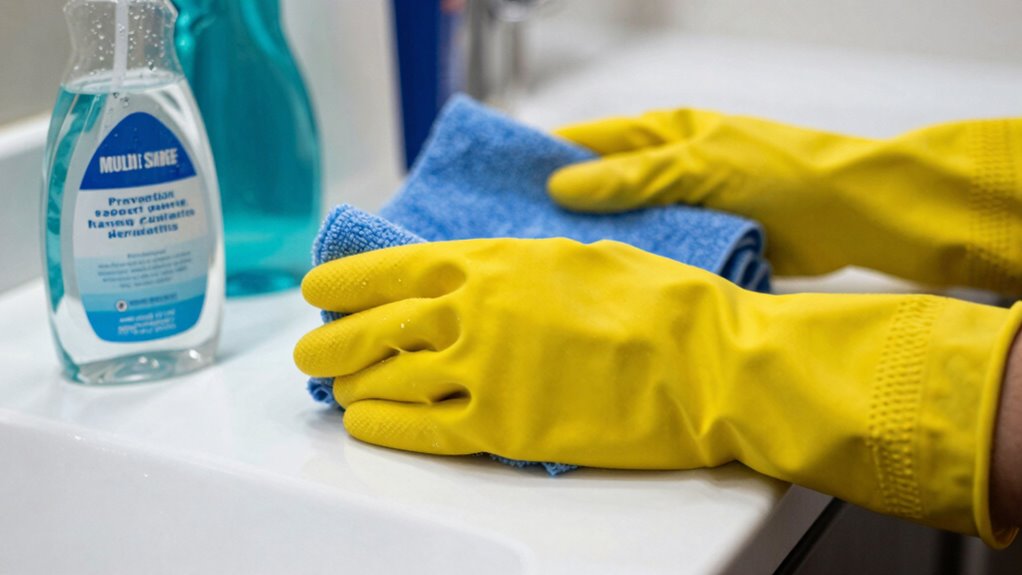

Cleaning can indeed trigger contact dermatitis, especially when using certain gloves and cleaning agents. Nitrile gloves are safer than latex but may still cause allergic reactions. Frequent hand washing and using disinfectants amplify irritation risk, particularly for those with pre-existing conditions like atopic dermatitis. To prevent skin issues, choose gloves without accelerators, take breaks, and moisturize regularly. If you want to know more about effective strategies and safer materials, keep exploring available information.
Key Takeaways
- Use nitrile gloves without accelerators to minimize the risk of allergic contact dermatitis while cleaning.
- Limit the duration of glove wear to under 8 hours daily to reduce skin irritation.
- Regularly moisturize hands with fragrance-free emollients to maintain skin barrier integrity after cleaning tasks.
- Substitute harsh cleaning agents with less irritating alternatives to lower the risk of skin symptoms.
- Be mindful of hand washing frequency, as washing more than 10 times daily increases susceptibility to dermatitis.

When you engage in cleaning tasks, you might not realize the hidden risks to your skin, particularly the potential for contact dermatitis. Cleaning agents like chlorine-based and ammonia cleaners can trigger serious skin reactions, especially when used frequently. If you’re using these products more than once a week, you’re at a heightened risk for symptoms like burning and redness. In fact, studies show that domestic cleaning done just once a week increases the odds of developing work-related skin symptoms markedly.
The type of gloves you wear while cleaning also matters. While nitrile gloves are generally safer than latex, they may still contain accelerators that can lead to allergic contact dermatitis. Latex gloves, on the other hand, can cause both irritant dermatitis and more severe immunologic reactions. If you’re using vinyl gloves, be aware that while they have low allergenicity, they often don’t provide the best barrier against chemicals. Prolonged wear of any glove increases the risk of skin irritation, so it’s essential to change them as recommended. Extended glove use can exacerbate skin irritation, particularly among those who wear them for more than eight hours daily.
Moreover, the risk multiplies when you combine frequent wet work with the use of disinfectants or detergents. If you wash your hands more than ten times a day or wear gloves for extended periods, you’re considerably increasing your chances of skin problems. The presence of pre-existing conditions like atopic dermatitis can further heighten your susceptibility to irritant and allergic reactions.
To reduce these risks, it’s essential to implement a few prevention strategies. Start by selecting the right type of gloves for your tasks. Opt for accelerator-free gloves when possible, and remember that proper fit is vital for effective protection. You should also take breaks during prolonged glove wear to prevent maceration, which can worsen skin irritation.
Incorporating a skincare routine that includes fragrance-free emollients can make a notable difference. Regularly moisturizing your hands, especially after cleaning tasks, will help maintain your skin barrier. Finally, you should be conscious of the cleaning agents you choose. If possible, substitute high-risk chemicals with less irritating alternatives to safeguard your skin.
Frequently Asked Questions
What Are the Symptoms of Contact Dermatitis From Cleaning Products?
You may experience symptoms of contact dermatitis from cleaning products like dryness, redness, and itching on your skin. After exposure, you might notice scaling or fissures, especially on your hands and wrists. Some people develop a burning sensation or stinging feeling. If you’ve been sensitized, eczematous lesions can appear days later at contact points. Remember, if these symptoms persist, it’s important to consult a healthcare professional for proper diagnosis and management.
How Can I Identify the Specific Allergen Causing My Dermatitis?
To identify the specific allergen causing your dermatitis, start by keeping a detailed diary of your exposures, noting products used and symptoms experienced. Contrast the times you felt irritation with your cleaning routines. Consult a dermatologist for patch testing; it reveals sensitivities to specific allergens. By juxtaposing your daily activities with your skin’s reactions, you’ll clarify potential triggers and get closer to effective management and relief from your dermatitis.
Are There Non-Latex Glove Alternatives for Sensitive Skin?
Yes, there are non-latex glove alternatives for sensitive skin. Nitrile gloves are a popular choice since they have lower allergenicity and provide good chemical resistance. You might also consider vinyl gloves, though they offer less protection against solvents. For those particularly prone to allergies, look for accelerator-free nitrile options. Always guarantee the gloves fit well to minimize irritation, and remember to moisturize your hands regularly to maintain skin health.
How Often Should I Change Gloves While Cleaning?
You wouldn’t wear a single pair of shoes all day, right? Similarly, you should change your gloves regularly while cleaning. Ideally, swap them every 30 minutes to an hour, especially if they become damp or damaged. This helps protect your skin and maintains effective barrier protection. If you’re handling harsh chemicals or working extensively, consider changing them even more frequently to minimize irritation and potential allergic reactions. Stay safe and clean!
Can I Use Moisturizer While Wearing Gloves?
Yes, you can use moisturizer while wearing gloves, but it’s best to apply it before putting on your gloves. Moisturizing your hands beforehand helps create a barrier and keeps your skin hydrated, reducing the risk of irritation from prolonged glove wear. If you’re working with gloves for an extended period, consider using moisturizer breaks to maintain skin health. Just guarantee the moisturizer is fully absorbed before donning gloves for maximum protection.
Conclusion
In summary, protecting your skin while cleaning isn’t just a choice; it’s a necessity. Just like a knight dons armor before battle, wearing the right gloves and using safe materials can shield you from contact dermatitis. By being proactive and mindful of the products you use, you can keep your skin healthy and irritation-free. So, gear up and clean with confidence—your skin will thank you for it!