When deciding between an enzyme cleaner and an odor masker, it’s key to know that enzyme cleaners actually break down organic stains and odors, providing long-lasting results. They tackle the source of the smell rather than just covering it. In contrast, odor maskers simply use fragrances to temporarily hide unpleasant scents without solving the problem. For a deeper understanding of their differences and best uses, stick around to explore more insights.

Get cleaning gear delivered free with Prime
- Fast, free delivery on millions of items
- Prime Video, Amazon Music and more included
- Member-only deals all year
Key Takeaways
- Enzyme cleaners break down organic matter, while odor maskers only cover smells with fragrances without addressing the source.
- Enzymes require specific conditions (moisture, temperature, pH) to work effectively, unlike maskers that act instantly.
- Enzyme cleaners eliminate odors from fresh stains and prevent recurrence, while maskers only provide temporary relief.
- Enzymes need longer contact times for effective results, whereas maskers offer immediate but short-lived solutions.
- For lasting odor elimination, choose enzyme cleaners; maskers are suitable for quick, superficial odor coverage.

When you’re dealing with pesky odors in your home, understanding the difference between enzyme cleaners and odor maskers can make all the difference. Enzyme cleaners use biological catalysts, known as enzymes, to break down organic matter into smaller, non-odorous molecules. They target specific substances, like proteins and carbohydrates, effectively “digesting” the source of the odor. However, these cleaners need the right conditions—moisture, temperature, and pH—to work effectively. If these factors aren’t *ideal*, their performance slows or stops. Proper maintenance of your cleaning tools can also enhance their effectiveness.
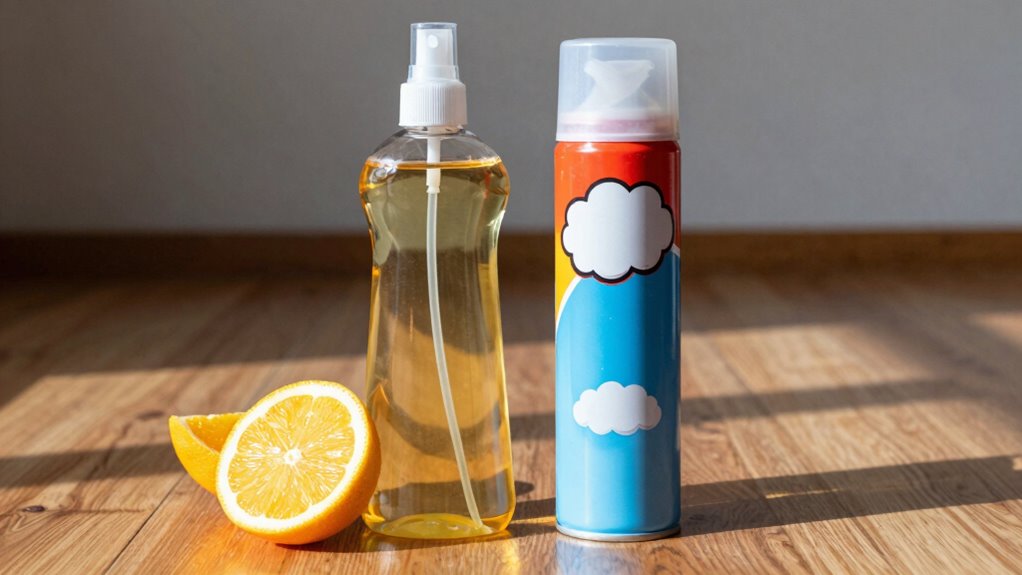
On the other hand, odor maskers simply cover up smells with strong fragrances. They provide immediate, albeit temporary, relief, but they don’t eliminate the underlying odor source. Instead of breaking down odor compounds, they rely on sensory deception, masking the smell without addressing the problem. This means that if there’s an organic stain, like pet urine, the odor will likely return once the masking agent fades.
Odor maskers provide temporary relief by covering up smells, but they fail to tackle the root cause of unpleasant odors.
You’ll find that enzyme cleaners excel in situations involving fresh organic stains, such as vomit or feces. They not only eliminate odors effectively but also help prevent their return in the long run. In contrast, odor maskers can allow bacteria to build up by leaving the source untouched, leading to recurring odors. You might think that the strong perfume of a masker is doing the job, but it often requires repeated applications, as the underlying issue remains.
The speed of action is another important factor *to weigh*. Enzyme cleaners typically require longer contact times, sometimes lasting from minutes to 24 hours or more for complete biodegradation. Maskers, however, act almost instantly, providing a temporary fix. While this quick action can be appealing, it’s essential to remember that it’s superficial. For persistent stains, oxidizing agents often outperform both enzymes and maskers in speed and effectiveness, as they provide broad-spectrum oxidation that can rapidly eliminate odors on the surface.
When choosing between the two, *to weigh* your needs. If you have deep-set odors or organic stains, go for enzyme cleaners. They’ll break down the source and help eliminate odors for good. But if you’re looking for a quick, short-term solution, a masker might suffice. Just keep in mind that it won’t solve the underlying issue. For true odor elimination, enzymes are your best bet, while maskers merely offer a temporary sensory distraction.
Frequently Asked Questions
Can Enzyme Cleaners Be Used on All Surfaces?
Enzyme cleaners aren’t suitable for all surfaces. While they work wonders on fabrics and carpets, you should avoid using them on delicate materials like silk or leather, as they can cause damage. Always test a small, inconspicuous area first to verify compatibility. They thrive on organic stains, but for non-organic surfaces, you might need a different cleaning solution. By knowing your surfaces, you can achieve the best results without risking harm.
How Often Should I Apply Odor Maskers?
You should apply odor maskers as needed, typically every few hours or whenever you notice the scent returning. Since they only cover odors temporarily, regular application is necessary to maintain a pleasant environment. Keep in mind that overuse can lead to overwhelming fragrances, so it’s crucial to balance your application. For persistent odors, consider addressing the underlying source instead of relying solely on maskers for relief.
Are Enzyme Cleaners Safe for All Pets?
Yes, enzyme cleaners are safe for all pets when used as directed. They’re made from biodegradable ingredients and work by breaking down organic materials without harmful chemicals. Just make sure to follow the instructions on the label and allow the cleaner to dry completely before letting your pets return to the area. Always perform a patch test on fabrics to guarantee compatibility, ensuring your furry friends stay safe and healthy while you clean.
Do Odor Maskers Contain Harmful Chemicals?
Yes, odor maskers can contain harmful chemicals. Many of them use synthetic fragrances and other compounds that might irritate your respiratory system or skin. You should always check the ingredient list before using them, especially around children and pets. If you’re concerned about safety, consider opting for environmentally friendly options or products specifically labeled as non-toxic. It’s better to choose solutions that safely eliminate odors rather than just covering them up.
How Do I Store Enzyme Cleaners Properly?
Like a delicate flower, enzyme cleaners need care to thrive. Store them in a cool, dark place away from direct sunlight and extreme temperatures. Keep the cap tightly closed to maintain potency, and avoid mixing them with harsh chemicals or fragrances. If possible, use them within their expiration date for best results. Regularly check for any signs of spoilage, ensuring you always have an effective cleaner ready when you need it.
Conclusion
In the grand tapestry of cleaning solutions, enzyme cleaners and odor maskers play distinct roles, much like the sun and the moon. While enzyme cleaners break down organic stains and odors at their source, odor maskers merely cloak the problem, offering only a temporary reprieve. When you seek a lasting solution, remember the wisdom of Shakespeare: “All the world’s a stage.” Choose wisely, as the right product can set the scene for a fresher, cleaner home.
Fall Picks
fall essentials
As an affiliate, we earn on qualifying purchases.