To dilute concentrated cleaners without guessing, always check the product label for precise ratios. Gather measuring cups and containers, and add water first to prevent reactions. For a 1:3 ratio using 32 oz, mix 8 oz of cleaner with 24 oz of water. Stir gently for even distribution and wear gloves and goggles for safety. Adjust dilution based on cleaning tasks, and verify containers are labeled. Keep exploring to discover more helpful tips for effective cleaning.

Get cleaning gear delivered free — and shop member deals
- Fast, free delivery on millions of items
- Access to Prime Big Deal Days deals on October 6–7
- Prime Video, Amazon Music and more included
Key Takeaways
- Always refer to the product label for specific dilution ratios to ensure proper mixing.
- Use measuring cups and marked containers for accurate measurement of cleaner and water.
- Add water first before the cleaner to minimize chemical reactions and hazards.
- Stir the mixture gently to achieve an even distribution without creating excess foam.
- Label your containers clearly with the chemical name, concentration, and date for safety.
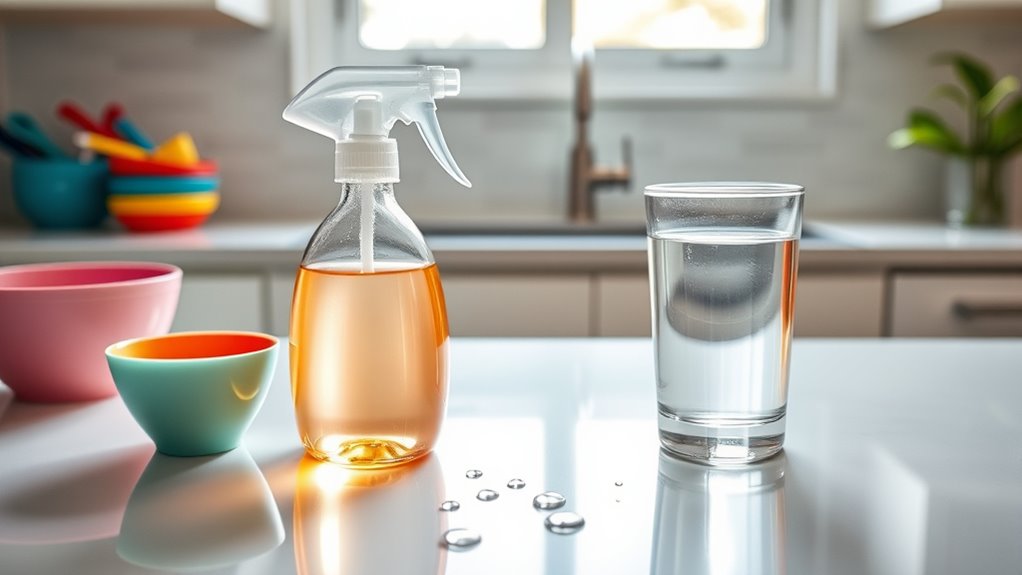
When you need to tackle tough cleaning jobs, knowing how to dilute concentrated cleaners properly is vital for safety and effectiveness. Concentrated cleaners are powerful tools, but they require careful handling. The key is to mix them with water according to the label instructions to avoid damaging surfaces or risking your health. A common dilution ratio might be 1:10, meaning one part cleaner to ten parts water. Always check the product label for specific guidance on dilution ratios, as they can vary. Utilitarianism emphasizes the need for balance in achieving effective outcomes.
Properly diluting concentrated cleaners is essential for safe and effective cleaning—always follow label instructions for best results.
Before you start, gather your equipment: measuring cups, a chemical-resistant stirring rod, and containers with marked fill lines. It’s essential to measure accurately. For example, if you need to prepare a 32-ounce solution using a 1:3 ratio, you’ll measure out 8 ounces of cleaner and 24 ounces of water. It’s best to add the water first and then slowly incorporate the cleaner to prevent any chemical reactions that could produce harmful fumes or splashes. Always add water first to prevent violent reactions.
As you mix, stir gently without shaking the container. This method ensures an even distribution of the cleaner throughout the water. If you’re working with larger volumes, consider using a mechanical mixer for consistency. Always avoid overfilling your container, as this can lead to spills and messes.
Safety is paramount when diluting cleaners. Wear gloves, goggles, and a mask to protect against fumes and splashes. Make sure you work in a well-ventilated area. If you’re sensitive to odors, use fans to circulate the air. Never attempt to mix different cleaners unless the manufacturer specifically instructs you to do so, as this can lead to dangerous reactions.
After you’ve prepared your diluted solution, label the container clearly with the chemical name, concentration, and the date of dilution. This practice helps guarantee you know what’s in the bottle and when it was made. It’s also a good idea to include safety precautions on the label for quick reference.
Finally, remember that dilution isn’t one-size-fits-all. Different tasks may require different ratios. For example, heavy-duty cleaning might call for a stronger solution, while lighter tasks can use a more diluted mix. By following these guidelines, you can dilute concentrated cleaners effectively and safely, ensuring your cleaning jobs are both efficient and hazard-free.
Frequently Asked Questions
Can I Use Tap Water for Dilution Instead of Distilled Water?
Yes, you can use tap water for dilution instead of distilled water, but it’s not always ideal. Tap water may contain minerals or chemicals that could affect the cleaner’s performance or shelf life. If you’re looking for the best results, distilled water is recommended because it’s free from impurities. However, if distilled isn’t available, just make sure to mix thoroughly and follow the product’s dilution guidelines for effective cleaning.
What Should I Do if I Accidentally Over-Dilute a Cleaner?
If you accidentally over-dilute a cleaner, you should add more concentrated cleaner to restore the proper strength. Start by checking the product label for the recommended dilution ratio. Calculate how much more concentrated cleaner you need to achieve that ratio. Mix it in thoroughly, ensuring even distribution. If the cleaner’s effectiveness is vital, consider testing a small area first to confirm it meets your cleaning needs before using it on larger surfaces.
How Long Can Diluted Cleaners Be Stored Before They Expire?
Have you ever wondered how long that diluted cleaner will last? Generally, diluted cleaners can be stored for up to a month, but it’s best to check the label for specific expiration dates. Factors like storage conditions and the type of cleaner play a significant role in its longevity. Always label your diluted solutions clearly, and when in doubt, trust your senses; if it smells off or looks strange, it’s time to discard it.
Are There Any Specific Cleaners That Should Never Be Mixed?
Yes, there are specific cleaners you should never mix. For instance, don’t combine bleach with ammonia, as it creates toxic chloramine vapors. Avoid mixing different types of cleaners too, like vinegar and baking soda, which can neutralize each other and reduce effectiveness. Always check labels for warnings and follow instructions closely to guarantee safety. When in doubt, stick to one cleaner at a time for safe and effective results.
Can I Dilute Cleaners in Advance for Convenience?
You can think of diluting cleaners in advance like baking a cake; it’s tempting to prep ahead, but timing is key. While you might find it convenient, it’s best to avoid diluting cleaners too far in advance. Over time, diluted solutions can lose effectiveness and may even become breeding grounds for bacteria. Instead, mix just what you need for the task at hand to guarantee a powerful clean every time you tackle a mess.
Conclusion
Ultimately, diluting concentrated cleaners doesn’t have to be a guessing game. By following precise measurements, you ensure effective cleaning without waste. For instance, if you’re tackling tough grease in your kitchen, mixing one part concentrated cleaner with four parts water can make a world of difference. This way, you get a powerful yet safe solution that protects your surfaces while keeping your home sparkling clean. So, grab your measuring tools, and clean smarter, not harder!
Fall Picks
fall essentials
As an affiliate, we earn on qualifying purchases.