Microfiber isn’t just a cloth; it’s made with microscopic fibers that create a dense, web-like structure. Tiny split filaments increase surface area and form microscopic pockets that trap dirt, liquids, and microbes. Its electrostatic charge attracts charged particles, while capillary action pulls dirt into tiny fiber crevices. This advanced design guarantees superior cleaning compared to traditional materials. Keep exploring to discover how microfibers work at a microscopic level and why they outperform ordinary cloths.

Get cleaning gear delivered free with Prime
- Fast, free delivery on millions of items
- Prime Video, Amazon Music and more included
- Member-only deals all year
Key Takeaways
- Microfiber’s dense, microscopic fibers create a web-like structure that traps dirt and debris securely.
- The high surface area and nanoscale pockets enhance dirt adhesion and absorption capabilities.
- Fine filaments generate electrostatic charges that attract and hold charged particles like dust and hair.
- Its flexible fibers conform to surfaces, increasing contact points and boosting cleaning efficiency.
- The intricate fiber network captures bacteria and microbes, preventing their spread and promoting hygienic cleaning.
What Is Microfiber and How Is It Made?

Have you ever wondered what makes microfiber so effective at trapping dirt and dust? It all starts with the manufacturing process, which creates fibers that are incredibly fine—much thinner than human hair. These tiny fibers are spun into fabric with remarkable durability, meaning they withstand repeated use and washing without losing their effectiveness. The manufacturing process involves blending synthetic materials like polyester and polyamide, then extruding them into long, thin filaments. These fibers are then woven tightly to produce microfiber fabric. This tight weave and the durable nature of the fabric guarantee that microfiber can consistently capture dirt, dust, and liquids. The combination of the manufacturing process and fabric durability makes microfiber a powerful cleaning material that lasts over time. Additionally, the contrast ratio of the fibers enhances their ability to trap particles effectively, making microfiber an essential tool for clean surfaces. The fiber structure also contributes to its superior cleaning capabilities by increasing surface area and particle entrapment.
The Unique Structure of Microfiber Fibers
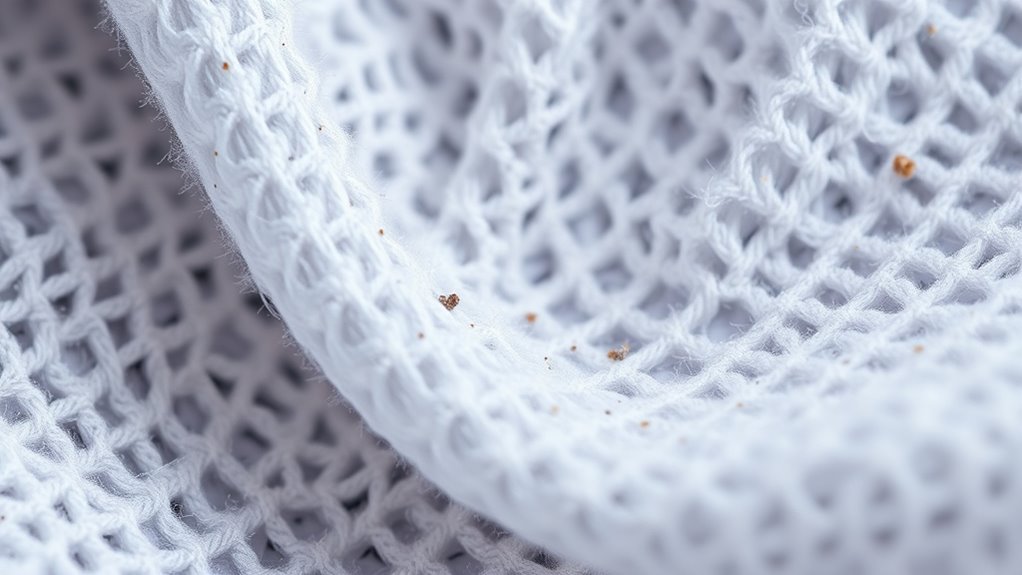
The secret to microfiber’s cleaning power lies in its unique fiber structure, which features tiny, split filaments that create a dense network of microscopic fibers. This design enhances flexibility and fiber elasticity, allowing the fibers to bend and conform to surfaces for better dirt pickup. During manufacturing processes, fibers are split into ultra-fine strands, increasing their surface area and improving dirt and liquid absorption. The split filaments also generate more contact points, trapping particles more effectively. European cloud innovation drives the development of advanced manufacturing techniques that can produce these precisely engineered fibers. These innovations enable the creation of fibers with optimized fiber elasticity, ensuring they adapt efficiently to various surfaces and contaminants. The split fibers increase surface contact, boosting cleaning efficiency. Manufacturing processes shape fibers for ideal elasticity and strength. Dense networks enable microfiber to reach into tiny crevices. Additionally, the development of advanced fiber technology continues to enhance microfiber’s ability to trap dirt and liquids more effectively, with research in nanotechnology contributing to even finer and more efficient fibers. Furthermore, innovations in manufacturing precision ensure consistent fiber quality, which is crucial for maintaining microfiber’s high cleaning standards. Fiber elasticity helps microfiber adapt to different surfaces and contaminants.
The Role of Surface Area in Dirt Trapping
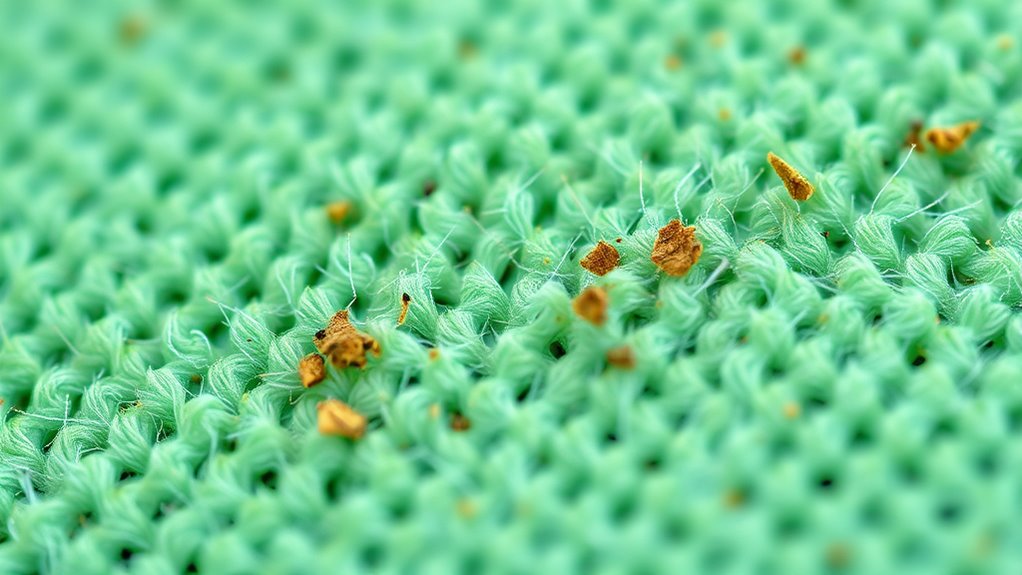
You’ll notice that microfiber’s high fiber density increases its overall surface area, making it more effective at capturing dirt particles. This enhanced surface contact allows the fibers to latch onto even tiny debris more efficiently. Thanks to their nanoscale structure, microfibers provide an incredibly vast surface area in a compact space, boosting dirt trapping capabilities. Additionally, the surface area of microfibers plays a crucial role in their ability to attract and retain dirt, dust, and oils, further enhancing their cleaning efficiency. The fiber density directly influences the microfiber’s capacity to trap contaminants, making it a key factor in their superior cleaning performance. Furthermore, the surface chemistry of microfibers can be engineered to improve their affinity for specific types of dirt or oils, optimizing their effectiveness for different cleaning tasks. The material composition of microfibers also impacts their durability and ability to withstand repeated use and washing, maintaining their cleaning properties over time. Moreover, the manufacturing process of microfibers can be tailored to enhance their cleaning capabilities and longevity.
Increased Fiber Density
As microfiber surfaces become more densely packed with fibers, their surface area increases substantially, enhancing their ability to trap dirt particles. Higher fiber density provides more contact points, making it easier to capture even tiny particles. Manufacturing techniques can optimize fiber placement and density, while fiber elasticity allows fibers to bend and adapt, increasing contact with surfaces. This dense arrangement creates a web-like structure that effectively holds dirt and dust. The tighter fiber packing also reduces gaps, preventing particles from escaping. Overall, increased fiber density improves cleaning efficiency and durability, ensuring your microfiber cloth performs better over time. By controlling fiber density, manufacturers can craft highly effective cleaning tools tailored for specific tasks and surfaces.
- Greater surface contact for trapping particles
- Better adaptability with fiber elasticity
- Enhanced durability and cleaning lifespan
- Reduced particle escape and re-dispersion
Enhanced Surface Contact
When microfiber fibers are packed densely, they create a larger surface area that directly impacts dirt trapping efficiency. This increased surface contact allows fibers to better grip and hold particles, making cleaning more effective. The manufacturing process plays a vital role in achieving this dense packing while maintaining fiber durability, ensuring the cloth withstands repeated use without losing its structure. Stronger fibers maintain their shape and surface integrity, which maximizes the contact area over time. As a result, the microfiber’s enhanced surface contact improves dirt removal, capturing particles more efficiently than traditional fabrics. The combination of dense fiber packing and durable manufacturing techniques creates a highly effective cleaning surface that truly grabs dirt at a microscopic level. surface area directly influences the microfiber’s ability to trap microscopic particles, further enhancing cleaning performance. Additionally, the manufacturing process is crucial in optimizing fiber density and durability for long-lasting cleaning effectiveness. Proper manufacturing techniques also ensure that the fibers do not break down prematurely, maintaining optimal fiber structure throughout multiple uses. Furthermore, advancements in fiber technology contribute to the overall effectiveness and longevity of microfiber cloths.
Microfiber’s Nanoscale Structure
Microfiber’s nanoscale structure considerably enhances its ability to trap dirt by increasing the surface area available for particle adhesion. This tiny scale allows fibers to maximize contact points, making dirt particles stick more effectively. The manufacturing process creates fibers that are incredibly fine, boosting surface area without sacrificing fiber flexibility. The increased surface area means more microscopic pockets and crevices for dirt and dust to settle into, improving cleaning efficiency. Additionally, the nanoscale structure enables fibers to bend and adapt to surfaces, reaching into small crevices. This combination of high surface area and fiber flexibility makes microfiber exceptional at trapping dirt. By understanding the manufacturing process, you see how each fiber is engineered to optimize its nanoscale features for superior cleaning performance. surface area plays a crucial role in how effectively microfiber captures and holds dirt particles. Furthermore, the fiber structure is designed to enhance dirt retention by creating a web-like network that traps particles more securely. Incorporating Suprem fabric technology can further improve the durability and eco-friendliness of microfiber cleaning tools, making them a sustainable choice.
How Microfiber Attracts and Holds Particles
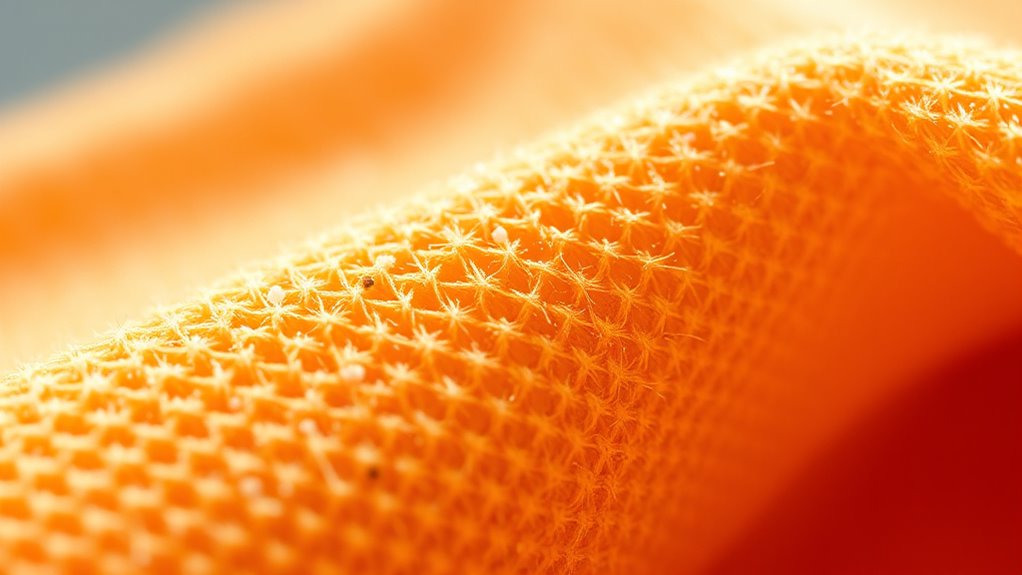
Microfiber attracts and holds particles primarily because of its unique structure and surface properties. Its fiber elasticity allows the fibers to bend and conform to surfaces, increasing contact with dirt and dust. During manufacturing processes, tiny, densely packed fibers are engineered to maximize surface area, creating numerous opportunities for particles to cling. The fibers’ fine filaments generate electrostatic charges, which attract charged particles like dust and hair. Additionally, the combination of fiber elasticity and manufacturing techniques results in a slightly rough surface at the microscopic level, enhancing grip. This synergy of fiber flexibility and precise production ensures microfiber effectively captures and retains particles, making it a powerful cleaning material without the need for harsh chemicals.
Capillary Action and Its Impact on Cleaning Efficiency

Capillary action plays an essential role in microfiber’s cleaning effectiveness by drawing liquids and dissolved dirt into tiny spaces within the fibers. This process enhances dirt removal without excessive scrubbing, making cleaning more efficient. The manufacturing processes of microfiber optimize fiber durability, ensuring capillary action remains strong over time. When you use microfiber, you benefit from fibers designed to maximize liquid absorption and retention. This ability is due to the microscopic channels formed during production, which promote capillary flow. These channels allow microfiber to trap and lift dirt particles effectively. Understanding this helps you appreciate how microfiber’s structure is engineered for superior cleaning. It’s not just about the material; it’s about how the fibers are crafted to harness capillary action for lasting performance and prime dirt removal. Manufacturing techniques play a crucial role in maintaining the capillary action’s effectiveness over the lifespan of the microfiber.
The Importance of Fiber Density and Weave Pattern

The density of fibers and the pattern of the weave are essential factors that determine how well a microfiber cloth can trap dirt and absorb liquids. A tighter fiber weave creates more surface area, increasing the cloth’s ability to pick up particles and hold liquids. Higher fiber density means more fibers per square inch, which enhances cleaning efficiency by providing more contact points. Additionally, the weave pattern influences material strength and durability; a well-designed weave ensures the cloth maintains its integrity through repeated use and washing. When you choose a microfiber with ideal fiber density and an effective weave, you get a cloth that’s not only more effective at capturing dirt but also longer-lasting. This combination maximizes cleaning power without sacrificing durability. Understanding fiber density can help consumers select the most effective cleaning cloths for their needs. Furthermore, the fiber arrangement plays a significant role in how well the cloth performs in different cleaning tasks, especially when considering visual and auditory cues that might be used during the manufacturing or testing processes to ensure quality. Incorporating quality control methods ensures consistent performance and reliability of microfiber products over time.
Microfiber’s Interaction With Water and Cleaning Solutions

Water plays a vital role in how microfiber cleans, as it activates the fibers and enhances dirt removal. Capillary action pulls water and cleaning solutions deep into the fabric’s structure, boosting their effectiveness. Choosing compatible cleaning solutions guarantees microfiber performs at its best without damaging the fibers or reducing their ability to trap dirt.
Water’s Role in Microfiber
Microfiber’s ability to clean effectively relies heavily on how it interacts with water and cleaning solutions. Water’s role is vital because it activates the microfiber’s absorption properties, allowing it to trap dirt and grime more efficiently. When you dampen a microfiber cloth, the fibers swell slightly, increasing surface area and enhancing dirt pickup. The tiny fibers create numerous microscopic spaces that hold water and cleaning agents, boosting cleaning power.
- Water helps loosen stubborn dirt so microfiber can trap it better
- Proper dampness prevents microfiber from just pushing dirt around
- Water’s surface tension aids in lifting particles from surfaces
- Microfiber’s absorption is directly linked to its interaction with water, maximizing dirt retention
Capillary Action Mechanism
Capillary action is the process that allows microfiber to draw in water and cleaning solutions into its tiny fibers and spaces. This happens because of the fiber weave’s structure, which creates narrow channels that water naturally moves through. Microfiber’s history reveals that its fine fibers, often thinner than a human hair, enable this capillary effect to work efficiently. As water enters these small spaces, it spreads and climbs along the fibers, pulling dirt and grime with it. This mechanism makes microfiber highly effective at cleaning without needing harsh chemicals. By understanding the capillary action, you realize how microfiber’s unique fiber weave maximizes water’s ability to lift and trap dirt, making it a powerful cleaning tool.
Cleaning Solution Compatibility
Understanding how microfiber interacts with cleaning solutions is key to maximizing its effectiveness. Microfiber’s fibers can engage in chemical reactions with various cleaning agents, enhancing dirt removal. When selecting solutions, you must consider their compatibility to avoid damaging the fibers or reducing cleaning power. Using harsh chemicals may weaken microfiber or cause undesirable chemical reactions that harm both your cloth and the environment. Choosing eco-friendly, biodegradable cleaners minimizes environmental impact and preserves microfiber’s longevity. Properly compatible solutions ensure ideal dirt and grease removal while maintaining the fabric’s integrity.
- Select cleaning solutions that align with microfiber’s properties
- Avoid harsh chemicals that cause chemical reactions damaging fibers
- Use environmentally friendly products to reduce environmental impact
- Regularly test solutions for compatibility to prolong microfiber lifespan
Comparing Microfiber to Traditional Cleaning Materials
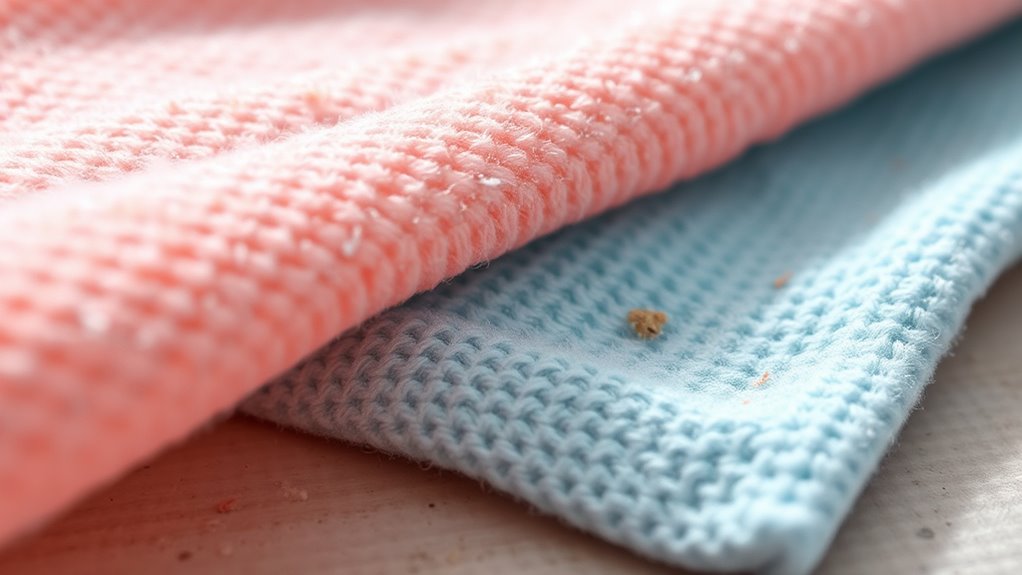
Compared to traditional cleaning materials like cotton cloths or paper towels, microfiber offers a more effective way to trap dirt and dust. Its fiber durability ensures it withstands repeated use and washing without losing effectiveness, making it a cost-effective choice. Microfiber’s manufacturing processes create millions of tiny fibers that form a dense, fine structure. This structure enhances its ability to pick up and hold onto particles better than rougher or less precise materials. Unlike cotton or paper towels, microfiber’s unique fiber arrangement maximizes surface area, improving cleaning efficiency. Plus, its durability means you can clean more thoroughly without degrading the material. Overall, microfiber’s advanced manufacturing and fiber strength make it superior for deep cleaning, capturing dirt more effectively and lasting longer than traditional options.
The Science Behind Microfiber’s Bacterial Retention
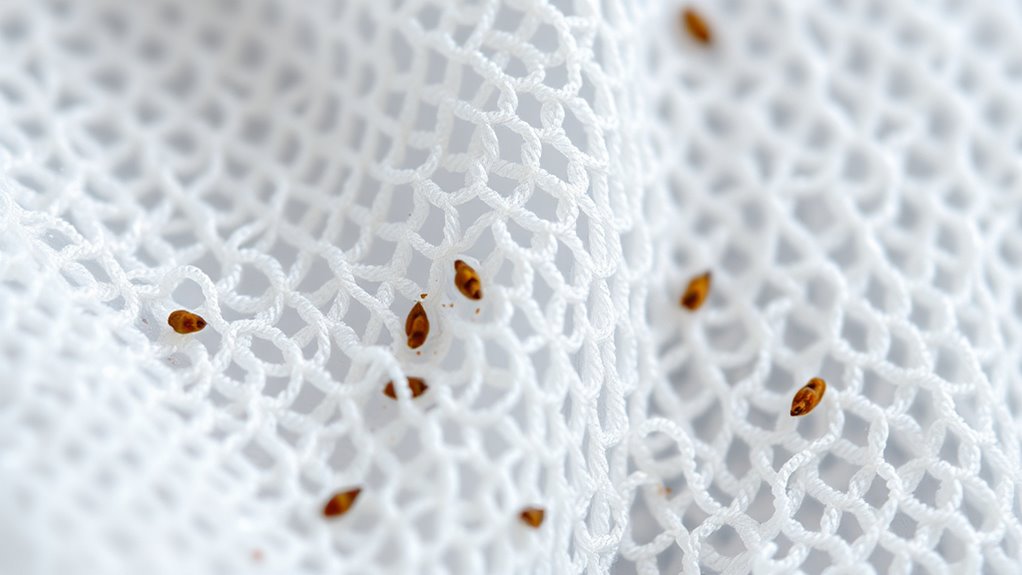
Microfiber’s fine fibers create an intricate network that effectively traps bacteria and other microbes during cleaning. This network’s efficiency depends on fiber durability and the manufacturing process, which guarantees the fibers maintain their structure even after multiple uses and washes. The tightly woven fibers create microscopic pockets that hold bacteria, preventing their spread. The manufacturing process enhances fiber strength and minimizes breakage, maintaining bacterial retention over time. As a result, microfiber can capture and hold germs more effectively than traditional materials. Properly manufactured microfiber maintains its bacterial retention capabilities, making it a hygienic choice.
- Fiber durability ensures long-lasting bacterial trapping
- Manufacturing process influences microfiber’s effectiveness
- Microscopic pockets enhance microbial retention
- Consistent quality maintains cleaning performance
Practical Applications and Benefits of Microfiber in Everyday Cleaning
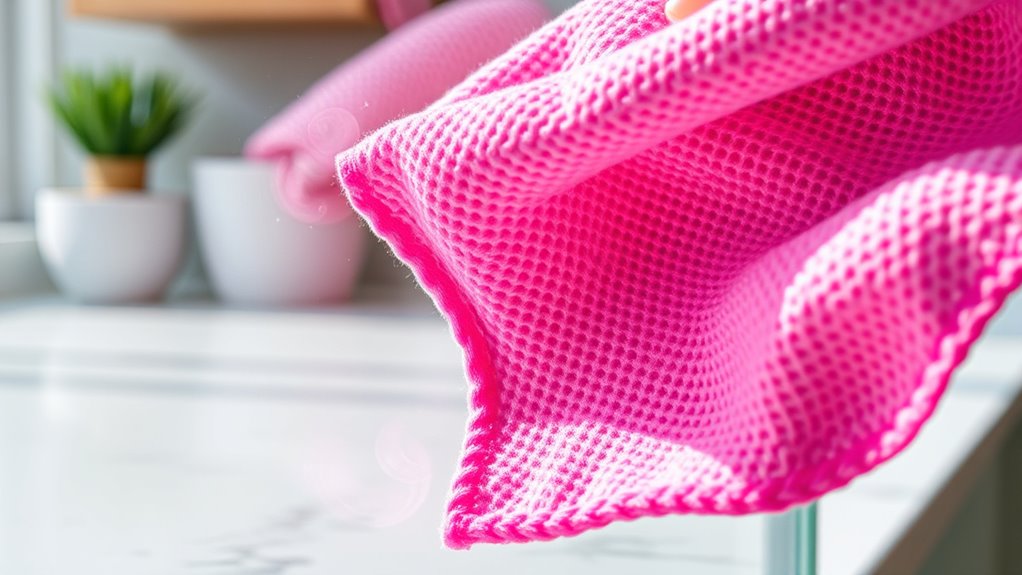
Microfiber has become a go-to material for everyday cleaning because of its proven ability to trap dirt, bacteria, and dust more effectively than traditional cloths. Its practical applications include cleaning windows, countertops, and appliances with less chemical use, making it an eco-friendly choice. Microfiber’s high absorbency means you can often clean with just water, reducing the need for harsh cleaners and supporting eco benefits. Additionally, microfiber cloths are durable and reusable, offering a cost-effective cleaning solution over time. They resist bacteria buildup and dry quickly, preventing mold and odor. Whether you’re wiping surfaces, dusting, or polishing, microfiber simplifies your routine while promoting sustainability. Its versatility and efficiency make it an essential tool for eco-conscious, budget-friendly cleaning at home or work.
Frequently Asked Questions
How Does Microfiber’s Electrostatic Charge Enhance Its Cleaning Ability?
Microfiber’s electrostatic charge enhances its cleaning ability through charge enhancement, which creates electrostatic attraction between the fibers and dirt or dust particles. This charge draws particles toward the cloth, making it easier to trap and remove debris effectively. As a result, microfiber can pick up more dirt with less effort, providing a more efficient cleaning experience, especially on surfaces where static attraction helps lift particles from surfaces.
Can Microfiber Fabrics Be Recycled or Environmentally Friendly?
Microfiber fabrics can be recycled, but recycling challenges like fiber separation and contamination make it difficult. As you look for eco-friendly alternatives, consider options like bamboo, cotton, or hemp cleaning cloths. These materials break down more easily and have fewer environmental impacts. While microfiber is effective, choosing sustainable options helps reduce waste and supports a healthier planet. Always check local recycling programs to see if they accept microfiber textiles.
What Is the Lifespan of Microfiber Cleaning Cloths Before Replacement?
You can expect microfiber cleaning cloths to last around 300 to 500 wash cycles before needing replacement. With proper care, their cloth durability keeps them effective, capturing dirt like a magnet. Over time, fibers may fray or lose their grip, signaling it’s time for replacement. Keep an eye on texture and cleaning performance—these clues guide you when to switch out your cloth for peak cleaning power.
How Effective Is Microfiber Against Different Types of Bacteria and Germs?
Microfiber is highly effective against various bacteria and germs, thanks to its antibacterial properties. When you use it, you’ll notice excellent germ removal efficiency, especially on surfaces like countertops and bathroom fixtures. Its tiny fibers trap and hold bacteria, preventing their spread. Regularly washing microfiber cloths maintains their effectiveness, ensuring you’re consistently reducing germs and bacteria, making them an essential tool for thorough cleaning and hygiene.
Does Microfiber Cleaning Require Specific Detergents or Maintenance?
Imagine microfiber as a loyal sponge, ready to serve. You don’t need special detergents—regular, mild laundry soap works best, making sure it stays effective. For maintenance, wash microfiber separately in cold or warm water and avoid fabric softeners, which can coat fibers. Keep it clean and dry, and your microfiber cloths will cling to dirt and germs like a magnet, ready for your next cleaning adventure.
Conclusion
Now that you know the science behind microfiber’s dirt-trapping power, imagine what it can do for your cleaning routine. Its unique properties aren’t just about looking good—they’re about performing better than traditional cloths in ways you might not expect. But there’s more to discover about how microfiber’s science can transform your approach to cleanliness. Are you ready to unleash its full potential and see the surprising results for yourself? The next clean could be the best yet.
Columbus Day / Indigenous Peoples' Day Picks
long weekend sales
As an affiliate, we earn on qualifying purchases.