
TL;DR

Get cleaning gear delivered free — and shop member deals
- Fast, free delivery on millions of items
- Access to Prime Big Deal Days deals on October 6–7
- Prime Video, Amazon Music and more included
Interior designers interviewed by House Beautiful say the #1 rule before choosing a paint color is to finalize all other design elements first. Paint options are nearly infinite, while rugs, upholstery, and finishes are not, so picking walls last prevents clashes and costly custom work.
Interior designers say the single most important rule before choosing a paint color is to pick the paint last — only after flooring, countertops, cabinetry, rugs, upholstery, and art have been finalized, according to a House Beautiful report featuring working designers. The approach, they say, eliminates decision fatigue and prevents expensive mismatches, because nearly identical shades only reveal their differences once they sit against the permanent surfaces already in a room.
The report centers on advice from several interior designers, including Dana Arazi Levine, Lisa Quinn, Lauren Grant, and Lindsay Atapattu of LEB Interiors. Their shared starting point is sequencing: lock in everything that cannot be painted or easily swapped before touching a paint deck.
“Paint colors are almost infinite, but rugs, curtains, upholstery, and art are not,” Levine told House Beautiful. “If you commit to a wall color too early, you can end up limiting every other decision or spending more on custom pieces just to make everything work together.” Quinn said she always finalizes flooring, counters, cabinets, and large furniture pieces first, noting that “colors that might seem eerily similar in the store only reveal themselves when they sit against these surfaces.”
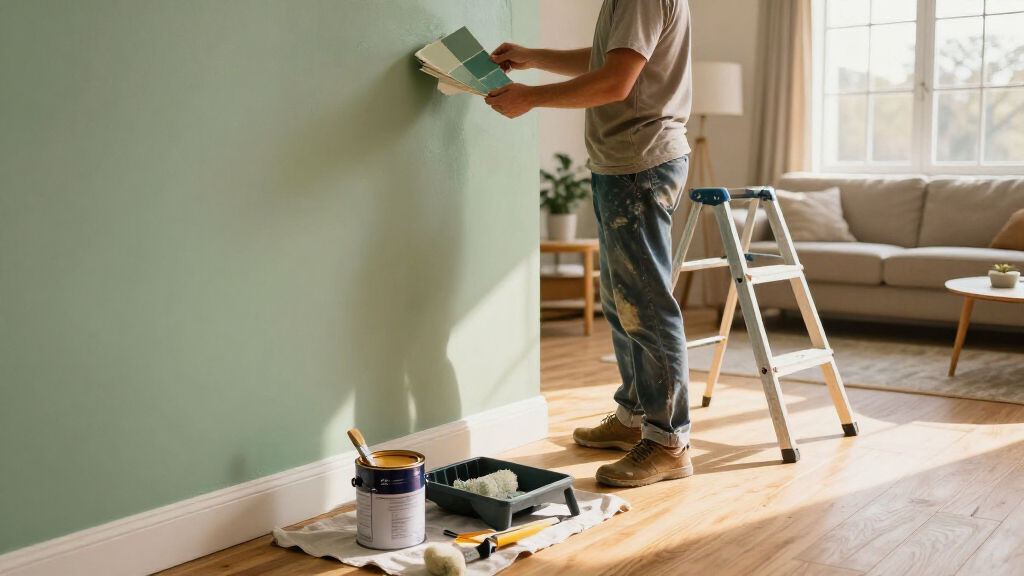
The report also lays out three supporting practices. First, designers caution against being overly swayed by the paint chip: Grant said she deliberately selects colors that look more subdued than the envisioned result, because walls reflect light and color onto each other and the applied paint reads stronger than the chip. Second, Quinn recommends evaluating undertones — asking whether a sample leans yellow, pink, purple, or green — as the way to distinguish near-identical shades. Third, Atapattu advises bringing finalists home, painting swatches on the wall, and living with them for at least 24 hours to see how lighting and room direction shift the color.
Why Paint-Last Saves Money and Regret
Paint is one of the cheapest elements to change in a room and one of the largest visual surfaces, which is what makes sequencing it last a financial safeguard rather than just a stylistic preference. According to the designers quoted, committing to a wall color early can force custom-priced furnishings to match it, or produce clashes that only appear after permanent finishes — honey oak flooring or cool marble, in Quinn’s examples — are already installed.
The advice also addresses a common consumer pain point: the wall covered in ten nearly identical swatches. By narrowing the field against fixed surfaces first, and then testing finalists in the actual room over a full day, homeowners reduce the risk of a repaint. Atapattu noted that lighting, room direction, and existing decor “can significantly change how a color appears,” which is why in-store viewing gives an inaccurate picture.
How the Designers Frame the Problem
The House Beautiful piece opens from a familiar scenario, widely shared in memes: a homeowner comparing a row of near-identical white, green, blue, or beige samples swatched on a wall, under pressure to commit to one. Designers, the report says, face the same choices professionally but reduce the hemming by following the sequencing rule.
The article illustrates its advice with real projects, including a Wisconsin family home by Emily Winters Posselt of Peabody’s Interiors painted in Benjamin Moore’s Sioux Falls, and a Cape Cod kitchen by Kathryn Hufton using Benjamin Moore’s White Dove to complement a cloudy marble backsplash — an example of a paint chosen to work with a finish that was already in place.
“Colors that might seem eerily similar in the store only reveal themselves when they sit against these surfaces. A color that looks neutral on a chip can clash the very second it meets honey oak flooring or cool marble.”
— Lisa Quinn, interior designer, to House Beautiful
Where the Advice Has Limits
The guidance reflects the professional opinion of the four designers quoted by House Beautiful; it is not a standardized industry protocol, and other designers may sequence projects differently, particularly in renovations where walls must be painted before furnishings arrive. The report does not claim the rule applies universally to every budget, timeline, or room type.
Levine herself adds a caveat: the process requires an open mind, because “the color that works best might be a total surprise.” The article also does not specify how many finalists to test or how large swatches should be, leaving those practical details to the reader.
Putting the Rule Into Practice
For readers applying the advice, the practical sequence is: finalize flooring, counters, cabinets, and large furniture; shortlist paint candidates by undertone; bring samples home and swatch them on the wall; then wait at least 24 hours, checking them at different times of day before committing. House Beautiful, which published the guidance as part of its design-inspiration coverage, continues to add designer tips through its Instagram and TikTok channels, where readers can expect follow-on paint and color advice.
Key Questions
What is the #1 rule designers say to follow before choosing a paint color?
Finalize everything else in the room first — flooring, counters, cabinets, rugs, curtains, upholstery, and art — and choose the paint color last, according to designers quoted by House Beautiful.
Why should paint be chosen last?
Because paint options are nearly infinite while furnishings and finishes are not, picking walls early can limit later choices or require spending more on custom pieces to make everything match, designer Dana Arazi Levine explained.
How long should you leave paint swatches on the wall?
At least 24 hours, according to Lindsay Atapattu of LEB Interiors, so you can see how the color shifts with the room’s natural light throughout the day.
Why does paint look different on the wall than on the chip?
Lauren Grant says walls reflect light and color back onto each other, making applied paint appear more exaggerated or higher in contrast than the chip — which is why she chooses more subdued shades than her envisioned result.
How do you tell similar paint colors apart?
Lisa Quinn recommends examining undertones: instead of asking whether a color is brown, ask whether it leans yellow, pink, purple, or green. That distinction narrows down near-identical shades.
Source: rss
Fall Picks
fall essentials
As an affiliate, we earn on qualifying purchases.