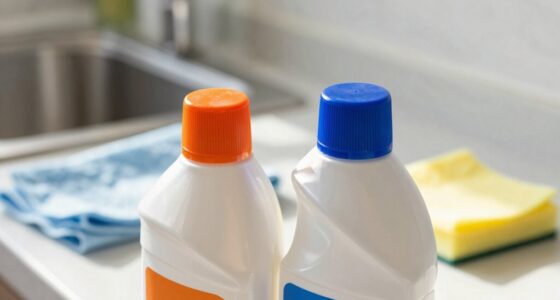
To effectively disinfect your bathroom, focus on high-risk surfaces like toilet bowls, flush handles, and soap dispensers. These areas can harbor thousands of bacteria, making regular cleaning vital. Aim to disinfect toilets weekly, while daily cleaning of countertops is essential to prevent buildup. Don’t forget to promote proper hand hygiene among family members, as it plays a significant role in reducing illness transmission. There’s more to learn about maintaining a truly germ-free bathroom environment.

Get cleaning gear delivered free with Prime
- Fast, free delivery on millions of items
- Prime Video, Amazon Music and more included
- Member-only deals all year
Key Takeaways
- Disinfect high-risk surfaces like toilet bowls, seats, flush handles, and soap dispensers to reduce bacterial and viral contamination effectively.
- Establish a cleaning routine: disinfect toilets weekly and bathroom countertops daily to maintain optimal hygiene.
- Use EPA-registered disinfectants for comprehensive pathogen elimination on all bathroom surfaces.
- Prioritize hand hygiene by promoting proper handwashing techniques to further reduce germ transmission among household members.
- Regularly dry surfaces after use to prevent mold and bacteria buildup, enhancing overall bathroom cleanliness.

When it comes to maintaining a healthy home, disinfecting bathrooms should be a top priority. You might think a simple wipe-down is enough, but bathroom surfaces can harbor millions of bacteria. For instance, toilet flush handles can contain between 1,000 to 10,000 bacteria per square inch, while sink faucet handles can carry up to 50,000. These numbers highlight the importance of a proper cleaning routine.
Disinfecting bathrooms is crucial—surfaces can harbor millions of bacteria, highlighting the need for a thorough cleaning routine.
To effectively combat these pathogens, you should aim for an extensive cleaning schedule. Ideally, toilets need disinfecting once a week, but high-traffic homes might require cleaning two to three times weekly. Don’t forget about daily cleaning for bathroom countertops, as they accumulate toothpaste and water splashes. Showers, too, need weekly attention to prevent mold, along with drying after each use. You’ll want to guarantee that you’re using EPA-registered disinfectants, as they’ve proven effective in killing germs. According to data, the frequency of cleaning the toilet in U.S. households indicates that regular disinfection is a common practice. A thorough cleaning routine can significantly enhance color accuracy in your overall hygiene efforts.
While cleaning your bathroom, focus on high-risk surfaces. The toilet bowl and seat should always be disinfected, as studies show this can reduce viral contamination by over 99.9%. Flush handles and soap dispensers are other key touchpoints that need routine disinfection. The soap dispensers can exceed a million bacteria per square inch, making them a breeding ground for germs. Cleaning these surfaces regularly can drastically reduce illness transmission.
Don’t rely solely on visible cleanliness. Just because a surface looks clean doesn’t mean it’s free from harmful pathogens. Many people skip soap when washing their hands in public bathrooms, and only a small percentage wash long enough to kill germs. This behavior increases the importance of disinfecting frequently. You should also promote proper hand hygiene among household members, as washing hands can reduce diarrheal and respiratory illnesses considerably.
Implement a cleaning protocol that combines routine disinfection with hand hygiene education. Make it a habit to clean and disinfect high-touch surfaces like door handles and light switches daily. Using the right tools—like brushes and disinfectants—will ensure you’re not just redistributing bacteria.
Products Worth Considering

Ring Battery Doorbell Plus (2nd Gen) and Indoor Cam Plus Bundle, Nickel Silver and White

Philips Hue Bridge Pro Smart Lighting Hub

Samsung 42-Inch Class OLED S90F 4K Smart TV (2025)
As an affiliate, we earn on qualifying purchases.
Frequently Asked Questions
How Often Should I Clean My Bathroom at Home?
You should clean your bathroom at least once a week, but consider more frequent cleanings if it sees heavy use, like in a busy household. Focus on high-touch areas, such as faucets, toilet handles, and door knobs. If someone in your home is sick, increase the frequency to reduce germs. Don’t forget to disinfect surfaces properly to guarantee a healthy environment for everyone using the space.
Are Natural Disinfectants Effective Against Germs?
Natural disinfectants can be effective against germs, but think of them like a trusty toolbox—great for some jobs, but not all. They often lack the potency of commercial disinfectants, especially against tough pathogens. Products like vinegar and essential oils can help reduce bacteria, but for high-risk areas, you might want to stick with EPA-registered options. Always verify the specific efficacy of any natural disinfectant you choose to guarantee it meets your needs.
Can I Use the Same Cloth for All Surfaces?
No, you shouldn’t use the same cloth for all surfaces. Different areas, like the toilet and sink, harbor varying levels of germs. Using one cloth can spread pathogens instead of removing them. It’s best to use separate cloths for high-touch surfaces and other areas. Color-coding your cloths can help keep things organized, ensuring you minimize cross-contamination and maintain a cleaner, healthier environment in your bathroom.
What’s the Best Way to Store Disinfectants Safely?
The best way to store disinfectants safely is in a cool, dry place, away from direct sunlight and heat sources. Keep them in their original containers, tightly sealed, and clearly labeled. Make certain they’re out of reach of children and pets. If possible, use a locked cabinet for added safety. Regularly check for expiration dates and safely dispose of any expired products. Following these steps helps maintain effectiveness and prevents accidents.
How Do I Ensure My Cleaning Tools Remain Sanitary?
To guarantee your cleaning tools remain sanitary, always clean them after use. Rinse brushes and cloths thoroughly to remove any debris, then disinfect them with an appropriate solution. Let them dry completely before storing. Use separate cleaning tools for different areas to prevent cross-contamination. Consider using disposable wipes for high-risk surfaces and replace them frequently. Regularly check and maintain your tools, discarding any that show wear or damage.
Conclusion
When it comes to disinfecting your bathroom, focus on high-touch surfaces like faucets, light switches, and toilet handles, which harbor 40% more germs than other areas. Remember, a consistent cleaning routine is key to keeping your space safe and hygienic. By understanding what actually needs disinfecting, you can tackle germs effectively and maintain a healthier environment for everyone. So, grab your disinfectant and make sure you’re hitting the right spots—your bathroom will thank you!