Grout sealing protects your tile work from moisture and stains. Seal grout 24 to 72 hours after installation and in high-moisture areas like showers. You should reseal every 1 to 3 years, especially if you notice discoloration or stains. To check if it’s working, perform a water-drop test; water should bead up. If it’s absorbed, it’s time to reseal. Want to learn more about maintaining that fresh look for your grout? Keep going!
Key Takeaways
- Seal grout 24 to 72 hours after installation, especially in high-moisture areas like showers and kitchens.
- Reseal grout every 1 to 3 years, or more frequently in high-traffic environments.
- Conduct a water-drop test; beading indicates effective sealing, while absorption means resealing is needed.
- Reseal after deep cleaning once grout is fully dry to maintain its protective barrier.
- Look for discoloration or persistent stains as signs that grout may need resealing.
Grout Sealing
Have you ever wondered how to keep your grout looking fresh and free from stains? Sealing your grout is one of the best ways to achieve that pristine look while protecting it from moisture and grime. When you’ve just installed new cement-based grout, wait for it to fully cure, usually 24 to 72 hours, before applying a sealer. This step is vital as it prevents trapped moisture from compromising the grout’s bond. If your installation is in a high-moisture area—like a shower or kitchen—consider sealing immediately after the grout cures to block water absorption that can lead to mold and mildew growth. A well-sealed grout can also enhance color accuracy in your tile installation, making the overall design more visually appealing.
Sealing your grout after installation is crucial for preventing moisture damage and maintaining a fresh appearance.
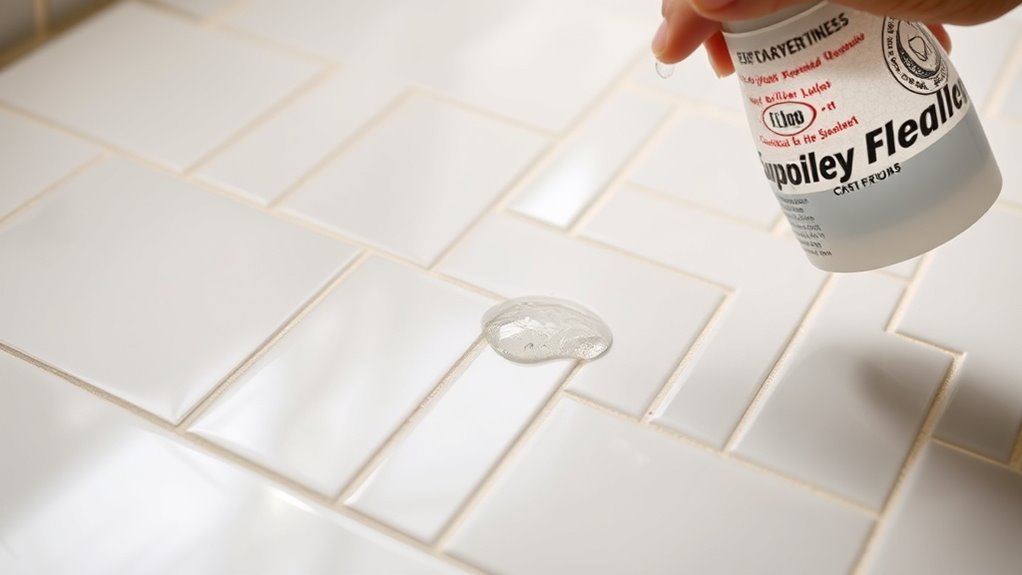
Once you’ve sealed it, remember to monitor your grout over time. Typically, resealing every 1 to 3 years is a good practice, but high-traffic areas like entryways or kitchens may need more frequent attention. To check if your grout needs resealing, perform a simple water-drop test. If the water beads on the surface, your seal is still effective; if it soaks in, it’s time to reseal. This annual check can save you from long-term damage and costly repairs.
After deep cleaning or grout restoration, always reseal once the grout is fully dry. This locks in the protection you’ve just provided. Keep in mind that if your grout is over a couple of years old or shows signs of wear, it’s wise to inspect it more closely. Look for persistent stains or darkened grout lines, as these are clear indicators that your grout’s protective barrier has diminished.
You might also wonder how to tell if the sealer you applied is working. A good indicator is how easily you can clean the grout. If scrubbing requires less effort and soil wipes away easily, your sealer is doing its job. Plus, a noticeable reduction in mold or mildew growth in humid areas suggests effective moisture protection.
Choosing the right type of sealer matters too. Penetrating sealers are often best for natural stone and high-moisture areas, while topical sealers provide surface protection. Whichever you choose, ensure it’s compatible with your grout type. Proper sealing not only enhances your tile’s appearance but also prolongs its lifespan, making it a worthwhile investment for any homeowner.
Frequently Asked Questions
Can I Seal Grout Myself, or Should I Hire a Professional?
You can seal grout yourself if you’re comfortable with DIY projects and follow the right steps. Cleaning the grout thoroughly and applying the sealer evenly is vital. However, if you’re unsure or want a perfect finish, hiring a professional might be the best option. They have experience and can guarantee the job is done correctly, saving you time and potential headaches. Ultimately, it depends on your confidence and the complexity of the project.
What Tools Are Needed for Sealing Grout?
Sealing grout is like painting a masterpiece; the right tools make all the difference. You’ll need a clean sponge, a grout sealer applicator or brush, a bucket for mixing, and possibly a vacuum for dust. Don’t forget gloves to protect your hands! An old towel can help wipe excess sealer from tiles. With these tools in hand, you’re ready to transform and protect your grout like a true artist.
How Much Grout Sealer Do I Need for My Project?
To determine how much grout sealer you need, calculate the total square footage of the grout lines. A typical sealer covers about 100–150 square feet per quart. Consider the width and depth of the grout lines to get a more accurate estimate. It’s best to purchase a little extra to ensure complete coverage, especially if you’re working in high-moisture areas. Always check the manufacturer’s recommendations for specific coverage details.
Is It Safe to Seal Grout Around Food Preparation Areas?
Yes, it’s safe to seal grout around food preparation areas. Imagine a kitchen where spills and crumbs can’t seep into porous grout, keeping your space hygienic. Sealing creates a protective barrier against moisture and stains, ensuring that your food prep area remains clean and safe. Just choose a food-safe, penetrating sealer and apply it properly. You’ll enjoy easier cleaning and peace of mind, knowing your kitchen surfaces are well-protected.
Can Sealed Grout Be Painted or Stained Afterward?
Yes, you can paint or stain sealed grout, but it’s important to prepare the surface properly. First, clean the grout thoroughly to remove any dirt or residue. Then, use a suitable grout stain or paint designed for this purpose. Keep in mind that the longevity of the color may vary based on wear and cleaning methods you use afterward. Regular maintenance will help maintain the appearance and protect your investment.
Conclusion
Sealing your grout is like wrapping a protective blanket around your home’s beauty. When you take the time to seal it, you’re not just preserving the vibrant colors and patterns; you’re safeguarding memories made in the warmth of your space. Keep an eye on that glossy sheen—it’s your assurance that the seal is working. So go ahead, embrace the peace of mind that comes with knowing your grout is shielded, and let your home shine bright for years to come.