
To establish No-Go Zones that actually stick, start by defining all zones before creating pathways or charge routes. Keep a 5 cm gap between boundaries and obstacles to guarantee smooth navigation. Combine small obstacles into single zones to simplify management. Use your app’s precision tools to draw boundaries accurately. After setup, test zones with app simulations and adjust as needed for peak performance. Keep checking your layout to maintain effectiveness. You’ll discover more tips on enhancing your zones.
Key Takeaways
- Establish No-Go Zones before creating pathways to avoid navigation conflicts during the mapping process.
- Maintain at least a 5 cm gap between zone boundaries and obstacles for effective navigation.
- Combine small obstacles into a single No-Go Zone to simplify management and enhance protection efficiency.
- Use precise boundary drawing tools in the app to ensure accurate zone placement.
- Regularly verify and adjust zones as needed to maintain effective lawn coverage and adapt to layout changes.
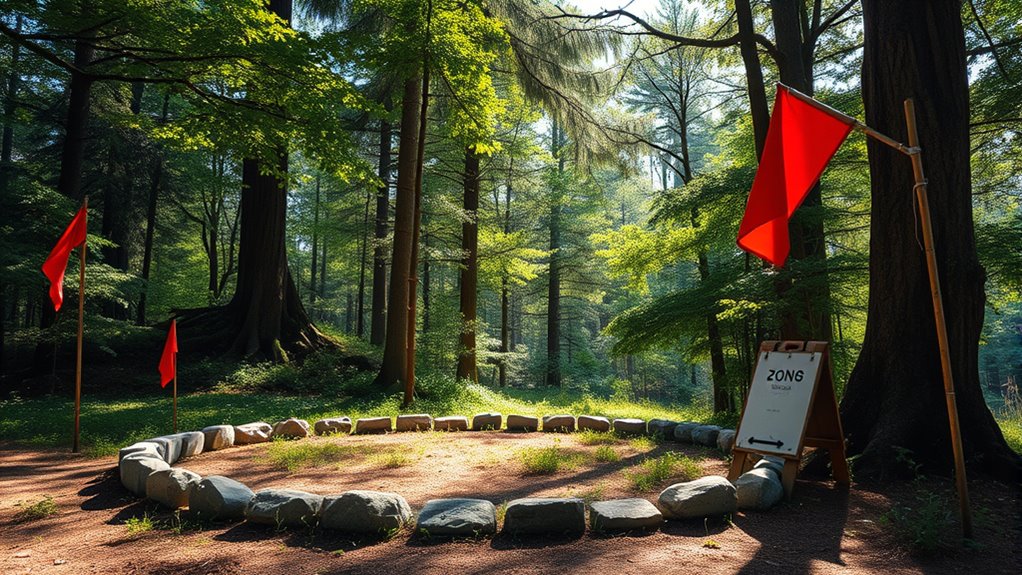
When setting up No-Go Zones in your lawn, you’ll create protected areas that your mower will automatically avoid during its tasks. These zones are vital for safeguarding flower beds, seating areas, and fixed obstacles from mower damage. There’s no limit to how many zones you can set up, and they can be easily deleted or redrawn using an app whenever layout changes are needed. Additionally, employing a field-of-view approach in your zone planning can enhance the mower’s efficiency in navigating around protected areas.
Start by establishing all your No-Go Zones before you create pathways or return-to-charge routes. This sequence is fundamental because it prevents navigation conflicts during the mapping process. You don’t want your mower running into issues because zones are too close to its routes. Make sure to maintain at least a 5 cm (2-inch) gap between the zone boundary and any obstacles. This distance ensures that your mower can navigate effectively around protected areas without interference. Additionally, incorporating a structured approach when defining these zones can help avoid conflicts with mowing pathways and enhance the overall efficiency of your lawn care.
If you have small fixed obstacles less than 1 meter (3.3 feet) apart, consider combining them into a single No-Go Zone. This approach simplifies management and reduces the number of separate zones you need to create. It also improves overall efficiency in protecting your lawn layout. By doing this, you’ll guarantee that all important areas remain untouched during mowing.
As you set up these zones, keep in mind the importance of distance management. Not only should your zones be spaced adequately from obstacles, but they also need to be sufficiently distant from mowing pathways. If zones are placed too close to your routes, you’ll likely need to adjust those pathways to ensure reliable navigation around the protected areas.
Creating multiple No-Go Zones caters to your specific lawn layout needs. Use the app to draw precise boundaries and adjust them as necessary. If you find that a zone isn’t working as intended, simply delete it and redraw it. This flexibility allows you to maintain an efficient lawn management system without hassle.
Before finalizing your setup, consider running simulations via the app to verify that your zones and pathways work harmoniously. This step ensures that everything is in order before you put your mower to work. By following these best practices, you’ll successfully set up No-Go Zones that stick, protecting your cherished areas while keeping your lawn looking pristine.
Frequently Asked Questions
How Do I Adjust No-Go Zones After Initial Setup?
To adjust no-go zones after the initial setup, use your app to delete or redraw the zones as needed. Just select the existing zone you want to modify and follow the prompts to reshape or remove it. Make certain to maintain the required distance from obstacles and pathways for effective mower navigation. Regularly reviewing and updating these zones helps ensure your lawn layout stays efficient and protected.
Can I Create Overlapping No-Go Zones?
Yes, you can create overlapping no-go zones. Just keep in mind that while overlapping zones can protect multiple areas, it might complicate your mower’s navigation. Make sure to observe how well your mower avoids these overlaps, as it could lead to confusion in movement. If you notice any issues, you can easily adjust or redraw the zones using your app to ensure everything runs smoothly and efficiently.
What Happens if I Forget to Set a No-Go Zone?
If you forget to set a no-go zone, your mower might venture into areas you want to protect, like flower beds or furniture. Imagine a painter splashing color outside the lines; the result can be messy. You’ll end up with damaged plants or obstacles. It’s best to take a moment to create those zones ahead of time. Adjustments can be made later, but prevention saves you from unnecessary headaches.
Are No-Go Zones Adjustable During Mowing?
Yes, you can adjust no-go zones during mowing. If you notice a need for changes, simply access the app to modify the zones while the mower is in operation. This feature allows you to adapt to your lawn’s evolving needs without interrupting the mowing process. Just make sure to keep the new boundaries free from obstacles to ensure smooth navigation. Regular adjustments help maintain the efficiency of your mowing tasks.
Can I Name My No-Go Zones for Easier Management?
Absolutely, you can name your no-go zones for easier management! Think of each zone as a unique garden bed, each with its own identity. This way, you’ll quickly recall what’s protected. Naming them helps you visualize their purpose and keeps your lawn organized. Whether you label them by their function or location, it simplifies adjustments and makes certain you maintain the beauty of your yard without the hassle of confusion. Get creative!
Conclusion
In the grand tapestry of community living, creating no-go zones isn’t about exclusion but rather about fostering safety and serenity. By setting clear boundaries, you’re not just protecting spaces; you’re nurturing an environment where everyone can thrive. Remember, it’s not about shutting doors but about opening windows to better experiences. With thoughtful planning and a touch of understanding, you can guarantee these zones become cherished havens, where peace and respect flourish for all.