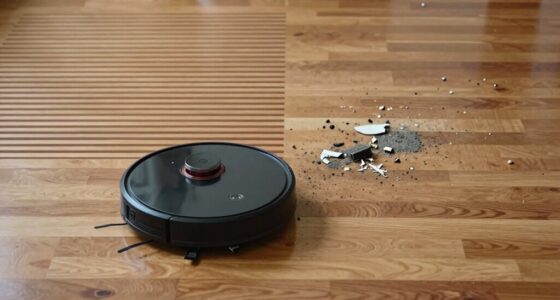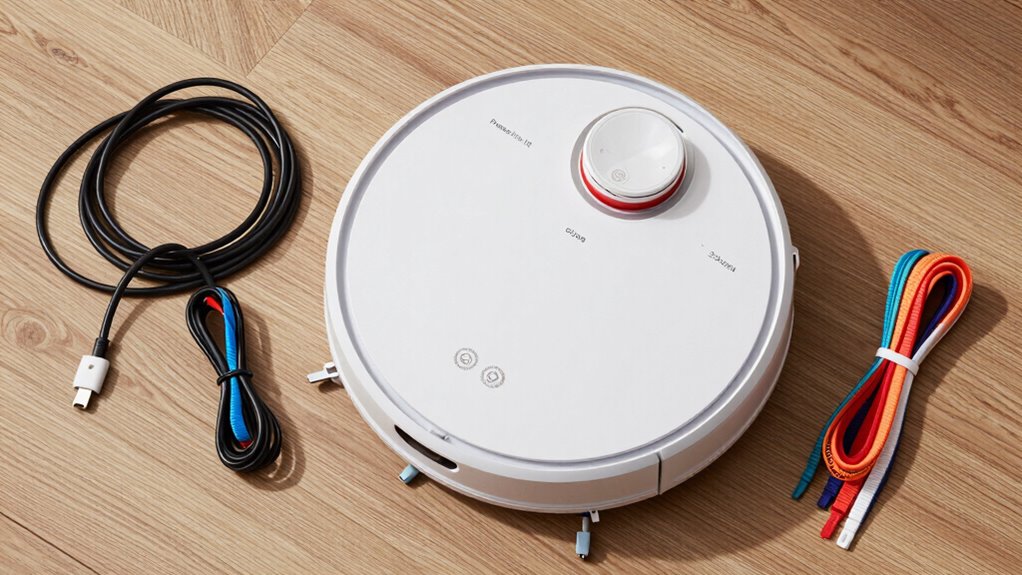
Before your robot vacuum gets to work, it’s essential to clear the area of cords, cables, and loose shoe laces. Make sure to secure power strips against walls and route any low-profile cables behind furniture. Check for small objects that could get stuck in the brushes. Also, tighten those shoelaces to avoid jams. Taking these quick steps not only saves time but keeps your vacuum running smoothly. There’s more to contemplate for a seamless clean!
Key Takeaways
- Clear any tangled cords and loose shoe laces from the floor to ensure uninterrupted vacuum operation.
- Elevate or secure power strips to reduce the risk of entanglement during cleaning sessions.
- Route low-profile and A/V cables behind furniture or use magnetic disconnects to minimize snagging.
- Move small appliances off the floor or attach their cords to furniture to prevent obstruction.
- Conduct a pre-run check for small objects and loose items to enhance cleaning efficiency.

Have you ever wondered how much tangled cords and loose shoe laces can disrupt your cleaning routine? As you prepare to run your robot vacuum, taking a moment to clear the floor of these pesky obstacles can save you from interruptions and headaches. Loose floor cords, especially those from lamps and chargers, are often the biggest culprits. They can easily wrap around wheels or brush rolls, halting operation and straining the motor. By elevating or securing power strips to baseboards, you can substantially reduce the risk of entanglement and enhance safety. Additionally, maintaining high refresh rates on connected devices can help ensure smoother operation when using your robot vacuum alongside other tech.
Don’t forget about those low-profile charging cables. They’re frequently left lying around and are among the most common small cords that robots snag. Consider routing them behind furniture or using magnetic disconnects to minimize damage. If you notice any fraying or exposed wires, replace them immediately to prevent electrical hazards. Utilizing cable anchors or under-desk routing keeps these cords securely in place, far from the vacuum’s path. Proper cable management is essential to ensure your robot vacuum operates without interruptions and to extend its lifespan.
Next, look out for A/V and computer cables. HDMI, Ethernet, and speaker wires often become hazards in living rooms. When these cables are unsecured, they’re at high risk for being caught by the vacuum. Shortening excess lengths with Velcro straps can help, as can using surface-mount raceways to keep them off the floor. Right-angle connectors can also reduce stress on plugs in case of minor tugging, which is vital for maintaining equipment integrity.
Now, let’s talk about small appliances. Power cords from lamps, fans, and heaters can easily obstruct your robot vacuum. By using cord-shortening devices or simply moving the appliances off the floor, you can eliminate many obstruction issues. Attaching cords to furniture or walls with clips can prevent them from migrating into open spaces where the robot operates. This way, you’ll avoid unnecessary interruptions during cleaning cycles.
Lastly, don’t overlook those loose shoe laces. They might seem insignificant, but they can jam the side brushes or wheels of your vacuum. Before you start the cleaning session, make a quick check to pick up any shoes, slippers, or laces lying around.
Frequently Asked Questions
How Often Should I Clean My Robot Vacuum?
You should clean your robot vacuum at least once a week. This includes emptying the dustbin, checking and cleaning filters, and removing any hair or debris from the brushes and wheels. If you have pets or a high-traffic home, consider cleaning it more frequently. Regular maintenance helps maintain performance and prolongs the vacuum’s lifespan. Plus, it guarantees your robot can effectively tackle dirt and debris during its scheduled runs.
Can I Run the Vacuum When I’m Not Home?
You can absolutely run the vacuum when you’re not home, but remember, “A stitch in time saves nine.” Before you leave, clear the floor of cords, shoes, and clutter to prevent any mishaps. Make sure the charging dock is accessible and the dustbin is empty. It’s also wise to schedule your cleaning runs when you’re out, minimizing the risk of entanglements and ensuring your space is clean by the time you return.
What Types of Floors Can Robot Vacuums Clean?
Robot vacuums can clean various floor types, including hardwood, tile, laminate, and low-pile carpets. They’re designed to adapt to different surfaces, ensuring effective dirt and debris removal. However, avoid using them on thick carpets or rugs, as they may struggle to navigate. Make sure to check your specific model’s guidelines for peak performance on each floor type, and adjust settings if needed for the best cleaning results.
How Do I Know if My Vacuum Needs Repair?
You’ll know your vacuum needs repair if it struggles to pick up dirt, makes unusual sounds, or stops unexpectedly during cleaning. Check for tangled hair or debris around brushes, as this can hinder performance. If the battery drains quickly or the robot fails to return to its dock, it’s time for a check-up. Regularly inspect the dustbin and filters; if they’re clean and issues persist, consider professional repair.
What Is the Average Lifespan of a Robot Vacuum?
The average lifespan of a robot vacuum is typically around 5 to 6 years, depending on usage and maintenance. You can prolong its life by regularly cleaning brushes, emptying the dustbin, and replacing filters as needed. If you notice decreased suction or navigation issues, it might be time for repairs or replacements. Keeping your robot vacuum in good condition ensures it continues to efficiently clean your home for years to come.
Conclusion
As you prepare for your robot vacuum’s journey, take a moment to scan the floor. The lurking cords, tangled cables, and stray shoelaces could spell disaster. Picture your vacuum, poised and ready, only to halt in its tracks, trapped in a web of household hazards. Don’t let that happen! Clear the path, and let it glide freely, transforming your home into a haven of cleanliness. What adventures await as it roams unencumbered? The thrill is just a sweep away.