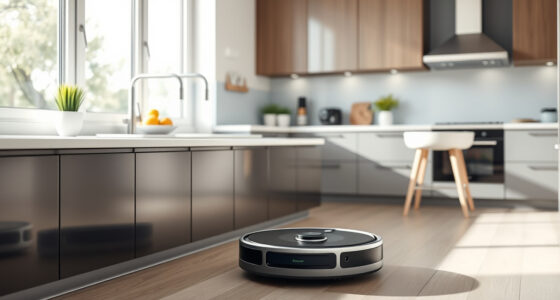
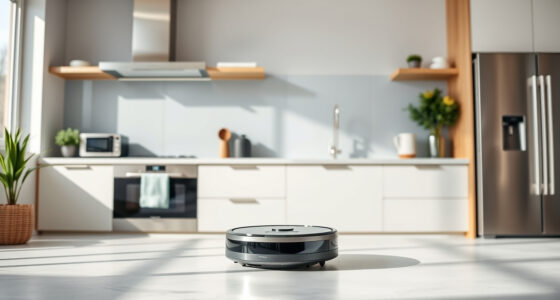
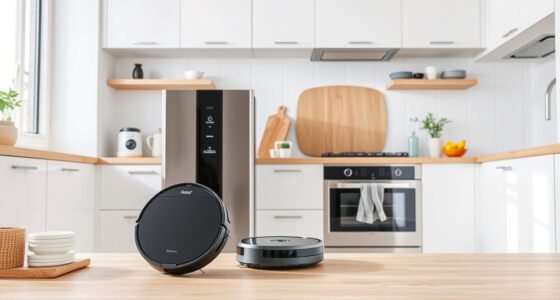
To keep your robot vacuum from smearing kitchen messes, start by wiping up spills immediately and keeping absorbent mats in high-spill areas. Schedule your vacuum runs after meal prep and avoid kitchen cleaning during messy activities. Consider using eco modes for gentler cleaning, and turn off any mop functions until floors are dry. Implementing these tips helps maintain clean floors, and there’s even more you can do to enhance your robot’s efficiency.

Get cleaning gear delivered free — and shop member deals
- Fast, free delivery on millions of items
- Access to Prime Big Deal Days deals on October 6–7
- Prime Video, Amazon Music and more included
Key Takeaways
- Schedule robot runs after cleaning sessions to ensure floors are dry and free of messes.
- Disable the mop function on hybrid models until the kitchen is thoroughly dry.
- Lower suction or brush speed in kitchen areas to prevent smearing during cleaning.
- Use absorbent mats in spill-prone zones to minimize mess before robot operation.
- Regularly wipe down counters and sweep up large debris to prepare for robot cleaning.

When you rely on a robot vacuum to keep your kitchen clean, it’s vital to take proactive steps to prevent messes from becoming bigger headaches. One effective strategy is to manage wet spills before your vacuum runs. By placing absorbent mats or rugs in high-spill zones, like near the sink or stove, you capture liquids before they can spread. Wiping up visible spills with a microfiber cloth immediately helps avoid smearing during your scheduled runs. Consider keeping a small squeegee or mop pad under the sink for quick cleanups of liquid messes, and develop a sink-to-counter habit to catch sauces or oils before they hit the floor. Additionally, remember to decontaminate certain areas by disinfecting surfaces regularly to reduce the risk of spills leading to bacteria growth, ensuring that your kitchen remains a space that promotes sustainable solutions.
Another essential aspect is restricting your robot’s access during messy activities. You can use magnetic boundary strips or LIDAR-designated no-go lines to block off the kitchen when you’re cooking. Physical barriers, such as baby gates or removable pet gates, can help prevent your robot from entering during meal prep. For a quick solution, place low-profile rugs or rolled towels across doorway thresholds, as many bump sensors recognize these as barriers. Always keep the robot dock in a non-kitchen room and schedule runs only when you’ve confirmed the kitchen is dry and clear.
Restrict your robot vacuum’s access during cooking by using barriers and scheduling runs only when the kitchen is clean and dry.
Adjusting your vacuum’s scheduling can also minimize mess encounters. Program it to run right after peak cleanup times, ensuring counters are wiped and dishes loaded. Consider using room-based scheduling to exclude the kitchen from daily automated runs, allowing you to clean it manually as needed. Enable “do not disturb” modes during meal prep hours to avoid accidental smearing of fresh spills. If necessary, run a short targeted spot-clean session after ensuring the floor is dry instead of a full kitchen sweep.
Before your robot starts, do a quick pre-clean to secure loose debris. Sweep up large food pieces to avoid pushing them into puddles during the run. Store pet food and open ingredient containers in sealed bins to prevent scattering. Patrol counters for fallen food before starting the robot, and use a handheld vacuum for concentrated sticky spots. Close garbage and compost lids frequently to minimize spills.
Finally, configuring your robot settings can markedly reduce smearing. Lower the suction or brush speed when cleaning near the kitchen, or enable eco modes if available. If you have a hybrid vacuum-mop device, turn off the mop function until you’ve ensured the floors are dry. By taking these preventive measures, you’ll keep your kitchen clean and your robot vacuum running smoothly.
Frequently Asked Questions
How Often Should I Clean My Robot Vacuum’s Brushes?
You should clean your robot vacuum’s brushes at least once a week, or more often if you have pets or a lot of debris. This keeps them free from hair and dirt, ensuring peak performance. Regular maintenance prevents clogs and improves suction power. Additionally, check the brushes for wear and tear; replacing them every few months can help your robot work effectively. Keeping your vacuum clean will enhance its longevity and efficiency.
Can Robot Vacuums Handle Different Floor Types Effectively?
Robot vacuums can handle multiple floor types effectively, with over 80% of models designed for both hard surfaces and carpets. You’ll notice they adjust suction levels based on the flooring, ensuring a thorough clean. Many even feature specialized brushes to prevent tangling on carpets while still picking up debris on tiles. Just keep in mind that the performance may vary based on specific models, so check your vacuum’s specifications for ideal results.
What Maintenance Do Robot Vacuum Batteries Require?
Your robot vacuum’s battery needs regular maintenance for ideal performance. Start by cleaning the battery contacts to prevent corrosion. Make sure you charge it fully after each use, and avoid letting it completely discharge frequently. Store the vacuum in a cool, dry place to extend battery life. If you notice it’s losing power quickly, consider replacing the battery. Regularly check the battery’s health through the app, if available, for best results.
Are There Robot Vacuums Suitable for Pet Hair Specifically?
If you’ve got a shedding Golden Retriever, a robot vacuum like the iRobot Roomba i7+ is perfect for you. It’s specifically designed to tackle pet hair with powerful suction and tangle-free brushes. You can set it to clean during your dog’s naptime, ensuring you catch all that fur. Plus, its advanced navigation avoids obstacles and returns to its dock when done, making it a hassle-free solution for pet owners.
How Long Do Robot Vacuums Typically Last Before Replacement?
Robot vacuums typically last between three to five years, depending on the brand and how well you maintain them. Regularly cleaning the brushes, emptying the dustbin, and ensuring the sensors are free from debris can extend their lifespan. If you notice a decline in performance or frequent malfunctions, it might be time to contemplate a replacement. Investing in a quality model can also make a significant difference in durability and effectiveness.
Conclusion
In a world where you expect your robot vacuum to be a cleaning superhero, it’s ironic that it could turn your kitchen into a slip-and-slide disaster instead. By taking a few simple precautions, like picking up crumbs and avoiding sticky spills, you can guarantee your trusty gadget doesn’t transform into a mess-making villain. So, while you sip your coffee, knowing your vacuum is actually cleaning, it’s smart to keep it from turning your kitchen into a chaotic playground.
Fall Picks
fall essentials
As an affiliate, we earn on qualifying purchases.