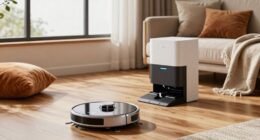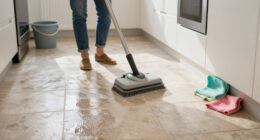
Robot vacuum mopping uses three main systems: vibrating pads, spinning pads, and drag pads. Vibrating pads loosen dirt gently with quick oscillations, ideal for delicate surfaces and quick cleanups. Spinning pads scrub stubborn stains effectively across larger areas with vigorous rotation. Drag pads maintain steady contact for gentle, routine cleaning on delicate floors. Each offers unique benefits, and understanding them helps you choose the right method—stay with us to learn more about each type.

Get cleaning gear delivered free — and shop member deals
- Fast, free delivery on millions of items
- Access to Prime Big Deal Days deals on October 6–7
- Prime Video, Amazon Music and more included
Key Takeaways
- Vibrating pads loosen dirt through oscillation, ideal for delicate surfaces and surface cleaning with quiet operation.
- Spinning pads scrub floors vigorously by rotating, suitable for deep cleaning and debris removal with circular patterns.
- Drag pads maintain steady contact, gently lifting dirt, perfect for delicate surfaces like hardwood and routine cleaning.
- Vibrating pads are energy-efficient and quieter, while spinning pads provide thorough cleaning but may consume more power.
- Proper maintenance of all pad types ensures optimal performance and prolongs the lifespan of robotic mopping devices.
How Vibrating Pads Clean Surfaces

Vibrating pads work by rapidly oscillating to loosen dirt and debris from surfaces. This motion enhances cleaning patterns by breaking up stubborn grime without requiring excessive scrubbing. They are especially effective on smooth, hard surfaces like tile, hardwood, or laminate flooring. Surface compatibility is key—vibrating pads work best on surfaces that can handle gentle vibrations without damage. For delicate materials, excessive vibration might cause scratches or wear. You’ll notice that the oscillation helps lift dirt from crevices and textured areas more efficiently than static pads. Additionally, free floating technology allows the pad to adapt better to uneven surfaces, improving overall cleaning performance. Proper Surface compatibility is essential to prevent damage and ensure effective cleaning, especially when using vibrating pads. Understanding the energy-efficient design of these pads can help maximize their lifespan and cleaning effectiveness. Furthermore, some models incorporate adjustable vibration settings, allowing users to customize the intensity based on surface type and cleaning needs. However, they may be less effective on thick carpets or uneven surfaces. Always check your floor type and the manufacturer’s recommendations to guarantee that vibrating pads deliver best cleaning without harming your surfaces.
The Mechanics of Spinning Pads
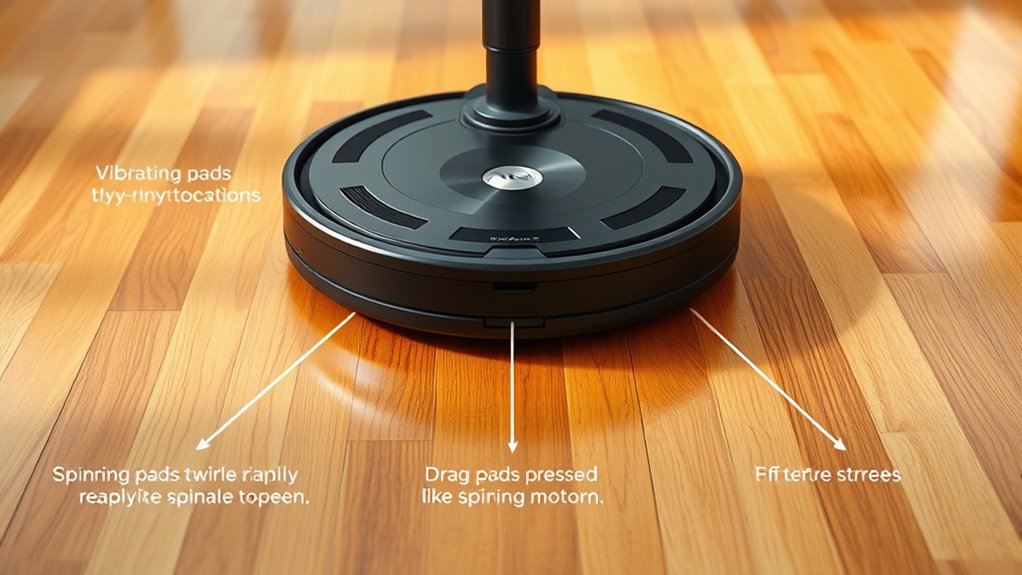
You’ll notice that spinning pads rotate rapidly to scrub floors effectively. Their rotation relies on precise mechanical movement dynamics that balance speed and torque. Understanding how these movements work helps you see why spinning pads are so efficient at cleaning. Mechanical movement dynamics involve the careful coordination of motor speed and pad design to achieve optimal cleaning performance. Additionally, rotational acceleration plays a crucial role in maintaining consistent cleaning effectiveness across different surfaces. The durability of the motor components ensures sustained performance during extended cleaning sessions. Moreover, proper ventilation and maintenance of the vacuum help prevent overheating and ensure consistent operation over time. Proper motor cooling is essential to prevent overheating, especially during long cleaning cycles, contributing to the longevity of the device.
Spinning Pad Rotation
Spinning pad rotation is a key feature that enhances a robot vacuum’s mopping efficiency by providing consistent, thorough cleaning. As the robot arm drives the spinning pad, it rotates rapidly, covering a larger surface area with each pass. This rotation creates a circular cleaning pattern that effectively lifts dirt and grime from your floors. Unlike dragging pads, spinning pads maintain constant contact and agitation, ensuring better debris removal. The motor inside the robot powers the spinning mechanism, allowing the pad to turn smoothly and steadily. This mechanical movement not only improves cleaning speed but also guarantees uniform coverage, especially in tight corners and along edges. By mastering diverse cleaning patterns, spinning pads deliver a more exhaustive and efficient mopping experience. Application techniques also influence how well the spinning pad performs in different environments. Understanding the mechanics of spinning pads can help optimize cleaning results and extend the lifespan of your device.
Mechanical Movement Dynamics
How exactly does the spinning pad achieve its smooth and steady rotation? It starts with the robot arm, which connects the pad to the motor. The motor generates rotational force, or torque, that spins the pad at a consistent speed. To maintain stability, the robot’s control system adjusts the motor’s power based on feedback, ensuring smooth movement. The suction power of the vacuum also plays a role, as it helps keep debris loosened and prevents slipping of the pad. Bearings and gears inside the robot arm support precise movement, reducing vibrations. This mechanical setup allows the spinning pad to glide evenly across surfaces, providing effective mopping with minimal wobbling or uneven wear. The result is a reliable, steady rotation that enhances cleaning performance.
Understanding Drag Pads and Their Functionality

Drag pads are vital components in robot vacuum mopping systems, as they directly influence cleaning effectiveness. They work by providing consistent contact with the floor, allowing the mop or cloth to effectively pick up dirt and grime. The robotic arm ensures the drag pad maintains proper pressure and positioning during movement. Proper sensor calibration is essential, as it helps the robot detect obstacles and adjust pressure to avoid damage or inadequate cleaning. Unlike vibrating or spinning pads, drag pads rely on steady, smooth contact, making their functionality highly dependent on precise calibration. When well-maintained, they enable thorough cleaning, especially on hard surfaces. Understanding how these pads operate helps you optimize your robot’s performance and prolong its lifespan.
Comparing Cleaning Effectiveness of Different Mopping Methods
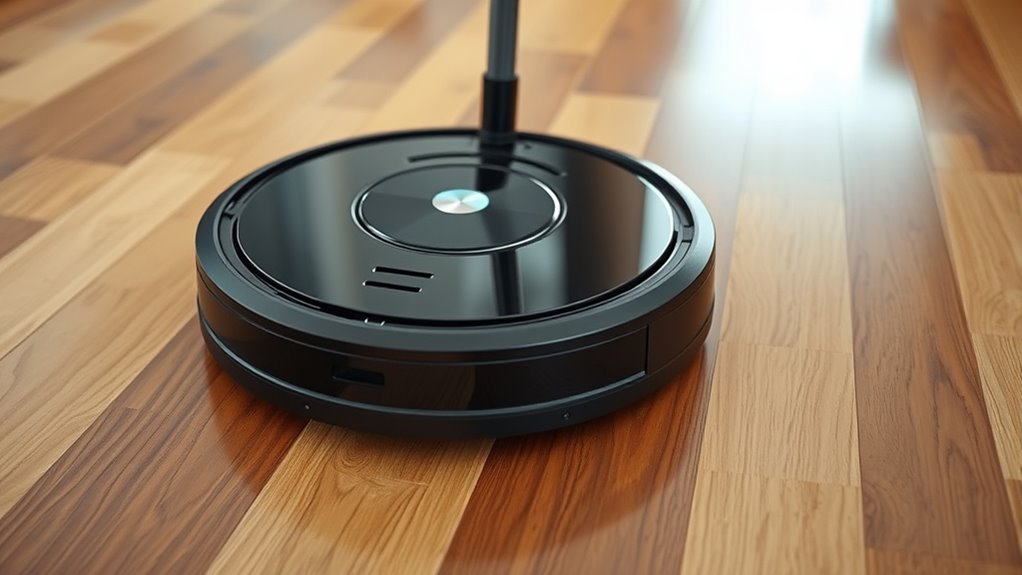
Different mopping methods vary considerably in their ability to remove dirt and grime from floors, making it important to choose the right one for your cleaning needs. Vibrating pads excel at loosening stubborn dirt quickly, often requiring less cleaning time and conserving battery life. Spinning pads tend to cover larger areas efficiently but may use more power, impacting battery life over time. Drag pads provide a gentler clean but might struggle with heavy stains, leading you to run the robot longer or empty the dustbin more frequently. When comparing effectiveness, consider the dustbin capacity—larger bins allow more dirt collection without frequent emptying, ensuring consistent cleaning. Additionally, understanding the cleaning performance of each method can help you select the most suitable option for your floor type and dirt levels. The mechanical action of vibrating pads can be especially beneficial for homes with stubborn or ingrained dirt, making them a preferred choice for thorough cleaning. Moreover, considering user preferences and specific cleaning goals can help you choose the most effective mopping method for your needs. For example, some users prioritize battery endurance for larger homes, influencing their choice of cleaning mechanism. Understanding the technology behind different pads can further assist in making an informed decision, especially when evaluating long-term durability and maintenance. Ultimately, selecting a method depends on your floor type, dirt levels, and the balance between cleaning performance and battery endurance.
Advantages of Vibrating Pad Technology
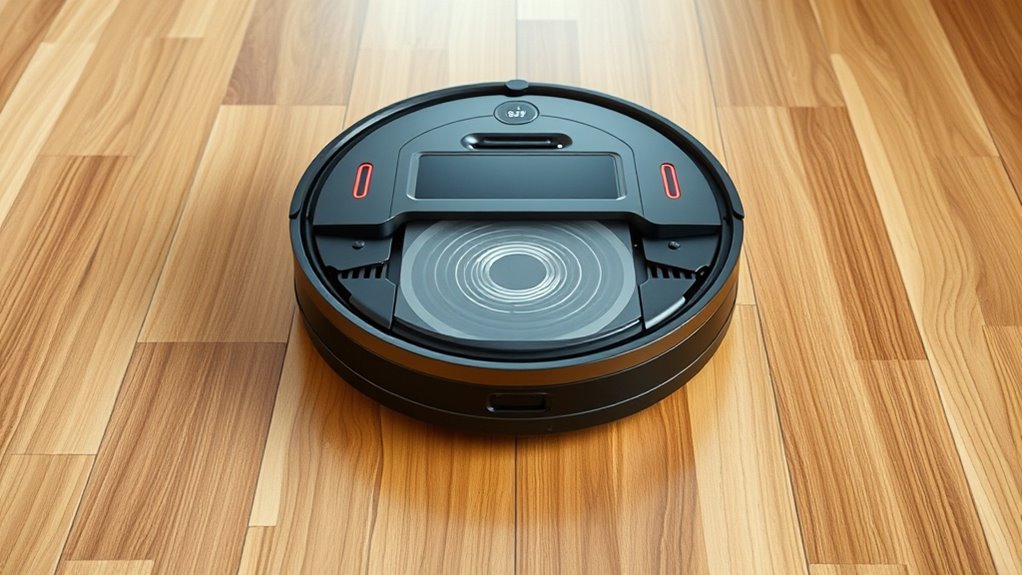
Vibrating pad technology helps your robot handle delicate surfaces without causing damage. It also operates more quietly, so your cleaning sessions are less disruptive. Plus, it uses less energy, making your robot more efficient and cost-effective. Additionally, its simple setup makes it easy to integrate into your home cleaning routine. This technology also benefits from filtration efficiency, ensuring a thorough clean without unnecessary wear on your device. Incorporating maintenance requirements further enhances the longevity and performance of your robot vacuum. Moreover, understanding indoor air quality can help you choose the best cleaning features for a healthier home environment. Recognizing energy efficiency benefits can lead to reduced operational costs over time.
Gentle Surface Handling
Thanks to vibrating pad technology, robot vacuum mops can handle delicate surfaces with greater care. Unlike spinning or dragging pads, vibrating pads gently loosen dirt without applying excessive pressure. This reduces the risk of abrasive materials causing surface scratches, especially on fragile flooring like hardwood or laminate. The vibration minimizes the need for aggressive scrubbing, making it ideal for sensitive surfaces. You won’t have to worry about damaging your floors with harsh cleaning methods. Vibrating pads work softly but effectively, cleaning without compromising the integrity of your surfaces. This gentle approach preserves your flooring’s appearance over time, ensuring it stays scratch-free and looking new. Additionally, understanding the safe cleaning practices can help prolong the life of your floors. Proper maintenance of the robot vacuum is essential to keep the vibrating pads functioning optimally and prevent unnecessary wear. With vibrating pad technology, you get thorough cleaning that’s safe for even the most delicate surfaces. Incorporating proper maintenance can further enhance your flooring’s longevity and keep it looking pristine.
Reduced Noise Levels
One of the key benefits of vibrating pad technology is its ability to markedly reduce noise during cleaning. Unlike spinning pads, vibrating pads operate with less mechanical movement, which minimizes the sound generated. This results in a quieter cleaning experience, making it ideal for use during your work hours or when you want to keep noise levels low. Enhanced sound insulation comes naturally with vibrating pads, as the vibration mechanism produces less overall sound compared to traditional spinning or drag pads. You’ll notice less disruption in your home environment, allowing you to carry on conversations or relax without disturbance. Overall, vibrating pad technology effectively balances cleaning power with a quieter operation, giving you a more peaceful, noise-efficient mopping process.
Energy Efficiency Gains
Energy efficiency is one of the standout benefits of vibrating pad technology. By optimizing power consumption, your robot vacuum uses less energy, extending battery life and reducing the need for frequent recharging. This technology ensures that the device consumes only what’s necessary for effective mopping without wasting power.
Here are some key advantages:
- Lower power consumption prolongs battery life.
- Reduced energy use decreases operational costs.
- Less strain on the motor leads to improved durability.
- Efficient energy management means fewer recharges and quicker cleaning cycles.
With vibrating pads, you get a more sustainable cleaning solution that maintains performance while conserving energy, helping your robot operate longer and more efficiently.
Benefits of Spinning Pad Systems
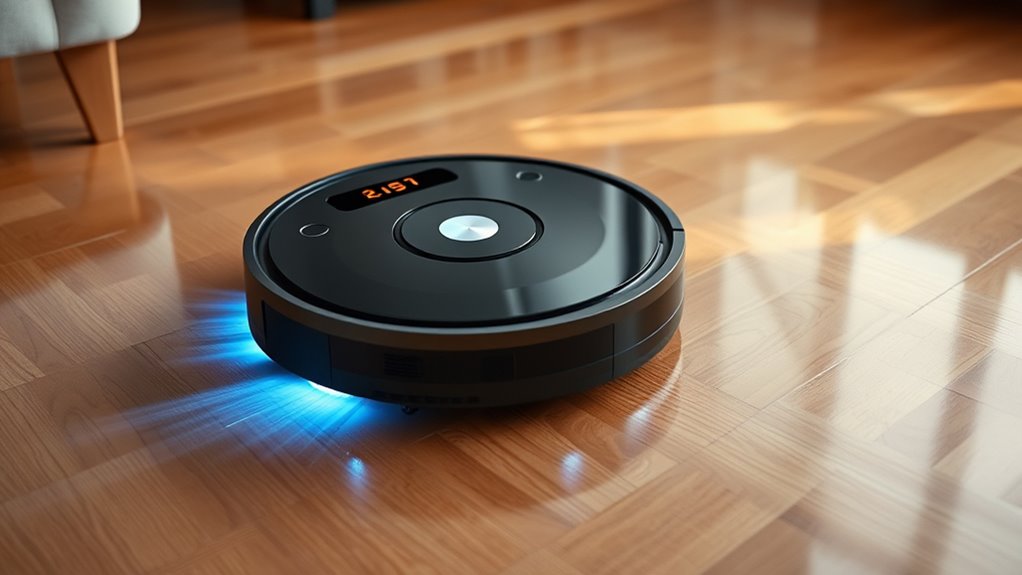
Spinning pad systems enhance the cleaning performance of robot mops by providing consistent, thorough scrubbing across surfaces. They effectively tackle dirt and grime, especially in hard-to-reach areas. The spinning motion allows debris to be lifted into the dust chamber more efficiently, reducing clogs and improving overall cleaning. Additionally, spinning pads are gentle on surfaces, preventing scratches or damage. They also help conserve battery life by requiring less power to operate compared to vibrating or drag pads. To visualize, consider the following:
| Advantage | Explanation |
|---|---|
| Deep Cleaning | Spins vigorously, removing stubborn dirt |
| Dust Chamber Efficiency | Collects debris more effectively with spinning action |
| Surface Safety | Protects delicate surfaces from damage |
| Battery Conservation | Uses less power, extending cleaning sessions |
When to Choose Drag Pads for Your Home

Drag pads are an ideal choice when you need a gentle, low-impact cleaning method for delicate surfaces or areas that require careful handling. They’re perfect for hardwood floors, preventing scratches during routine cleaning. If you have robot pet hair, drag pads can gently lift hair without pushing it further into the fibers. Choose drag pads if you want to maintain your hardwood’s finish over time or clean surfaces that are easily damaged.
Consider these scenarios:
- Regular hardwood maintenance with minimal abrasion
- Gentle removal of pet hair on sensitive flooring
- Cleaning delicate surfaces needing a soft touch
- Situations requiring careful handling of fragile areas
Drag pads provide a soft, non-invasive clean suited for sensitive home environments.
Potential Drawbacks of Each Mopping Technique

While drag pads are gentle and ideal for delicate surfaces, they aren’t always the best choice for every cleaning situation. They can be less effective on stubborn stains and may require more passes, impacting user convenience. Additionally, their simple design often leads to higher manufacturing costs, which can influence the overall price of your robot vacuum. Vibrating pads may clean more thoroughly but can struggle with large debris, while spinning pads might damage fragile surfaces if not carefully managed. Here’s a quick comparison:
| Technique | Pros | Drawbacks |
|---|---|---|
| Drag Pads | Gentle, low cost | Less effective on tough stains, slower |
| Vibrating Pads | Good for deep cleaning | May miss debris, higher manufacturing costs |
| Spinning Pads | Fast, thorough cleaning | Risk of surface damage, less gentle |
Understanding these drawbacks helps you choose the right method for your needs.
Tips for Maintaining Your Robot Vacuum’s Mopping Components

Regularly inspecting and cleaning your robot vacuum’s mopping components is essential to guarantee peak performance and longevity. Keep the mopping pads clean by removing and rinsing them with a gentle cleaning solution, avoiding harsh chemicals. Check for debris or hair that can clog vibrating or spinning pads, and wipe down the nozzles to ensure even water distribution. Maintain the water tank and refill it with fresh water after each use. Also, prioritize battery maintenance by fully charging the device and avoiding complete discharges, which prolongs battery life.
Regularly clean mopping pads, nozzles, and water tanks to ensure optimal robot vacuum performance and battery health.
Here are some tips to follow:
- Clean the mopping pads after every use.
- Use a suitable cleaning solution for stubborn stains.
- Regularly check and clean nozzles and water tanks.
- Keep the battery charged and avoid deep discharges.
Frequently Asked Questions
How Do Noise Levels Compare Among Vibrating, Spinning, and Drag Pads?
You’ll find that vibrating pads generally produce the lowest noise levels due to their gentle action, while spinning pads tend to be louder because of their rapid rotation. Drag pads usually generate moderate noise, as they don’t vibrate or spin but scrape or drag lightly across surfaces. When considering noise comparison, vibrating pads are quieter, spinning pads are the loudest, and drag pads fall somewhere in between, depending on the surface and vacuum model.
Are Certain Pads More Suitable for Specific Floor Types?
You should choose pads based on your floor type and pad material. For hard surfaces like tile or hardwood, spinning or vibrating pads work well because they provide thorough cleaning without damage. Drag pads are better for delicate floors, as they gently wipe without scratching. Always check your vacuum’s floor compatibility and select a pad material suited for your specific floor to guarantee effective and safe mopping.
Can These Mopping Methods Handle Stubborn Stains Effectively?
Did you know that 65% of users report improved stain removal with vibrating pads? These pads excel at handling stubborn stains due to their agitation, but their durability can vary. Spinning pads also tackle tough spots, yet drag pads may struggle with intense stains. For the best results, choose a pad designed for durability and consider pre-treating stubborn stains for supreme cleaning.
What Is the Typical Lifespan of Each Mopping Component?
The typical lifespan of each mopping component varies based on usage and quality. Vibrating pads usually last around 3-6 months due to frequent vibrations causing wear, while spinning pads often have similar durability but may wear faster with heavy use. Drag pads tend to be more durable, lasting up to a year. Proper maintenance and cleaning can extend your mopping pad durability, ensuring better component longevity and consistent cleaning performance.
Do Different Pads Require Special Cleaning or Replacement Routines?
Different pads do require specific pad maintenance and replacement routines. Vibrating pads often need gentle cleaning to remove debris, while spinning pads may need regular checks for fiber wear. Drag pads should be rinsed after use and replaced when worn or damaged. Follow your vacuum’s manual for recommended cleaning methods and replacement intervals, ensuring peak performance and longevity for each type of mopping component.
Conclusion
No matter which mopping method your robot vacuum uses—vibrating, spinning, or drag—you’re revealing the secret to spotless floors that could make even professional cleaners jealous. These tech marvels aren’t just cleaning; they’re transforming your home into a pristine paradise in minutes. So, pick the right system, keep it maintained, and watch your floors become so clean, they might just sparkle like they’ve been touched by magic. Prepare for the cleanest, most awe-inspiring home ever!
Halloween Picks
halloween
As an affiliate, we earn on qualifying purchases.