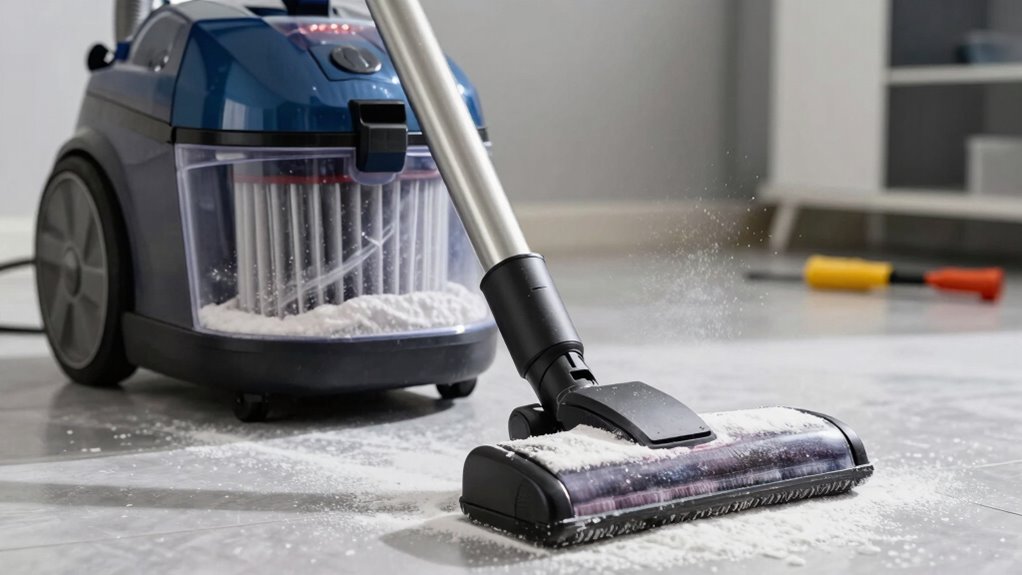

To vacuum fine powder effectively, you need a multi-stage filtration system. Start with a primary pre-filter that captures 80-90% of large particles. Add a secondary pleated filter for ≥99% efficiency on 1-micron particles, and finish with a HEPA filter for 0.3-micron particles at ≥99.97% efficiency. Guarantee airtight seals to prevent blowback and system leaks. Monitoring differential pressure helps maintain ideal airflow. This setup keeps your environment clean and safe, and there’s more to learn about enhancing your filtration system.
Key Takeaways
- Implement a multi-stage filtration system to capture coarse to fine particles effectively and prevent blowback during vacuuming.
- Choose HEPA filters for capturing fine particles down to 0.3 microns at high efficiency to ensure clean air output.
- Use anti-static filter media to mitigate the risk of electrostatic discharge when vacuuming combustible powders.
- Ensure all components are airtight with properly sealed gaskets and clamps to avoid leaks and maintain system integrity.
- Monitor differential pressure regularly to determine when to clean or replace filters, preventing overload and ensuring optimal performance.
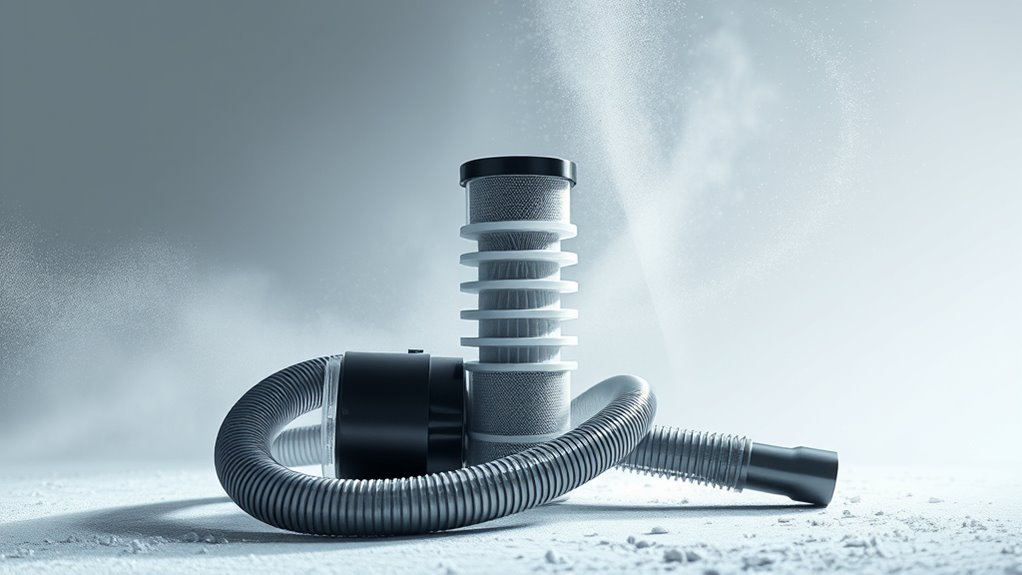
When vacuuming fine powder, how do you guarantee effective collection without risking blowback? To ensure that your vacuuming process is both efficient and safe, you need a robust filter setup. Start with a multi-stage filtration hierarchy. Your primary pre-filter should capture over 80-90% of coarse particles, protecting downstream filters and extending their life. Following that, a secondary pleated or cartridge filter will tackle mid-range particles, achieving at least 99% efficiency for particles down to 1 micron. Finally, don’t overlook the importance of a HEPA filter, which will capture respirable particles down to 0.3 microns at an impressive rate of 99.97% or higher. Regular vacuuming helps minimize dust accumulation and chemical contaminants, ensuring cleaner air during the vacuuming process. Effective filtration systems are essential for maintaining air quality in your home.
Next, focus on the filter media. For fine powders, opt for HEPA media made of fiberglass or paper, ideal for allergenic or toxic dust. If you’re dealing with combustible materials, use anti-static or conductive media to minimize the risk of electrostatic discharge. Remember, the right media not only captures particles effectively but also withstands the chemical properties of the powders you’re handling.
Choose the right HEPA media for fine powders to ensure effective capture and minimize electrostatic risks.
Sealing and gaskets are critical in preventing blowback. Ensure every component of your vacuum system is airtight, from gaskets to clamps. Utilize bag-in/bag-out systems for hazardous powders to minimize operator exposure during filter changes. Installing one-way valves or blast dampers can also help prevent reverse airflow that might disrupt captured dust.
Proper maintenance of your filtration system is essential. Schedule cleaning or replacement of filters based on differential pressure rather than a set timeline. Use staged cleaning, addressing the primary filter first before moving to the HEPA filter to avoid pushing dust into the final stage. Regularly monitor the system’s static pressure to maintain ideal airflow and prevent filter overload.
Lastly, manage airflow effectively. Ensure that your duct velocities are high enough to entrain the target powder but not so excessive that they overload the filters. Balancing airflow is key; your pre-filters should handle bulk collection without starving the HEPA filter of necessary volumetric flow.
Frequently Asked Questions
How Often Should I Replace My Vacuum Filters?
You should replace your vacuum filters based on their differential pressure (dP) readings rather than a fixed schedule. Monitor the dP regularly, and when it reaches the manufacturer’s maximum, it’s time for a change. Depending on your usage and the type of dust, this could be every few months or longer. Keeping a log of filter performance helps you predict when replacements are due and guarantees peak vacuum efficiency.
What Are the Signs of Filter Clogging?
You might think your vacuum filters are fine just because the machine’s running, but that’s not always the case. Look for decreased suction power, unusual noises, or an increase in dust escaping from the exhaust. If you notice longer cleaning times or a burning smell, those are signs of clogging too. Regularly checking and maintaining your filters will keep your vacuum efficient and extend its life, preventing bigger issues down the line.
Can I Use Regular Filters for Fine Powder?
No, you can’t use regular filters for fine powder. Regular filters often lack the efficiency needed to capture fine particles, leading to potential blowback and reduced air quality. Instead, opt for high-efficiency filters like HEPA or specialized cartridges designed for fine powders. These filters can trap particles down to 0.3 µm, ensuring cleaner exhaust and better performance. Always check the filter specifications to match your specific fine powder handling needs.
How Do I Properly Clean Vacuum Filters?
How often do you think about cleaning your vacuum filters? To properly clean them, first, release any trapped dust using a gentle pulse-jet or reverse-air method. Check for clogs and use a brush for stubborn debris. Always replace disposable filters before they reach maximum differential pressure. Finally, maintain a log of your cleaning schedule to track filter performance and guarantee efficient operation. Regular maintenance keeps your vacuum running smoothly and extends filter life.
What Should I Do With Used Filters?
When you’ve finished using your filters, dispose of them according to local regulations. If they’re reusable, clean them thoroughly following the manufacturer’s guidelines. Make certain you wear appropriate protective gear during handling to prevent exposure to any trapped particles. Record the filter type and maintenance history for future reference. If they’re disposable, replace them before they reach their maximum differential pressure to maintain ideal performance and prevent blowback during your next cleaning.
Conclusion
In the world of fine powders, a little careful planning can go a long way. By setting up your filter correctly, you’re not just vacuuming; you’re embracing a cleaner, more efficient workspace. With the right approach, you’ll keep the dust where it belongs—out of your lungs and away from your equipment. So, take a moment to fine-tune your setup. Your future self will thank you for the clearer air and hassle-free cleanup!