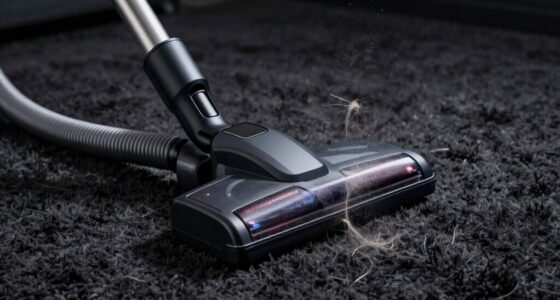

If your carpet cleaner’s suction is weak, don’t overlook the lint screen. This often-forgotten component can clog easily, restricting airflow and reducing suction power. Check the lint screen located in the tank or filter compartment; a simple rinse under warm water can readily improve performance. Also, verify your filters and dirt container are in good condition. There’s more to maintaining your cleaner’s power, so look out for additional tips to boost performance.
Key Takeaways
- Check the lint screen regularly, as a clogged screen can significantly reduce suction power.
- Rinse the lint screen under warm water to restore airflow and improve cleaning efficiency.
- Ensure all filters are clean; clogged filters can also limit suction similar to lint screens.
- Inspect and maintain the dust bag or dirt container, emptying it when it’s three-quarters full to ensure optimal airflow.
- Clear any blockages in hoses and nozzles, as debris can obstruct airflow and weaken suction performance.

When your carpet cleaner’s suction weakens, it can be frustrating, especially if you’ve just cleaned your carpets. One often-overlooked culprit is the lint screen. Many users forget to check this crucial component, which can considerably impact your cleaner’s performance. A clogged lint screen restricts airflow, leading to weaker suction and making it harder to lift dirt and debris from your carpets. Robotic cleaning solutions can help maintain the cleanliness of your home, but proper maintenance is essential.
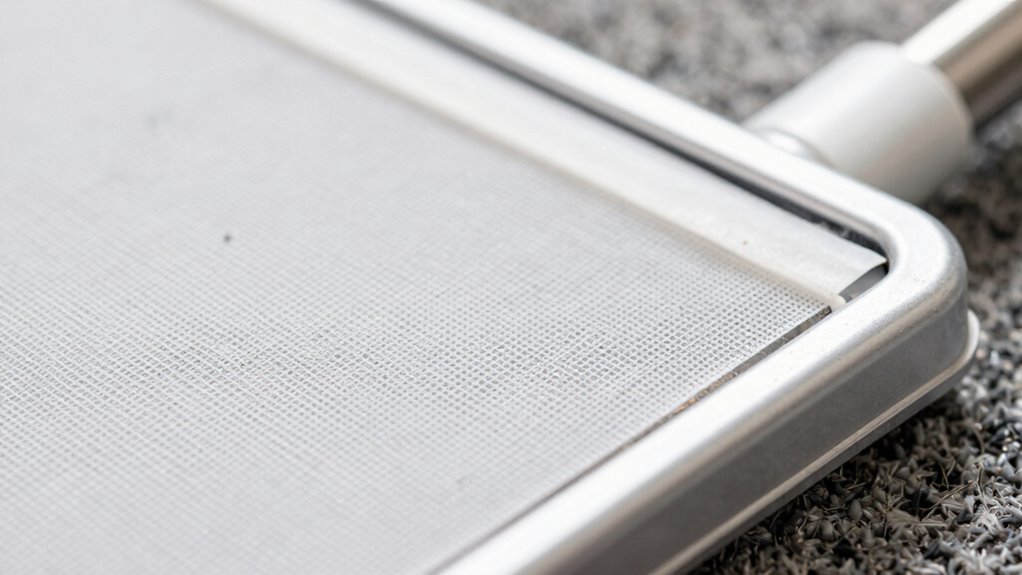
To tackle this issue, start by locating the lint screen, which may be hidden in the tank or near the filter compartment. Once you’ve found it, remove the screen and inspect it for buildup. If it’s dirty, rinse it under warm running water, ensuring all particles are gone. Let it dry completely before reinserting it. This simple step can restore airflow and boost suction power, allowing your cleaner to work effectively once again. Maintaining optimal airflow efficiency is crucial for ensuring your carpet cleaner operates at its best.
Locate and clean the lint screen to restore airflow and boost your carpet cleaner’s suction power effectively.
You should also pay attention to the filters in your vacuum. Clogged filters can restrict airflow just like a blocked lint screen. Refer to your manual to determine if your filters are washable or need replacing. Washable filters can be cleaned under running water, while non-washable types should be replaced periodically. Always check both pre-motor and post-motor filters for dirt accumulation, as they can also impact suction.
Another area to inspect is the dust bag or dirt container. If it’s full, there’s less room for air circulation, which reduces suction power. Ideally, you should empty the container or replace the bag when it’s three-quarters full, especially in dusty environments. Ensure the dirty water tank is seated properly as well; a misaligned tank can trigger valves that cut off suction prematurely.
Blocked hoses and nozzles are additional causes of weak suction. Large debris can obstruct the hose, reducing airflow. To clear blockages, remove the hose and gently push out clogs using a broom handle or similar object. Regularly check the front nozzle and brush roll cover for hair and debris, using a CleanOut tool if necessary.
Finally, if your carpet cleaner still struggles despite these checks, look for worn or damaged parts. A slipping belt or tangled brushes can hinder performance. Keeping all components clean and in good condition is essential for maintaining ideal suction. By addressing these often-overlooked elements, you can revitalize your carpet cleaner’s performance and achieve the clean carpets you desire.
Frequently Asked Questions
How Often Should I Clean My Carpet Cleaner’s Lint Screen?
You should clean your carpet cleaner’s lint screen after every use. This helps maintain ideal suction and prevents clogs. If you’re using it in particularly dusty areas, check it more frequently. Regular cleaning ensures that debris doesn’t build up, which can hinder performance. Just remove the screen, rinse it under running water, and let it dry completely before reinserting. Keeping it clean will help your carpet cleaner work efficiently and extend its lifespan.
What Tools Do I Need to Clean the Lint Screen?
To clean the lint screen, you only need a few simple tools: a soft brush, a vacuum cleaner with a hose attachment, and warm soapy water. Why not make it easier on yourself? Start by gently brushing off the lint, then use the vacuum to suck up any loose debris. If it’s particularly dirty, rinse it with warm soapy water and let it dry completely before reinserting. Keeping it clean guarantees ideal performance!
Can a Dirty Lint Screen Cause Permanent Damage?
Yes, a dirty lint screen can cause permanent damage to your carpet cleaner. When airflow gets restricted, it leads to overheating and can strain the motor, reducing its lifespan. You might notice weaker suction or unusual noises as a warning sign. Regularly cleaning or replacing the lint screen guarantees peak performance and prevents costly repairs. So, make it a habit to check that screen to keep your cleaner running smoothly!
Where Is the Lint Screen Located on My Carpet Cleaner?
The lint screen on your carpet cleaner is usually located near the dirty water tank or inside the tank itself. Check your user manual for specific instructions on finding it, as placements can vary by model. Once you locate it, remove the screen and clean it regularly to guarantee maximum suction. Keeping it clear of debris helps maintain your cleaner’s performance and prevents clogs that could affect its efficiency.
What Are Signs My Lint Screen Needs Cleaning?
If your lint screen needs cleaning, you’ll notice reduced suction power and unusual sounds from your carpet cleaner. You might see debris buildup on the screen or notice that your cleaner’s performance has dropped considerably. If water isn’t flowing properly or the float feels stuck, it’s time to check the lint screen. Regularly inspecting and cleaning it guarantees your machine runs efficiently and effectively, keeping your carpets looking their best.
Conclusion
So, before you throw your carpet cleaner out the window in frustration, check that lint screen! You might just save yourself from an epic cleaning disaster. It’s like finding a hidden treasure in your living room—who knew a tiny screen could make such a colossal difference? With proper maintenance, your cleaner can regain its superhero suction powers, making your carpets look like they just stepped off a magazine cover. Don’t let a small oversight ruin your cleaning dreams!