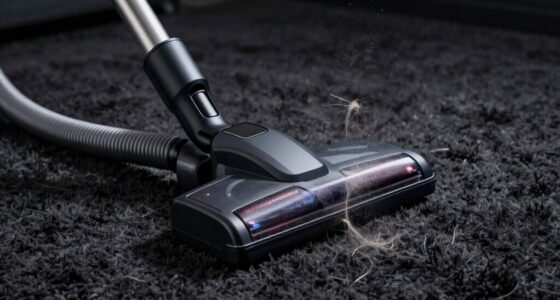
If your carpet cleaner sprayer’s clogged, try the hot-water flush method to clear it. First, turn off the machine and make certain it’s cool. Then, fill the tank with hot water and run the sprayer until the water flows smoothly. This helps dislodge stubborn debris. If that doesn’t work, consider checking for blockages in the nozzle or pump head. Stick around for more tips on keeping your carpet cleaner in top shape!
Key Takeaways
- Begin by turning off the carpet cleaner to prevent any liquid flow during the flushing process.
- Fill a container with hot water and connect it to the sprayer’s inlet.
- Actuate the trigger to force hot water through the nozzle, clearing any blockages.
- Repeat the process as needed until the sprayer operates freely without clogs.
- Regularly flush the nozzle with hot water to maintain optimal performance and prevent future clogs.

If you’ve ever experienced a clogged carpet cleaner sprayer, you know how frustrating it can be. It can halt your cleaning progress, leaving you with dirt and stains still on your carpet. Clogs often result from particulates like dirt or debris that block the nozzle. Sometimes, additives in cleaning solutions bind together, forming blockages. High-viscosity fluids can create buildups in nozzle passages, and if you’ve stirred contaminants from storage tanks, that can cause issues too. It’s essential to identify the source of the clog before trying to fix it. Color accuracy in your cleaning solutions can also affect their efficacy.
Start by evaluating whether the issue stems from the nozzle or the upstream lance and pipe system. Check for low water pressure, which might mimic a nozzle clog. Inspect the freshwater tank to ensure it’s not empty and that the float switch is working correctly. Verify the detergent you’re using isn’t the wrong kind or in the wrong amount, as that can lead to spray failure. Systematically examine the suction nozzle, pipe, handle, and hose for any blockages.
Once you’ve identified the clog, turn off the machine to stop the liquid flow through the pipes. Always wear personal protective equipment, including gloves and goggles, when dealing with chemicals. Disconnect the machine from the power supply before troubleshooting, and be careful not to overfill tanks beyond the maximum fill line. Check the freshwater tank for cracks and secure the cap tightly.
Basic cleaning methods can often resolve the issue. Remove the nozzle and soak it in a cleaning solution for at least 45 minutes. After soaking, use a soft brush to remove any remaining debris. You can also submerge the pump head in water and actuate the trigger multiple times to help clear blockages. If you suspect acidic or alkaline clogs, soak the nozzle in vinegar for about 30 minutes. For oil-based or sticky residues, an alcohol soak can be effective. Proper maintenance can greatly enhance the longevity and efficiency of your equipment, preventing future clogs.
For more stubborn clogs, consider advanced techniques. Apply firm pressure to the bottle to force out any trapped debris or air. Disassembling the pump head for cleaning can also help. Installing strainers upstream to catch particulates before they reach the nozzle can prevent future issues. By following these steps and using the hot-water flush method, you can effectively clear clogs and keep your carpet cleaner working efficiently.
Frequently Asked Questions
How Often Should I Clean My Carpet to Prevent Clogs?
You should clean your carpet every 6 to 12 months to prevent clogs and maintain its appearance. If you have pets or high foot traffic, consider cleaning every 3 to 6 months. Regular maintenance helps remove dirt and allergens, reducing the risk of buildup in your cleaning equipment. Always pre-treat stains and use the right cleaning solutions to enhance effectiveness and keep your sprayer functioning smoothly.
What Types of Cleaners Are Safe to Use in Sprayers?
You should stick to eco-friendly, non-toxic cleaners that are specifically designed for carpet cleaning sprayers. Avoid using any harsh chemicals or those with oils, as they can clog the nozzle. Always check the label for compatibility with your machine. Additionally, consider adding an ounce of white vinegar to your clean water tank to keep the lines clean and prevent buildup while ensuring a safe and effective cleaning process for your carpets.
Can I Use the Sprayer for Upholstery Cleaning?
Yes, you can use the sprayer for upholstery cleaning! In fact, studies show that hot water extraction can eliminate up to 99% of bacteria and allergens from surfaces. Just make sure to select an appropriate upholstery cleaner, and avoid over-saturating the fabric. Start with a test patch to verify compatibility, and follow up with proper drying techniques to prevent moisture-related issues. Your upholstery will look refreshed and clean in no time!
What Signs Indicate My Sprayer Is About to Clog?
If your sprayer’s about to clog, you’ll notice a decrease in water flow or a change in spray pattern—typically a sputtering or uneven mist. You might also see foam or residue building up at the nozzle. If the solution’s not mixing properly or you’re hearing unusual sounds from the pump, those are clear signs too. Regularly check for these indicators to prevent a full blockage and guarantee smooth operation during cleaning.
Is Vinegar Safe for All Carpet Types When Cleaning?
Yes, vinegar’s generally safe for most carpet types, but you should always test it first. Mix one part vinegar with three parts water, and apply it to an inconspicuous area. Wait for a few minutes to see if any discoloration occurs. While it’s effective for deodorizing and breaking down stains, avoid using it on wool or silk carpets, as it can damage these delicate fibers. Always follow manufacturer guidelines for your specific carpet.
Conclusion
If your carpet cleaner sprayer’s clogged, don’t stress! The hot-water flush method can save the day. Just like when Sarah discovered her sprayer was blocked mid-cleaning, she quickly boiled some water, poured it through the nozzle, and watched the grime disappear. In no time, her carpet looked fresh again, and her cleaning session resumed without a hitch. So, next time you encounter a clog, remember this simple trick and get back to revitalizing your carpets!