To stop outdoor patio dust tracking, use a two-zone mat system. Place a scraper mat outside to catch larger debris, followed by an absorbent mat indoors to trap finer dust and moisture. Integrate a shoe management system—like a “patio shoes” policy or shoe scrapers at entry points—to minimize dirt carry-in. Keep mats clean and inspect them regularly for wear. This combination creates a powerful defense against dust. Explore more effective strategies to enhance your dust control efforts.
Key Takeaways
- Use a coir scraper mat outside to effectively remove large debris from footwear before entering the patio.
- Place an absorbent mat inside to trap finer dust and moisture, improving indoor air quality.
- Implement a “patio shoes” policy to limit the amount of outdoor dirt brought indoors.
- Regularly clean mats by shaking them out or vacuuming to prevent re-release of trapped particles.
- Ensure mats are placed on firm, level surfaces for consistent contact and optimal dust control.
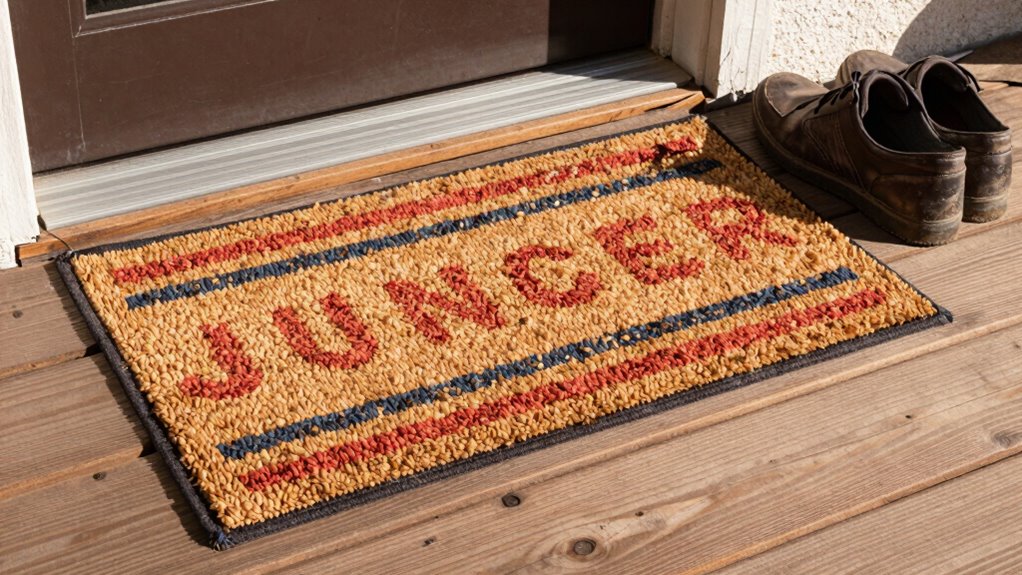
As you enjoy your outdoor patio, dust tracking can become a vital nuisance, especially during high pollen seasons or after windy days. To combat this issue effectively, you need a solid mat and shoe setup that minimizes the dirt and pollen that makes its way indoors. The right entrance mats are essential in this fight. Coir mats are excellent at scraping footwear, removing coarse debris, and reducing soil tracking. However, in high-traffic areas, they tend to wear out quickly. Instead, consider using rubber-backed loop or scraper mats, which excel at retaining larger particles and moisture. These mats can greatly improve your first line of defense when it comes to dust control.
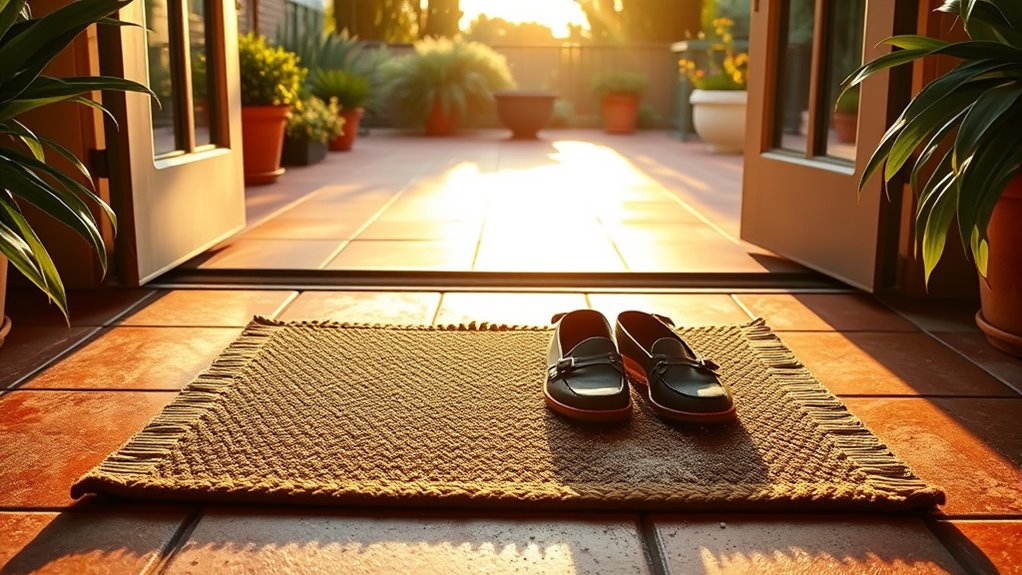
To maximize effectiveness, adopt a two-zone approach. Place a scraper mat outside to capture larger debris and an absorbent mat inside to catch finer dust and moisture. Ensure that your mats have a footprint of at least 60-90 cm in depth to guarantee that each walking stride makes good contact with the mat surface. This setup allows for the removal of different particle sizes more effectively. Additionally, using pollen proof enclosures can further enhance your outdoor space by blocking over 99% of pollen from entering.
You can also implement shoe control strategies to further reduce indoor dust transfer. Establishing a “patio shoes” policy or mandating outdoor-only footwear is a great start. Adding shoe scrapers or brush stations at your entry points helps dislodge grit and coarse soil before it even reaches the mats. If you must enter your home from a dusty patio, consider using slip-on indoor footwear or reusable shoe covers. Regularly maintaining your footwear by brushing and rinsing can also help lower the cumulative dust load.
Mat placement is vital. Staggering your mats, with a scraper mat positioned directly outside and a heavier traffic mat inside, helps capture descending particle sizes in sequence. Ensure full-width coverage of your primary entry paths to eliminate any gaps. Mats should be placed on a firm, level surface to guarantee consistent contact with footwear.
Finally, don’t overlook maintenance. Daily shake-outs or vacuuming of high-traffic mats prevent particle re-release. Schedule deep cleans every few weeks based on foot traffic. Inspect mats regularly for wear and replace them when necessary to ensure they maintain their dust-trapping efficiency. By implementing these strategies, you can enjoy your outdoor patio while keeping your indoor space cleaner and more comfortable.
Frequently Asked Questions
How Often Should I Replace My Entrance Mats?
You should replace your entrance mats when over 20–30% of their surface performance is lost, which typically happens every 1–4 months, depending on traffic. Regular inspections help you determine wear and tear, so keep an eye out for curling or deterioration. Also, monitor mat loading to schedule cleaning before they lose effectiveness. By maintaining a clean and functional mat, you’ll considerably reduce indoor dust transfer and improve your space’s overall cleanliness.
Can I Use the Same Mats for Indoor and Outdoor?
You can’t effectively use the same mats for indoor and outdoor spaces. Outdoor mats are designed to withstand harsher conditions and trap larger debris, while indoor mats focus on absorbing moisture and fine dust. Mixing them may lead to ineffective dirt control and quicker wear. Instead, use dedicated mats for each area to optimize cleanliness and maintain your indoor air quality. It’s worth the investment for both functionality and longevity.
What Materials Are Best for Mats in Wet Conditions?
Did you know that mats with an absorbency of over 1.5 L/m² can considerably improve moisture control? For wet conditions, rubber-backed loop or scraper mats work best, as they effectively retain larger particles and moisture. High-absorption textile mats made from microfiber or polypropylene also excel in capturing fine dust and water. Combining a scraper mat outside with an absorbent mat inside creates a two-zone setup that maximizes moisture management and soil tracking reduction.
How Do I Clean Mats Effectively at Home?
To clean mats effectively at home, shake them out daily to remove loose dirt. Vacuum high-traffic mats regularly to maintain their trapping efficiency. For deeper cleaning, pressure wash rubber or coir mats, and launder textile mats every few weeks. Inspect mats weekly for wear, and replace them when performance drops. Using a rotary brush vacuum with HEPA filtration helps remove fine dust without redistributing it, keeping your home cleaner.
What Are the Signs of Mat Deterioration?
Have you ever wondered if your mat’s still doing its job? Signs of mat deterioration include visible wear, curling edges, or fading colors. If you notice gaps or fraying fibers, it’s probably time for a replacement. Additionally, if the mat no longer retains moisture or debris effectively, its performance has likely declined. Regular inspections help you identify these issues early, ensuring your space remains clean and dust-free. Don’t ignore these signs!
Conclusion
By setting up a mat and shoe system, you’re not just keeping your patio pristine; you’re crafting a barrier against the swirling dust storms that threaten to invade your outdoor oasis. Think of it as a welcoming handshake between your home and the great outdoors, ensuring that every step you take is a clean one. So, embrace this simple setup, and watch as your patio transforms into a dust-free haven, ready for relaxation and enjoyment.