To prevent tiny glass shards from causing injuries later, you need to thoroughly clean the area after a breakage. Start by wearing protective gear and ensuring the space is clear. Use a flashlight to spot hidden fragments and employ methods like pressing bread against the floor or using damp paper towels to pick up fine shards. Double-bag the collected glass for disposal and wipe the area with soap and water. There’s more to efficient cleanup that you’ll want to know.
Key Takeaways
- Always wear protective gear to shield against potential injuries from glass shards during cleanup.
- Thoroughly scan the area up to ten feet from the break site to find scattered fragments.
- Use techniques like pressing bread or damp paper towels to collect tiny shards effectively.
- Employ a high-powered handheld vacuum for any remaining debris, avoiding regular vacuums to prevent damage.
- Double-bag collected glass in sturdy plastic bags and dispose of them in outdoor trash bins to eliminate risks.

Have you ever faced the formidable task of cleaning up broken glass? It’s a situation that can arise unexpectedly, and it’s essential to approach it safely. First, put on protective gear like shoes, rubber gloves, and safety glasses. Turn on the lights to illuminate the area, making it easier to spot those dangerous shards. You’ll want to clear the space of people and pets to prevent any injuries while you work. Move slowly and carefully, scanning up to ten feet away from the break site for scattered pieces.
Start your cleanup by picking up the large visible shards. Use your gloved hands to gather these pieces, or sweep them into a dustpan with short broom movements. If there are clusters on surfaces, sturdy cardboard can help you scoop them up efficiently. Always dispose of these shards directly into a trash container to minimize risk—never use your bare hands for this task. Proper disposal methods are crucial in ensuring no one accidentally comes into contact with the shards later.
Once you’ve tackled the larger pieces, it’s time to focus on the tiny shards that are often the most insidious. Use a flashlight or your phone’s backlight to help detect any elusive fragments. To check for these hard-to-see slivers, press a slice of bread against the floor; it can pick up fine shards that might otherwise embed themselves. Make sure to inspect your carpets and upholstery separately, as these areas can hide glass too. Prioritizing safety is essential when handling broken glass to avoid accidents.
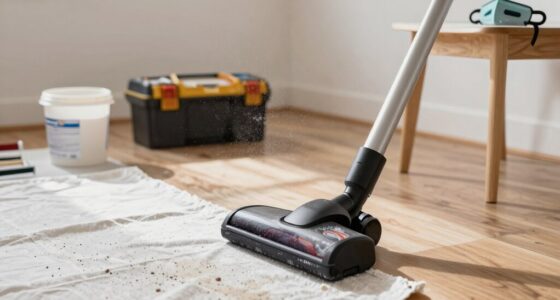
For those tiny pieces, employ some cleanup hacks. Press damp folded paper towels onto the shards for better adhesion, or try using fresh bread or a cut potato to lift the glass off the surface. Duct or masking tape can also be effective—just apply it sticky side out and dab the area. If you have a high-powered handheld vacuum, use it to clean up the remaining debris after manual removal, but avoid using regular bagged vacuums that could be damaged by the glass.
Once you’ve collected all the glass, double-bag it in sturdy plastic bags and dispose of it in an outdoor trash bin. Wipe any residue with a soap and water mixture to make sure the area is clean. If you’re faced with a major break, don’t hesitate to call professionals for help. Following these steps diligently can greatly reduce the risk of tiny shards remaining and guarantee a safer environment for everyone.
Frequently Asked Questions
What Should I Do if I Cut Myself on Broken Glass?
If you cut yourself on broken glass, first apply gentle pressure with a clean cloth to stop the bleeding. Rinse the wound under running water to clean it, then apply an antiseptic. Cover it with a sterile bandage. Monitor for signs of infection, like redness or swelling. If the cut is deep or won’t stop bleeding, seek medical attention. Remember to keep the area clean and change the bandage regularly.
Can I Use a Regular Vacuum for Glass Cleanup?
Imagine trying to catch water with a sieve; that’s what using a regular vacuum for glass cleanup is like. You can’t use a standard vacuum for this task. It’ll only spread tiny shards around, creating more trouble. Instead, grab a vacuum designed for tough jobs, one with a rigid hose and crevice tool. After picking up the big pieces, use it carefully to catch what’s left behind, ensuring a thorough cleanup.
How Can I Prevent Breakage in the First Place?
To prevent breakage, secure fragile items and avoid placing them near edges. Use tempered or safety glass when possible, and implement non-slip mats to reduce slips. Train yourself and others on safe handling techniques, and maintain stable shelving for breakables. Always keep your workspace organized to minimize accidents. Consider using physical shielding on fixtures to catch any accidental falls. By taking these steps, you can markedly reduce the risk of breakage.
What Are the Signs of Glass Contamination?
Signs of glass contamination start with sharp shards scattered across surfaces, signaling a safety scare. Shiny slivers gleam under light, hinting at hidden hazards. You might spot scratches or cuts on nearby objects, indicating glass’s presence. If you hear crunching sounds while walking, that’s a clear clue. Ultimately, if you notice unusual debris or dust, it’s time to investigate further. Always prioritize safety and check your surroundings carefully to confirm contamination.
Are There Special Disposal Rules for Antique Glass?
Yes, there are special disposal rules for antique glass. Since it can have historical significance or lead content, you should avoid throwing it in regular trash. Contact your local waste management facility for guidance on proper disposal methods. They may recommend recycling or special hazardous waste programs. Always handle antique glass carefully to prevent damage and guarantee it’s disposed of properly to preserve its value and history.
Conclusion
Cleaning up broken glass isn’t just about picking up the big pieces; it’s essential to prevent tiny shards from causing harm later. Imagine a child running barefoot, oblivious to hidden dangers lurking on the floor. By taking a few extra minutes to make certain every shard is gone, you’re not just tidying up—you’re safeguarding loved ones from injury. So, take a moment to be thorough; it can make all the difference in keeping your home safe and sound.