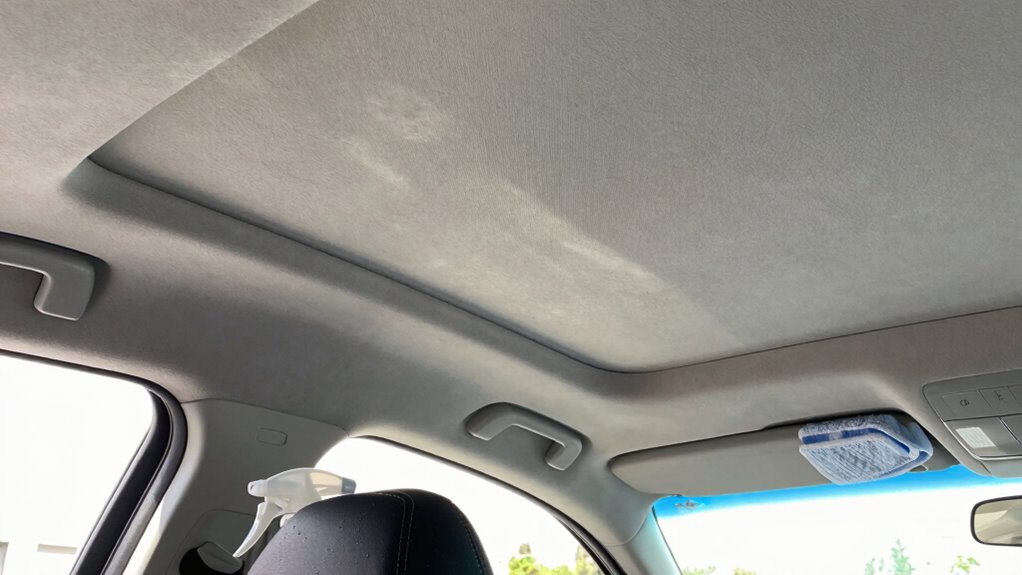
Cleaning your car’s headliner with the no-soak method helps you avoid sagging while effectively removing stains. Start by inspecting for damage and vacuuming the surface. Use a low-moisture cleaner applied to a soft brush or towel, working in small sections from the top down. Gentle agitation lifts dirt without over-saturating the fabric. Allow for proper airflow during drying to prevent any issues. Stick around for more tips on maintaining that fresh look!
Key Takeaways
- Use low-moisture cleaners specifically designed for automotive fabrics to minimize the risk of sagging.
- Apply cleaning products to tools, not directly onto the headliner, to control moisture levels.
- Work in small sections, starting from the top to prevent drips and allow better drying.
- Blot excess cleaner immediately with a dry microfiber towel to avoid oversaturation.
- Promote airflow by opening windows and doors, allowing headliner to dry evenly without moisture buildup.
When it comes to keeping your car’s interior looking sharp, cleaning the headliner is often overlooked but vital. You might not think much about it, but a clean headliner can considerably elevate your vehicle’s overall appearance. Start by inspecting the headliner for stains, tears, or damage. It’s essential to vacuum the surface with a soft brush attachment to remove dust and debris. Doing this guarantees you won’t rub dirt into the fabric during the cleaning process.
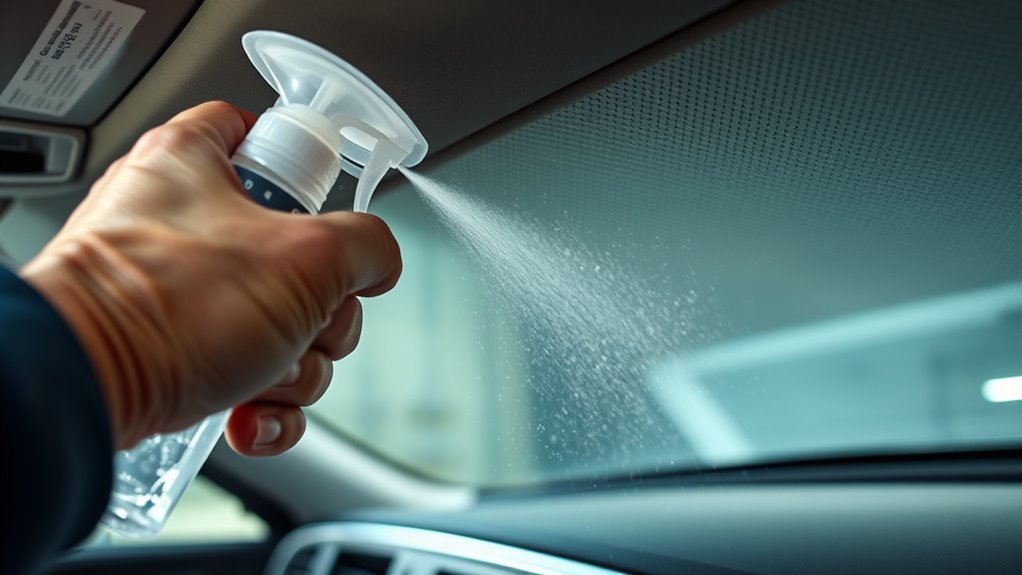
Gather your cleaning tools, which should include microfiber towels, a soft brush, upholstery foam cleaner, and a spray bottle. Remember to use low-moisture cleaners specifically formulated for automotive fabrics. Avoid strong chemicals that can weaken adhesive or stain the material. Instead of spraying cleaner directly onto the headliner, apply it to your brush or towel. This helps prevent oversaturation and protects the adhesive backing from being compromised. Using the right products enhances cleaning efficiency and results longevity. Additionally, robotic cleaning solutions can assist in maintaining a dust-free environment in your car, ensuring less buildup on the headliner.
When you start cleaning, work in small sections from the top down to avoid drips. Lightly mist your tool with the cleaner and use gentle circular or straight strokes to lift dirt. It’s important to agitate minimally; let the foam do the work rather than applying heavy pressure. After agitating, immediately blot with a dry microfiber towel to absorb any residue and excess cleaner. Patience is key here; repeat spot treatments instead of flooding the area with more liquid, as cumulative moisture can lead to sagging.
For specific stains, use targeted strategies. For grease or oil marks, apply a small amount of an upholstery spot cleaner to your towel, agitate gently, and then blot dry. For smoke residue, use a diluted foam cleaner and repeat the lifting technique. If you encounter biological stains, apply enzyme-based products with caution, ensuring thorough drying afterward.
Once you’ve finished cleaning, promote airflow by opening windows and doors to allow the headliner to dry evenly. Avoid pressing excessively or rubbing, which can re-embed soils or distort the fabric. Expect about 10-15 minutes of air drying per section, and be sure to inspect for any signs of sagging or bubbling. If you notice any issues, stop further liquid treatments immediately. In cases of severe damage or persistent odors, consider consulting a professional to guarantee your headliner remains in top shape. By following these steps and using the no-soak method, you’ll keep your car’s headliner looking fresh and well-maintained.
Frequently Asked Questions
How Often Should I Clean My Car Headliner?
You should clean your car headliner every six months to a year, depending on your environment and usage. If you smoke, have pets, or frequently transport food, consider cleaning it more often. Regular maintenance helps prevent stains and odors from setting in. Always use a low-moisture cleaning method to avoid damaging the fabric or adhesive. Keeping the headliner clean not only enhances your vehicle’s appearance but also maintains its value over time.
Can I Use Regular Household Cleaners on My Headliner?
You shouldn’t use regular household cleaners on your headliner. These cleaners often contain strong solvents or bleach that can damage the fabric and weaken the adhesive. Instead, opt for a low-moisture upholstery cleaner specifically formulated for automotive fabrics. This way, you’ll minimize the risk of oversaturation and preserve the integrity of your headliner. Always test any cleaner in a small area first to make sure it won’t cause discoloration or damage.
What Causes Headliner Sagging Over Time?
Headliner sagging is like your car’s way of saying, “I’ve had enough!” Over time, heat, humidity, and age weaken the adhesive holding the fabric in place. The foam backing absorbs moisture, leading to that delightful droop. If you’ve ever seen a tired old dog slouching on the floor, you get the idea! It’s essential to avoid using harsh cleaners or excessive moisture to keep that headliner looking perky and proud.
Is It Safe to Use a Vacuum on the Headliner?
It’s generally not safe to use a vacuum on the headliner, especially with high suction settings. The vacuum can pull at the fabric and loosen the adhesive, leading to sagging. If you need to remove loose dirt or debris, use a soft brush or a microfiber cloth instead. This way, you can gently lift dust without risking damage to the headliner or affecting the adhesive that keeps it in place.
How Can I Prevent Odors From Forming in My Headliner?
To prevent odors from forming in your headliner, keep it clean and dry. Regularly vacuum it gently to remove dust and debris. Use low-moisture cleaners for any stains, and always blot excess moisture to avoid soaking the fabric. Guarantee good airflow by keeping windows slightly open when parked. If persistent odors develop, consider using a low-moisture odor neutralizer applied with a towel, rather than sprays that could oversaturate the material.
Conclusion
Cleaning your car’s headliner doesn’t have to be a hassle. By using the no-soak method, you can keep it looking fresh without risking sagging. Did you know that a well-maintained interior can increase your car’s resale value by up to 15%? So, take a little time to care for that headliner, and you’ll not only enjoy a cleaner ride but also get more when it’s time to sell. Happy cleaning!