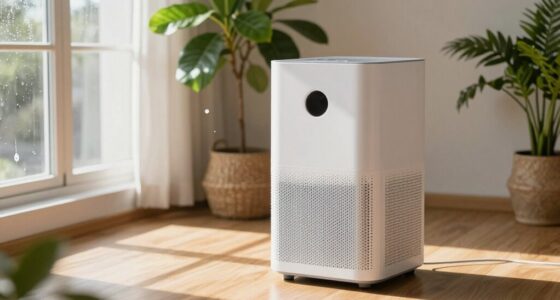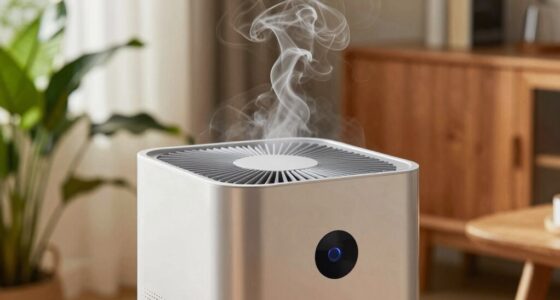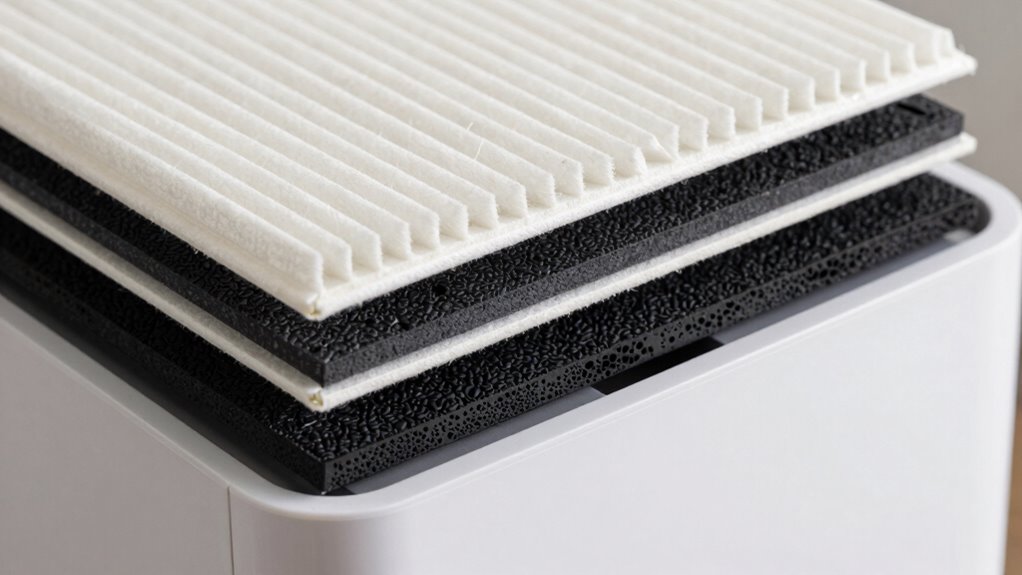
Your air purifier’s filter stack works together to clean your indoor air effectively. The pre-filter catches large particles like dust and pet hair, reducing strain on the main filters. The HEPA filter traps tiny particles such as pollen and bacteria, while the activated carbon filter removes odors and gases. Combining these filters guarantees thorough air cleanliness. Understanding how each part functions helps you optimize your purifier’s performance—stick around to discover how to get the most from your setup.

Get cleaning gear delivered free with Prime
- Fast, free delivery on millions of items
- Prime Video, Amazon Music and more included
- Member-only deals all year
Key Takeaways
- Pre-filters trap large particles like dust and pet hair, extending the lifespan of main filters and maintaining airflow.
- HEPA filters capture tiny airborne particles such as bacteria, pollen, and smoke with 99.97% efficiency.
- Carbon filters adsorb odors and gaseous pollutants, chemically binding molecules responsible for smells.
- Combining pre-filters, HEPA, and carbon filters provides comprehensive air purification by targeting different pollutant sizes and types.
- Regular maintenance and timely replacement of each filter type ensure optimal performance and air quality.
Understanding the Role of Pre-Filters
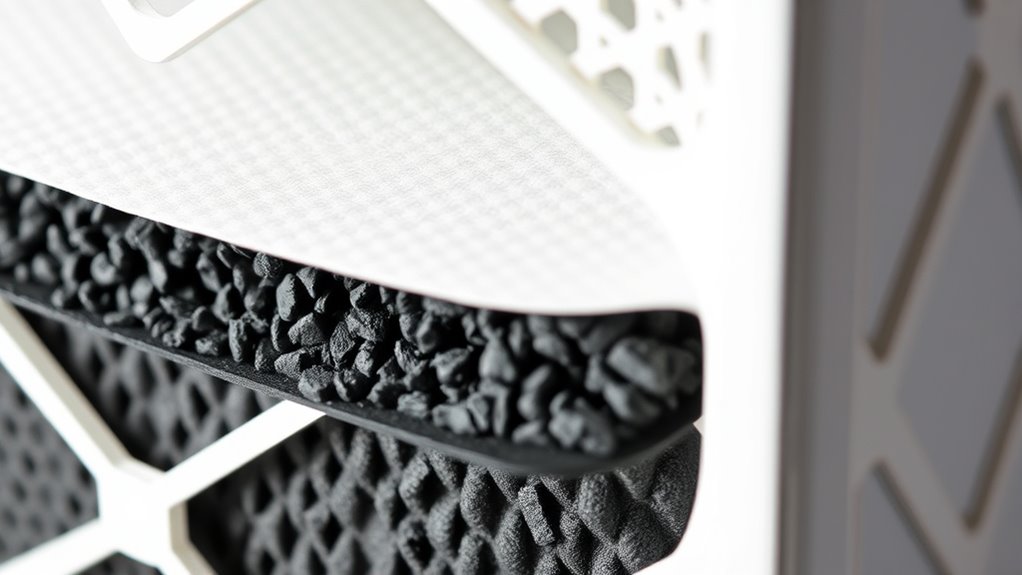
Pre-filters are the first line of defense in an air purifier, capturing large particles like dust, pet hair, and lint before they reach the main filters. This initial layer helps extend the filter lifespan, reducing the workload on more delicate filters. To keep your pre-filter effective, follow simple maintenance tips such as regularly checking and cleaning or replacing it as recommended by the manufacturer. A clean pre-filter guarantees ideal airflow and prevents clogging, which can decrease overall purifier efficiency. Regular upkeep also helps maintain energy-efficient operation, ensuring the device functions optimally over time. Keep an eye on visible dirt and dust buildup, and don’t wait too long to perform maintenance. Regular upkeep not only maintains air quality but also prolongs the life of your entire filtration system, saving you money and ensuring consistent performance. Proper maintenance is crucial for filter longevity and maintaining air quality over time.
How HEPA Filters Capture Tiny Particles
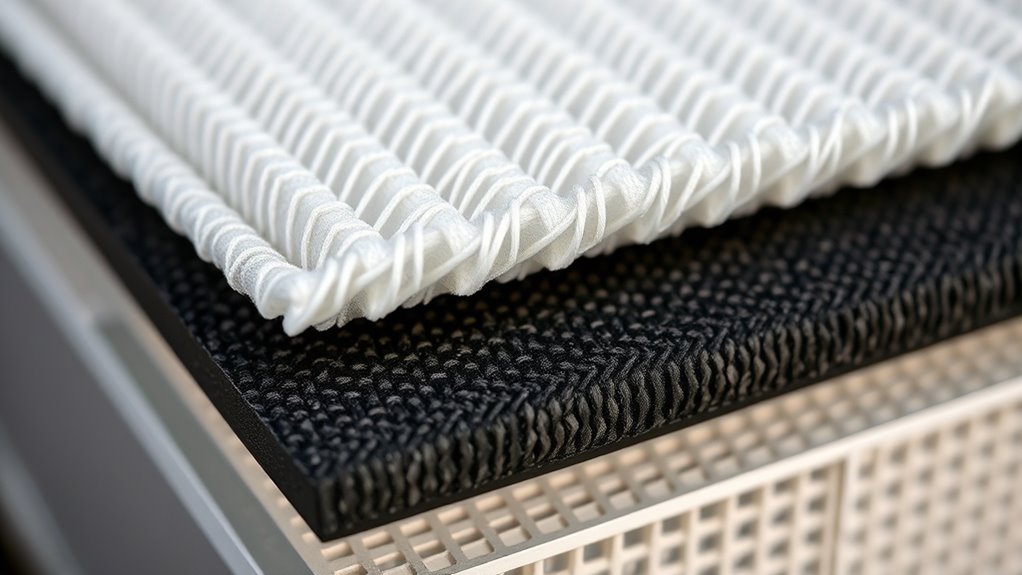
HEPA filters are designed to trap tiny particles that are invisible to the naked eye, such as bacteria, pollen, and smoke. They achieve this through a combination of mechanisms that target specific particle sizes, ensuring high filtration efficiency. The filter’s fibers create a maze-like structure, forcing particles to collide with them and become captured. HEPA filters excel at capturing particles as small as 0.3 microns, which are among the most difficult to filter. Their filtration efficiency is typically 99.97%, meaning almost all tiny particles are removed from the air. This high efficiency is critical for improving air quality, especially when dealing with allergens, viruses, or pollutants. Additionally, filter lifespan can be extended by proper maintenance and regular replacement, ensuring consistent performance. **Understanding filtration efficiency helps you evaluate the effectiveness of a filter in removing **airborne contaminants. By effectively capturing these tiny particles, HEPA filters considerably reduce airborne contaminants in your environment. Filtration mechanisms work together to ensure comprehensive removal of harmful particles. Properly designed HEPA filters utilize multiple filtration layers, each targeting different particle sizes for optimal performance.
The Function of Carbon Filters in Air Purification

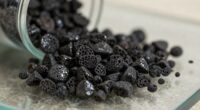
While HEPA filters effectively trap tiny particles, they don’t address odors or gaseous pollutants. That’s where activated carbon filters come in. They use porous charcoal to adsorb molecules responsible for smells and harmful gases. When air passes through, odors from cooking, smoke, pets, and chemicals are captured by the activated carbon, markedly improving indoor air quality. The high surface area of activated carbon allows it to trap a wide range of gaseous pollutants efficiently. This process doesn’t just mask odors but chemically binds with odor-causing compounds, removing them from the air entirely. Additionally, adsorption capacity plays a crucial role in determining how effectively the filter can remove pollutants over time. The filter lifespan depends on the amount of contaminants in the environment and the capacity of the carbon to adsorb gases. Proper maintenance practices and timely replacement of activated carbon filters are essential to maintain their adsorption efficiency and ensure continued air purification. Regular filter performance testing helps detect when the carbon has become saturated and needs replacement. As a result, activated carbon filters are essential for achieving a fresher, cleaner environment, especially in spaces where odors or volatile organic compounds are prevalent.
Combining Filters for Optimal Air Quality

Combining different types of filters in an air purifier enhances overall air quality by targeting a broader range of pollutants. HEPA filters capture small particles like allergens and dust, while carbon filters remove odors and volatile organic compounds. Pre-filters trap larger debris, reducing strain on the main filters and extending their lifespan. To maximize performance, you should follow maintenance tips such as regularly checking and replacing filters when they reach the end of their lifespan. Proper upkeep ensures your air purifier works efficiently and maintains ideal air quality. Combining filters not only broadens pollutant removal but also helps prolong filter lifespan, saving you money and ensuring cleaner air for longer periods. Staying on top of maintenance keeps your air purifier running smoothly and effectively. Incorporating connected equipment and wellness technology can further optimize your indoor environment for better health.
Choosing the Right Filter Stack for Your Space

Choosing the right filter stack for your space depends on evaluating your specific air quality needs and the environment you want to improve. Consider how long each filter type lasts; a longer filter lifespan reduces maintenance and replacement costs. If noise levels matter, opt for filters that operate quietly, especially if you’ll be using the purifier in bedrooms or offices. HEPA filters are excellent for capturing airborne particles, while carbon filters help with odors and chemicals. Pre-filters extend the lifespan of the main filters by trapping larger debris early. Additionally, understanding the filter lifespan of each component helps in planning maintenance schedules and budget considerations. By balancing these factors—filter lifespan and noise levels—you can customize a filter stack that effectively cleans your air without constant upkeep or disruptive sound. This ensures your space stays fresh and healthy.
Frequently Asked Questions
How Often Should I Replace Each Type of Filter in My Air Purifier?
You should replace your filters based on their filter lifespan and replacement frequency recommendations. Generally, change the pre-filter every 1 to 3 months, the HEPA filter every 6 to 12 months, and the carbon filter every 3 to 6 months. Keep an eye on your air quality and device performance, as increased dust or odors may signal it’s time for a replacement. Regular maintenance ensures your air purifier works efficiently.
Can Filter Stacks Remove Odors From Outdoor Pollution Sources?
Yes, a filter stack can remove odors from outdoor pollution sources. The efficiency of your filter stack depends on its design and materials. Activated carbon filters excel at absorbing odors, while HEPA filters trap particles. To maximize outdoor odor removal, guarantee your filter stack includes a high-quality carbon filter and replace it regularly. Proper maintenance keeps your air purifier effective against outdoor pollution and its odors.
Do Different Filter Combinations Affect Noise Levels During Operation?
Like a symphony with varying instruments, different filter combinations can change the sound levels of your air purifier. The more complex the filter stack, the more noise it might produce, as the motor works harder. You’ll notice that certain filters, especially dense ones, can increase filter noise, making operation louder. To keep sound levels low, opt for simpler filter setups or models designed for quieter performance.
Are There Filters Specifically Designed for Allergy Sufferers?
Yes, there are allergy-specific filters designed for allergy sufferers. You can opt for hypoallergenic filter options that target common allergens like pollen, pet dander, and dust mites. These filters are specially crafted to trap tiny particles, helping you breathe easier and reduce allergy symptoms. When choosing an air purifier, look for models that feature these allergy-specific filters to guarantee ideal relief and cleaner indoor air for your needs.
How Do Maintenance Routines Vary Between Residential and Commercial Air Purifiers?
You’ll find that maintenance routines differ mainly in frequency and complexity. For residential units, follow simple filter replacement protocols, typically once every few months. Commercial air purifiers demand more rigorous maintenance schedules, often requiring professional servicing and more frequent filter changes. Staying attentive to these differences guarantees peak performance and air quality, helping you maintain a healthier environment whether at home or in a busy workplace.
Conclusion
By understanding how each filter works—pre-filters catching larger particles, HEPA filters trapping tiny pollutants, and carbon filters absorbing odors—you can create a cleaner, healthier environment. Think of your filter stack as a team working together, like a well-choreographed dance. When you choose the right combination, you’ll breathe easier and enjoy fresher air every day. Keep your filters maintained, and your indoor air quality will stay as fresh as a spring breeze.
Halloween Picks
halloween
As an affiliate, we earn on qualifying purchases.