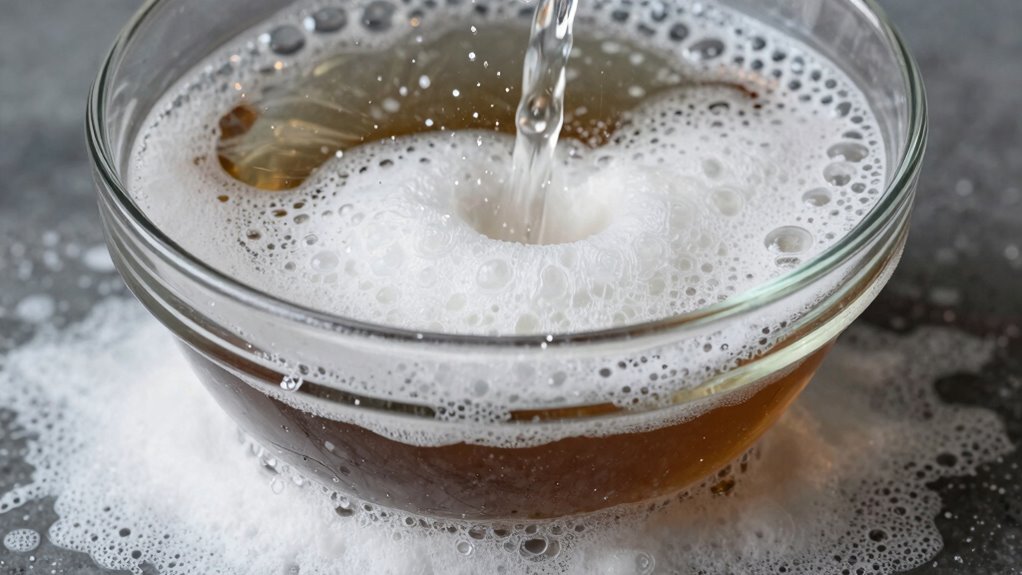

The fizz from mixing vinegar and baking soda is fun, but it doesn’t clean as effectively as you might think. While the reaction dislodges some dirt with its bubbles, it doesn’t dissolve stubborn stains or soils well. Plus, it often leaves residues, and neither ingredient is a strong disinfectant. So, the fizzing action might give you a false impression of deep cleaning. If you want to learn more about proper cleaning techniques, keep exploring!
Key Takeaways
- The fizzing from vinegar and baking soda mainly dislodges dirt rather than dissolving it, limiting its cleaning effectiveness.
- The reaction neutralizes their individual cleaning properties, reducing overall efficacy against tough stains.
- Residues may remain after the reaction, necessitating additional cleaning steps to remove dirt completely.
- Neither ingredient is a strong disinfectant, offering limited effectiveness against bacteria and odors.
- The fizzing can create a misleading perception of cleanliness, as it does not equate to deeper cleaning power.
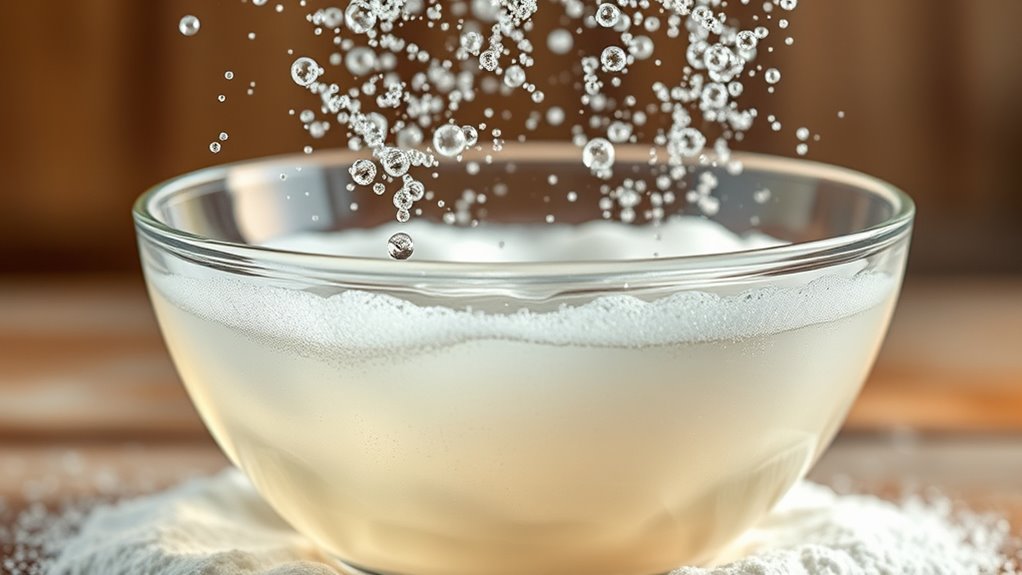
When you mix vinegar and baking soda, a fascinating chemical reaction unfolds, producing carbon dioxide gas, water, and sodium acetate. The fizzing you see is a result of carbon dioxide bubbles escaping from the mixture, creating an impression of vigorous cleaning. However, while this reaction certainly looks impressive, it’s essential to understand how it really works and why it might not clean as effectively as you think.
The reaction occurs when the bicarbonate in baking soda accepts a proton from the acetic acid in vinegar, forming carbonic acid, which quickly breaks down into CO2 and water. Although the mechanical agitation from the fizz can lift some dirt and debris, it doesn’t actually dissolve most soils. The effervescence merely dislodges loose particles, leaving behind residues that often require additional cleaning. This reaction is a classic example of an acid-base reaction, showcasing how acids donate hydrogen ions while bases accept them. Additionally, this combination is often touted for its ability to neutralize odors and tackle various cleaning tasks around the home.
The fizz from vinegar and baking soda dislodges dirt but doesn’t dissolve most soils, often leaving residues behind.
One of the main claims to fame for this combo is its ability to neutralize odors. The mild abrasiveness of baking soda and the weak acidity of vinegar can help tackle certain types of stains, particularly mineral deposits like limescale. Yet, their combined effect neutralizes the individual cleaning properties of each agent. Instead of enhancing their cleaning power, you often end up with sodium acetate, which is primarily neutral and may even leave a sticky residue if not rinsed away.
You might think that mixing these two household staples would yield a powerful cleaning solution, but both vinegar and baking soda have limitations. Neither is a strong disinfectant at household concentrations, and both show limited efficacy against bacteria. The fizzing action can mislead you into believing that you’re achieving a deeper clean, but the reality is that for tougher stains or embedded dirt, specialized cleaners typically outperform this duo.
Additionally, it’s vital to be cautious when mixing these ingredients. Doing so in a closed container can lead to dangerous pressure buildup due to CO2 generation. Instead, you should always perform this reaction in an open space.
In essence, while the vinegar and baking soda reaction is a fun science experiment that demonstrates chemical principles, it’s not the cleaning miracle it’s often made out to be. For effective cleaning, consider using each ingredient separately or opting for specialized cleaners that tackle specific tasks more efficiently. So, next time you reach for vinegar and baking soda, remember that the fizz doesn’t equal effectiveness.
Frequently Asked Questions
Can Vinegar and Baking Soda Be Used on All Surfaces?
You can’t use vinegar and baking soda on all surfaces. While they’re great for many tasks, they can damage porous materials like marble or granite due to their acidity. Always test on a small, inconspicuous area first. For delicate surfaces, consider using them separately instead of mixing. Baking soda works well on grease, while vinegar’s effective on hard water stains. Choose wisely to avoid damaging your surfaces while achieving a clean environment.
What Happens if I Mix Vinegar and Baking Soda in Equal Parts?
Did you know that commercial disinfectants can reduce pathogens by over 5.6 log10? When you mix vinegar and baking soda in equal parts, you neutralize their properties, limiting their effectiveness. Instead of a powerful cleaning duo, you get a fizzing reaction that produces carbon dioxide but lacks the cleaning power of either ingredient alone. For better results, use them separately or in unequal ratios to harness their unique cleaning abilities.
Is the Fizzing Reaction Safe for Pets and Children?
Yes, the fizzing reaction of vinegar and baking soda is generally safe for pets and children. It’s a non-toxic, natural reaction that produces carbon dioxide gas, water, and sodium acetate. However, always supervise young kids and pets during any cleaning activities. You should avoid inhaling the fizzing gas directly, but the reaction itself doesn’t pose a significant risk. For peace of mind, make sure your space is well-ventilated while using it.
How Often Can I Use This Cleaning Method?
You can use the vinegar and baking soda cleaning method as often as needed, but it’s best to limit it to once a week for tough stains. This prevents any potential buildup and guarantees your surfaces stay fresh. Remember to alternate with other cleaning methods to tackle different types of grime effectively. If you notice any residue, adjust your frequency or try different techniques to keep everything sparkling clean!
Are There Any Odors Produced During the Reaction?
When vinegar meets baking soda, it’s like a volcano erupting in your kitchen, but thankfully, the only odors you’ll notice are minimal. During the reaction, you shouldn’t smell anything strong or unpleasant. The fizzing creates carbon dioxide gas, which can have a slight vinegar scent, but it’s not overpowering. If you do notice any odors, they’re likely from the surfaces you’re cleaning rather than the reaction itself.
Conclusion
While the fizzy reaction of vinegar and baking soda may seem like a miracle solution for cleaning, it’s not quite the silver bullet you might expect. This bubbly mix can tackle some grime, but it often falls short on tougher stains or deep cleaning tasks. So, next time you think you’ve got a magic potion at your fingertips, remember that not everything that glitters is gold. Sometimes, you need a more targeted approach for a truly clean space.