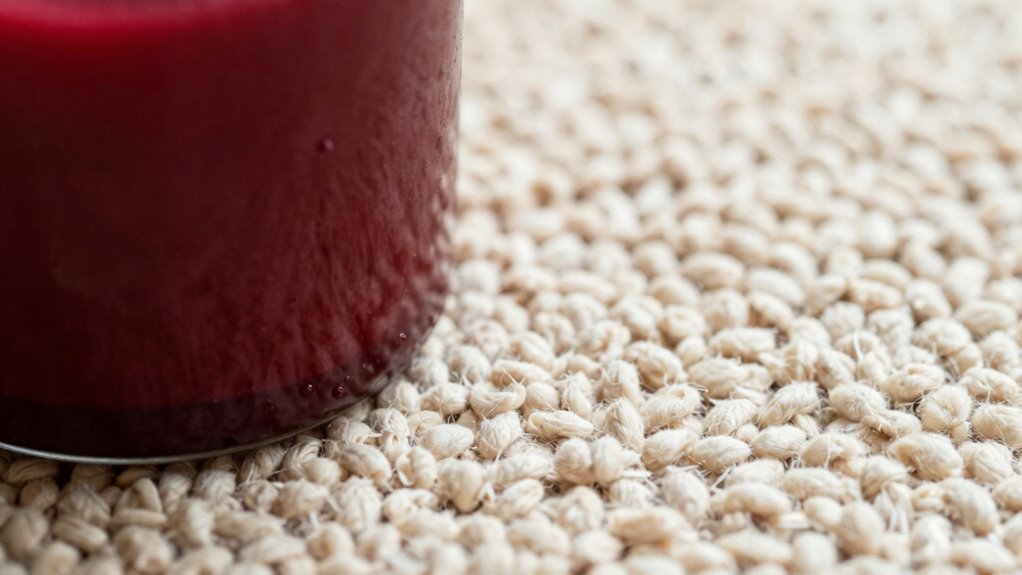

If you’ve spilled candle wax on your carpet, don’t panic! Start by scraping away hardened wax gently with a dull knife. Then, cover the wax with brown Kraft paper and place a damp microfiber cloth on top. Using an iron set to a low temperature, press it for 10 to 30 seconds. This melts the wax without harming fibers. Replace the paper as needed. There’s more to know about cleaning up stubborn stains effectively, so stick around!
Key Takeaways
- Use brown Kraft paper or butcher paper to cover the wax before heating.
- Place a damp microfiber cloth or white towel on the paper to protect fibers.
- Set the iron to medium or warm heat, avoiding direct contact with the carpet.
- Gently press the iron for 10 to 30 seconds, monitoring closely to prevent overheating.
- Replace the paper and repeat if necessary until the wax is completely melted and absorbed.

Candle Wax on Carpet
When a candle spills wax on your carpet, it can feel like a formidable cleanup task, but don’t worry—removing it is manageable with the right approach. The first step is to act quickly and scrape off the hardened wax using a butter knife or a dull scraper. Be gentle; you don’t want to damage the carpet fibers. After scraping, vacuum up any loose wax particles. This initial scrape prevents the wax from bonding deeper into the fibers, making your removal efforts more effective.
Next, you’ll want to employ the heat absorption method. Start by covering the wax with a piece of brown Kraft paper or butcher paper. Then, lay a damp microfiber cloth or a white towel over the area. Set your iron to a medium or warm heat setting—avoid the hottest setting to prevent melting your carpet fibers. Gently press the iron over this covering for about 10 to 30 seconds. The heat will melt the wax, and it’ll absorb into the paper or cloth underneath. If the wax transfers heavily, replace the covering and repeat this process until no more wax lifts. Using an iron on a low setting will help prevent damage to the carpet fibers during this process. Proper ventilation is also important during this process to ensure any fumes dissipate quickly.
Employ the heat absorption method by covering the wax with paper and a damp cloth, then gently press with a warm iron.
Always remember to avoid direct contact between the iron and your carpet to prevent damage. If needed, you can use a non-oily, non-caustic dry cleaning solvent, but be cautious with its application. Keep a close eye on the process; monitoring ensures you don’t overheat the fibers. Once the area cools down, vacuum up any dried wax chips.
You may notice some residual staining after you’ve removed the bulk of the wax. To tackle that, mix ½ teaspoon of clear dish detergent with a cup of warm water, and apply this solution to the area. Dab with a clean towel afterward to lift any remaining stain. Allow the area to dry completely before applying a carpet stain remover for lingering color. Always test any cleaner on an inconspicuous area first to avoid further damage.
If you find the wax is particularly stubborn, consider using an ammonia solution as an alternative. You might also choose to freeze the wax and scrape it off entirely, avoiding heat altogether. For large spills, professional cleaning might be the best option. With these methods and precautions, you can safely remove candle wax without damaging your carpet fibers.
Frequently Asked Questions
Can I Use a Hairdryer Instead of an Iron?
You can use a hairdryer instead of an iron, but you need to be cautious. Set the dryer to a low heat and keep it moving to avoid overheating any specific area of the carpet. Hold it at a distance to prevent melting fibers. As you melt the wax, use a paper towel to absorb it. Just remember, the key is to control the heat to protect your carpet while effectively removing the wax.
How Can I Prevent Wax Spills in the Future?
Imagine coming home to a beautifully scented room, only to find wax splattered across your carpet. To prevent this disaster, always place candles on sturdy, non-flammable surfaces. Use candle holders with wide bases to catch drips, and never leave them unattended. Consider using electric candles for a worry-free ambiance. Finally, make sure candles cool completely before moving them. With these steps, you can keep your space wax-free and your heart at ease.
What Types of Candles Are Safest for Carpets?
For carpets, choose candles made from soy or beeswax, as they burn cleaner and produce less soot. Opt for pillar or jar candles with sturdy bases to prevent tipping. Avoid using candles with metal or glass containers that could break and spill wax. Additionally, LED candles are a safe alternative, eliminating the risk of spills entirely while still providing ambiance. Always keep candles on stable surfaces to minimize accidents.
Is There a Specific Carpet Cleaner for Wax Stains?
There isn’t a specific carpet cleaner designed solely for wax stains, but you can use a general carpet cleaner that’s safe for your carpet type. After removing the bulk of the wax, blot the remaining stain with the cleaner, following the product instructions. For stubborn residues, an oxy cleaner can be effective. Make sure to test any cleaner in an inconspicuous area first to avoid discoloration or damage to your carpet fibers.
Can I Use Ice Packs on Other Types of Stains?
Yes, you can use ice packs on other types of stains! They’re especially effective for removing gum, oil, and certain food stains. Just apply the ice pack until the stain hardens, making it easier to scrape off without spreading. Remember to avoid moisture, as it can complicate the cleaning process. Once you’ve removed the bulk of the stain, follow up with your usual cleaning method for best results.
Conclusion
In the end, removing candle wax from your carpet doesn’t have to be a formidable task. By applying the safe heat method, you can lift the wax without damaging the fibers, preserving your carpet’s beauty. It’s a simple yet effective approach that proves the theory that heat can be a friend, not a foe, when it comes to stains. So, next time you spill wax, don’t panic—just grab your iron and follow these steps for a hassle-free cleanup!