
To clean your wet/dry vac after smelly jobs, start by thoroughly rinsing the drum and removing all debris. Use a diluted disinfectant solution, sucking it through the hose to neutralize odors. Let the solution sit for about 20 minutes before rinsing the hose until the bleach smell fades. Don’t forget to clean filters and attachments, which can harbor lingering scents. Want to know more about keeping your vac fresh and odor-free? Keep exploring!
Key Takeaways
- Begin by emptying the canister completely to eliminate any lingering solids and liquids after use.
- Rinse the drum with warm water and scrub with mild soap to remove grime effectively.
- Create a disinfectant solution and suck it through the hose for thorough deodorizing and sterilization.
- Allow the disinfectant to sit for about 20 minutes before rinsing the hose until the bleach smell dissipates.
- Use enzymatic cleaners for persistent organic odors, such as pet messes, to ensure complete deodorization.
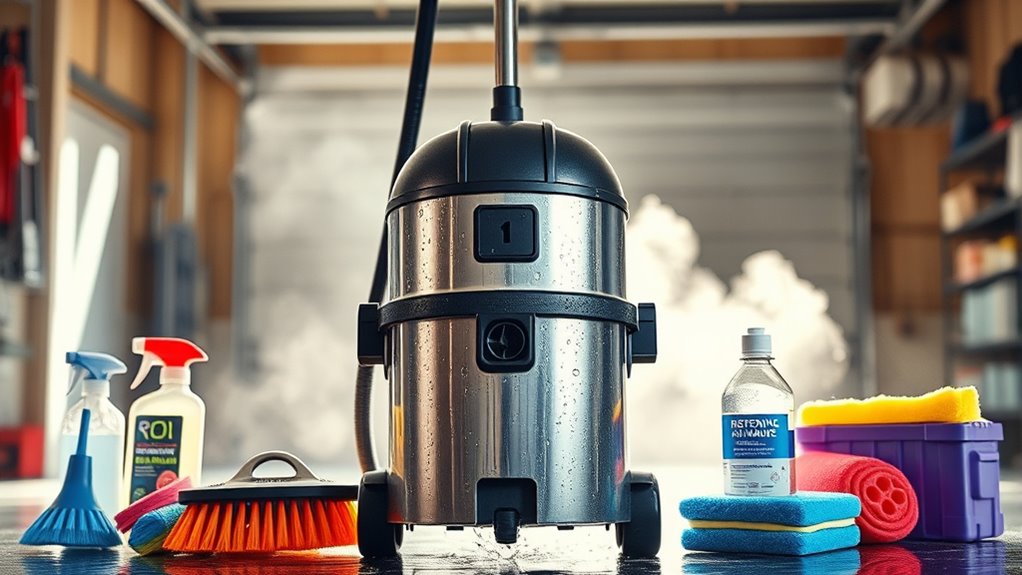
When you tackle a smelly job with your wet/dry vac, it’s essential to clean it thoroughly afterward to prevent lingering odors and bacteria growth. Start by emptying the canister completely, disposing of all liquids and solids right after your pick-up. This immediate action reduces the risk of bacterial growth, which can amplify unpleasant smells. Use disposable gloves to remove large solids and sticky debris manually, ensuring you prevent clogs and further odors.
Next, rinse the drum with warm water to loosen any residual grime. Using mild soap can speed up the removal of oils and organic matter. Grab a scrub brush or scouring pad to tackle the interior surfaces, dislodging any biofilm and stains that retain odors. After scrubbing, make sure to dry the drum thoroughly—air-drying it upright or using a towel helps inhibit microbial regrowth and mildew formation. Proper cleaning also ensures that the vacuum operates at its best without any hindrance from residual debris. Additionally, maintaining energy-efficient cloud solutions can help reduce the environmental impact of operating your equipment.
Rinse the drum with warm water and mild soap, scrub thoroughly, and dry completely to prevent odors and mildew.
When it comes to filter care, first identify your filter type. If you’re using a dry paper cartridge, switch to a wet-compatible filter for liquid jobs to avoid damage. For washable foam or rubber filters, run low-pressure water until it runs clear, then allow the filter to air-dry completely before putting it back in service. If you’ve had a particularly messy job, consider replacing paper filters, especially if they’ve become contaminated or odorous.
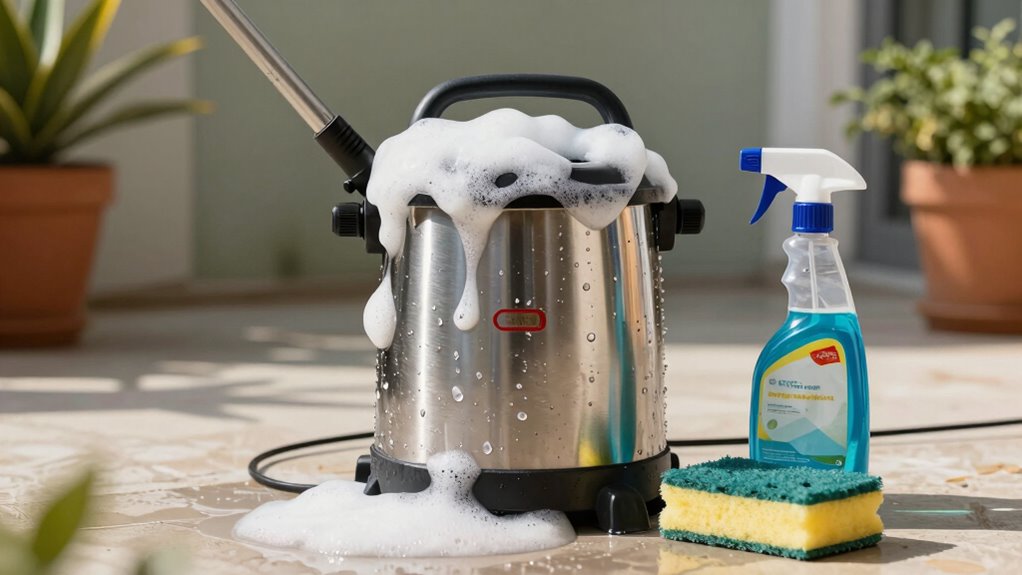
To deodorize your wet/dry vac, mix a diluted disinfectant solution, such as bleach, in a bucket or tub. Suck up this solution through the hose after removing the filter. Let it sit for about 20 minutes to disinfect, then rinse until the bleach smell is gone. Alternatively, enzymatic cleaners are excellent for breaking down organic odors, particularly if you’ve dealt with pet messes or food spills.
Don’t forget to give your hoses and nozzles some love too. Detach the hose and run warm water through it to flush out trapped debris. Inspect the hose for blockages, and use a flexible brush if needed. For smaller attachments, soak them in warm soapy water or an enzymatic solution, then rinse and dry before storing. Finally, ensure you keep the motor housing and electrical components dry, avoiding any water spray near these areas.
Following these steps will help keep your wet/dry vac smelling fresh and functioning at its best, ready for whatever mess comes next.
Frequently Asked Questions
How Often Should I Clean My Wet/Dry Vac?
You should clean your wet/dry vac at least once a month, or more often if you notice any odors or after particularly messy jobs. Regular maintenance not only keeps it functioning well but also prevents unpleasant smells from building up. Empty the canister completely, scrub it with soapy water, and clean or replace the filter as needed. Keeping up with this routine will extend the life of your vac and ensure it operates efficiently.
What Type of Disinfectant Should I Use?
When it comes to disinfectants, you’ll want to choose a solution that’s tough on germs but safe for your vacuum. Look for a multi-surface cleaner or a vinegar solution diluted with water; both pack a punch against odors. Hydrogen peroxide’s great too, offering anti-mold properties. Just remember, whatever you pick should be compatible with your vacuum’s materials. You’ve got this—keeping your space fresh starts with the right tools!
Can I Use Bleach for Cleaning?
You can use bleach for cleaning, but be cautious. It’s effective for disinfecting, but it can also damage certain materials and emit strong fumes. Always dilute bleach with water, usually a 1:10 ratio, and guarantee good ventilation when using it. After cleaning, rinse thoroughly to remove any residue. If your wet/dry vac has plastic components, check the manufacturer’s guidelines to avoid any potential damage before using bleach.
Is It Safe to Use Vinegar in My Vacuum?
Yes, it’s safe to use vinegar in your vacuum. Imagine the fresh scent of vinegar wafting through the air as you tackle unpleasant odors. Just mix it with water for a natural deodorizer and pour it through the vacuum. This method helps eliminate stubborn smells without harsh chemicals. Remember to rinse thoroughly afterward to avoid lingering scents. With regular use, your vacuum will stay fresh and ready for your next cleaning adventure!
What Should I Do if the Filter Is Damaged?
If your filter’s damaged, you should replace it immediately. A compromised filter can reduce your vacuum’s efficiency and allow debris to escape back into the air. First, check your vacuum’s manual for the right replacement part, then purchase it. After that, install the new filter carefully, ensuring it fits snugly. Regularly inspect your filters to catch any damage early, keeping your vacuum performing at its best.
Conclusion
In conclusion, don’t let unpleasant odors linger in your wet/dry vac. Rinse it out, deodorize it, and clean it thoroughly to keep it fresh for your next project. Use vinegar for a natural cleanse, baking soda for odor absorption, and make certain all parts are dry before storage. By maintaining your vac, you’re not just preserving its functionality; you’re also enhancing your workspace’s atmosphere and ensuring that your next job is as pleasant as possible.