
To reduce airborne dust in your home workshop, invest in quality dust control systems, like powerful vacuums and cartridge dust collectors. Install exhaust fans to circulate clean air and minimize dust buildup. Using wet-cutting techniques and dampening surfaces can help bind dust particles during operations. Strategically position machines near collection points for better efficiency. By following these tips, you’ll create a healthier workspace. Explore more techniques to keep your workshop dust-free and safe.
Key Takeaways
- Invest in a high-quality dust collection system with powerful vacuums and nano-fiber filters for effective airborne dust capture.
- Optimize your workshop layout by positioning dust-generating machines near central collection points to minimize dust migration.
- Utilize ventilation systems with exhaust fans and air scrubbers to circulate clean air and remove airborne contaminants effectively.
- Implement dust suppression techniques like wet-cutting and water-based misting to bind and reduce airborne dust particles.
- Regularly maintain and clean your dust collection system to ensure maximum efficiency and prevent blockages.

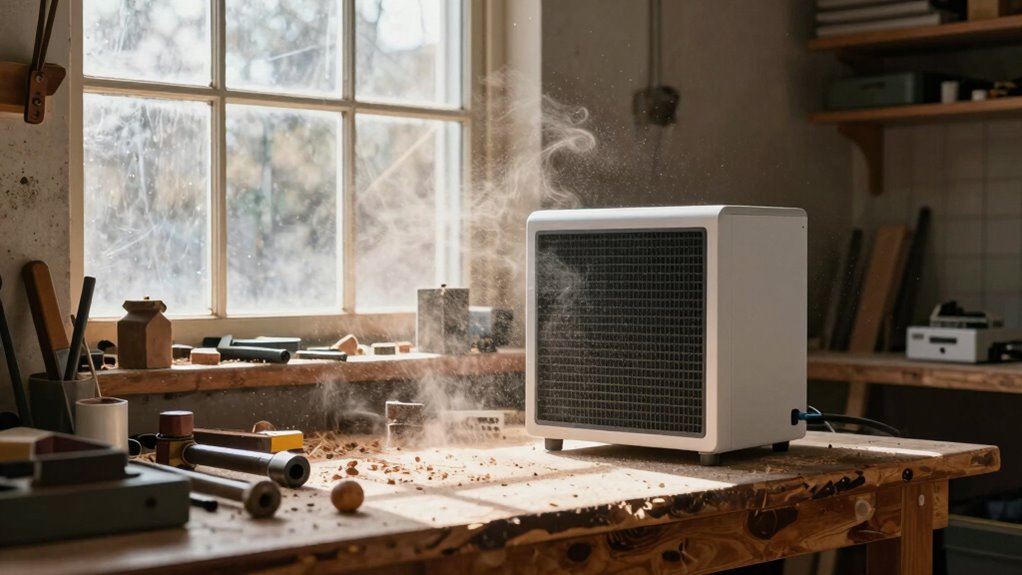
When you work in a home workshop, airborne dust can pose serious health risks, including respiratory issues and even cancer. To tackle this problem, you need to implement effective dust control strategies. One of the best ways to reduce airborne dust is by investing in high-quality dust collection systems. These powerful vacuums or fans draw wood dust from table saws, routers, and sanders through ducts and filters, keeping your workspace cleaner and safer. Cartridge dust collectors with nano-fiber filters capture even the finest particulates, ensuring compliance with safety standards.
You should consider using source extraction methods by attaching dust hoods and extraction ports to your machinery. This means capturing dust directly from blades, which prevents it from becoming airborne. For table saws, equip them with dust shrouds and hoses that enhance targeted capture, ultimately improving air quality. If your workshop layout changes frequently, mobile units can be a great addition. Positioning collection units near high-dust tools minimizes duct travel distance, reducing potential blockages. Proper installation and maintenance are essential for system efficiency, ensuring that your dust collection setup works at its best.
Optimizing your shop layout can also make a difference. Position dust-generating machines near central dust collection systems. This shortens duct runs and minimizes dust migration. Strategically organize your workstations to optimize workflow while containing dust within specific areas. For enhanced efficiency, place collection systems close to tools that produce the most dust. A well-structured setup integrates ventilation to create thorough air filtration, directing airflow toward exhaust points to prevent contaminant buildup.
Don’t overlook the importance of ventilation and airflow. Installing exhaust fans and air vents can help circulate clean air, preventing the accumulation of airborne contaminants. Pair air scrubbers with your ventilation systems to capture fine particles effectively. Fans can blow air to keep bulk dust particles away from your breathing zone while maintaining negative air pressure. This ensures that machines exhaust filtered air outside, enhancing your workshop’s air quality.
You might also want to use dust suppression techniques. For example, applying water-based misting systems can bind fine particles, reducing dust circulation. Wet-cutting techniques and dampening surfaces before cutting weigh down dust effectively. By adopting these methods and maintaining your dust collection systems, you can notably reduce airborne dust in your home workshop, creating a safer and healthier workspace for you and anyone who enters.
Frequently Asked Questions
What Are the Long-Term Health Effects of Wood Dust Exposure?
Long-term exposure to wood dust can lead to serious health issues, including respiratory diseases like asthma and chronic bronchitis. You might also face an increased risk of developing lung cancer, particularly nasal cancer. Prolonged inhalation of fine particles can penetrate deep into your lungs, causing conditions like silicosis. It’s essential to implement effective dust control measures in your workshop to protect your health and minimize these risks over time.
How Often Should I Replace My Dust Extractor Filters?
You’ll want to replace your dust extractor filters every 6 to 12 months, depending on usage. Think of it as giving your equipment a little spa day—it helps keep everything running smoothly! If you notice a drop in suction or see dust escaping, it’s definitely time for a change. Regular maintenance not only improves performance but also keeps your workspace safer and more pleasant, so your creative endeavors can flourish without a hitch!
Can I Use a Regular Vacuum for Woodworking Dust?
You can’t use a regular vacuum for woodworking dust effectively. Standard vacuums lack the necessary filtration systems to capture fine particulate matter like sawdust, which can damage the motor and reduce suction. Instead, opt for a vacuum designed specifically for dust collection, equipped with a HEPA filter. This will not only safeguard your vacuum but also ensure a healthier workspace by preventing harmful dust from lingering in the air.
What Personal Protective Equipment Should I Wear While Woodworking?
When woodworking, you should wear a dust mask or respirator to protect your lungs from harmful particles. Safety goggles are essential to shield your eyes from flying debris, and hearing protection is important if you’re using loud tools. Don’t forget gloves to protect your hands from splinters and cuts, and consider wearing a hard hat if you’re working in a space where overhead hazards exist. Proper footwear is vital for stability and safety too.
Are There Specific Cleaning Products That Help Reduce Dust?
Vacuum cleaners and microfiber cloths are your best allies in reducing dust, while traditional brooms and dry cloths just stir it up. You’ll find that using a vacuum with a HEPA filter captures fine particles effectively, keeping your space cleaner. Additionally, using damp cloths minimizes airborne dust during cleaning. Choose products designed for dust control, and you’ll notice a significant difference in your environment, enhancing both air quality and your overall health.
Conclusion
By taking these steps to reduce airborne dust in your home workshop, you’re not just protecting your lungs; you’re creating a space where creativity can flourish like a well-tended garden. Regular cleaning, good ventilation, and effective dust collection systems can make a world of difference. So, grab your tools and get to work on keeping your workshop air clean and safe. After all, a healthy workspace is the foundation for great craftsmanship!