Fine concrete dust poses serious health risks, especially when you’re exposed to respirable crystalline silica. These tiny particles can penetrate deep into your lungs, leading to chronic respiratory issues like asthma, COPD, and even lung cancer. Regular masks just won’t cut it; you need specialized filtration methods like high-efficiency masks or respirators to safeguard your lungs effectively. By understanding the dangers and the right protective measures, you can ensure a safer work environment and maintain better respiratory health.

Get cleaning gear delivered free with Prime
- Fast, free delivery on millions of items
- Prime Video, Amazon Music and more included
- Member-only deals all year
Key Takeaways
- Fine concrete dust contains respirable crystalline silica (RCS), which poses serious health risks, including chronic respiratory issues and lung diseases.
- Particles smaller than 5 micrometers can penetrate deep into the lungs, causing inflammation and increasing the risk of COPD and lung cancer.
- Simple cloth masks do not adequately filter fine dust; high-efficiency masks or respirators are essential for effective protection.
- Implementing specialized filtration systems and wet methods during concrete work can significantly reduce dust inhalation and improve worker safety.
- Regulatory measures and employer responsibilities emphasize the need for proper safety protocols to prevent severe respiratory complications from dust exposure.
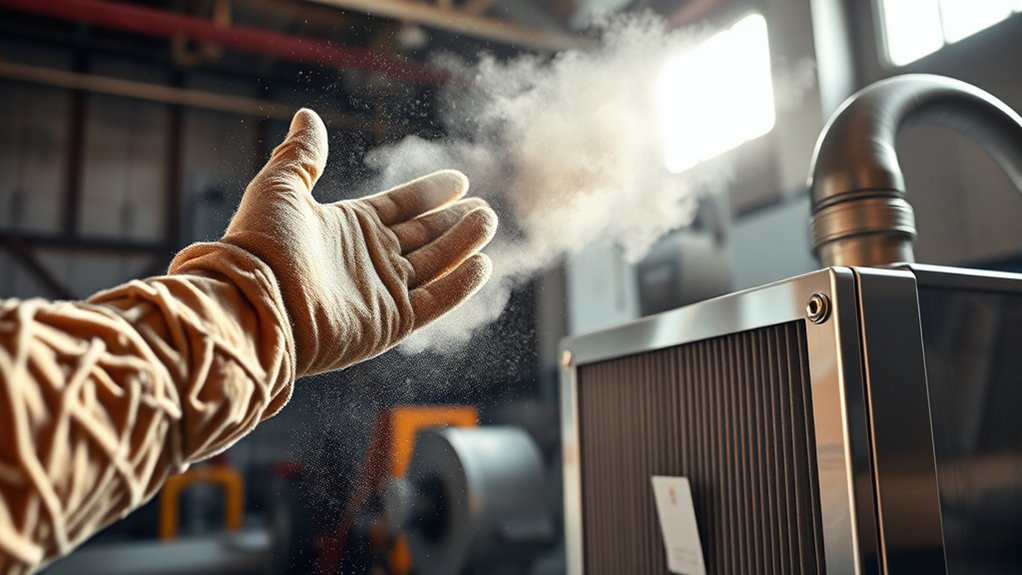
As you work with concrete, it’s essential to be aware of the fine dust it generates, which poses serious health risks. The inhalation of this dust, particularly respirable crystalline silica (RCS), can lead to various chronic respiratory complications. Reports indicate that nearly 63% of workers exposed to cement dust experience chronic respiratory symptoms, such as coughs, asthma, and lung infections. You might not notice these effects immediately, but over time, the risks compound, leading to conditions like silicosis—a serious, irreversible lung disease.
Be mindful of concrete dust; it poses serious health risks, including chronic respiratory complications and irreversible lung diseases like silicosis.
Silicosis can develop either acutely or chronically, depending on the intensity and duration of your exposure to silica dust. If you find yourself working in environments with heavy dust without adequate protection, you may be at risk for rapid deterioration in lung function. Studies show that some individuals develop symptoms within months of heavy exposure, which emphasizes the need for awareness and proper protective measures. Sustainable foraging practices can also provide insights on how to minimize environmental hazards while working with concrete.
The particle size of cement dust markedly contributes to its health risks; particles less than 5 micrometers in diameter can penetrate deep into your lungs. Once inhaled, these particles can trigger inflammation and fibrosis, leading to chronic obstructive pulmonary disease (COPD) and even lung cancer. You might think a simple cloth mask is sufficient, but it won’t filter out these fine particles effectively. Instead, high-efficiency masks or respirators are necessary to protect your lungs from the harmful effects of fine concrete dust.
Moreover, the prevalence of occupational exposure is staggering, with approximately 2.3 million workers in the U.S. regularly exposed to RCS. The construction sector sees hundreds of thousands of workers at risk daily, especially during tasks like cutting, grinding, or demolition. The mortality rate associated with silica exposure is alarming, with over 500 construction workers dying annually due to related diseases.
To safeguard your health, pay attention to OSHA regulations, which have reduced permissible exposure limits for RCS. Implementing specialized filtration systems and utilizing wet methods during concrete work can also markedly lower your risk of exposure. Additionally, employers must evaluate risks and implement control measures to protect workers from silica dust hazards. By prioritizing these safety measures, you can reduce the likelihood of developing severe respiratory issues and ensure a healthier working environment. Don’t underestimate the potential dangers of fine concrete dust; take proactive steps to protect your respiratory health today.
Frequently Asked Questions
What Are the Symptoms of Silicosis and Other Silica-Related Diseases?
If you’re exposed to silica, you might develop symptoms like shortness of breath, a severe cough, wheezing, and chest tightness. You could also experience fever and weight loss. Silicosis, in particular, leads to lung inflammation and scarring, which can worsen over time. Chronic obstructive pulmonary disease (COPD), emphysema, and bronchitis are common as well. it is crucial to pay attention to these symptoms and seek medical advice if they arise.
How Can Workers Protect Themselves From Silica Dust?
So you think breathing in dust is a fun pastime? To protect yourself from silica dust, wear a proper respirator, and make sure it’s not the flimsy kind. Use wet cutting methods, and keep your workspace well-ventilated. Regularly clean up dust instead of letting it settle. And for heaven’s sake, don’t skip those safety meetings! Your lungs will thank you, and you might just avoid a lifetime of wheezing and coughing.
What Types of Filtration Systems Are Most Effective Against Fine Concrete Dust?
HEPA filters are among the most effective filtration systems against fine concrete dust. They capture 99.97% of particles as small as 0.3 micrometers, ensuring cleaner air in your workspace. You should also consider using cyclonic dust collectors, which can separate larger particles before they reach the filters. Regularly maintaining and replacing these filters is essential to keep your environment safe and minimize health risks associated with fine concrete dust exposure.
Are There Legal Regulations Regarding Silica Exposure in the Workplace?
Yes, there are legal regulations regarding silica exposure in the workplace. The Occupational Safety and Health Administration (OSHA) sets permissible exposure limits, requiring employers to keep silica dust levels below 50 micrograms per cubic meter over an 8-hour shift. Employers must implement safety measures to protect workers, including monitoring exposure and providing appropriate personal protective equipment. Staying informed about these regulations helps you maintain a safer work environment and minimizes health risks associated with silica.
How Often Should Filtration Systems Be Maintained or Replaced?
You wouldn’t want to overlook the importance of keeping your filtration systems in tip-top shape. Ideally, you should maintain them regularly—every few months is a good rule of thumb. Depending on usage, you might need to replace filters annually or even sooner if they show signs of wear. Staying proactive guarantees you breathe easier and keeps your environment healthier, so don’t wait until it’s too late to take action!
Conclusion
You might think regular filters are enough for fine concrete dust, but they’re not. Imagine breathing in those tiny particles that slip through standard filters—it’s like trying to catch water with a sieve! Specialized filtration systems capture these microscopic dust particles, protecting your lungs and improving indoor air quality. Don’t compromise your health; invest in the right filtration to keep your environment safe. Your well-being deserves the best protection against fine concrete dust.
Halloween Picks
halloween
As an affiliate, we earn on qualifying purchases.